 Auto
Auto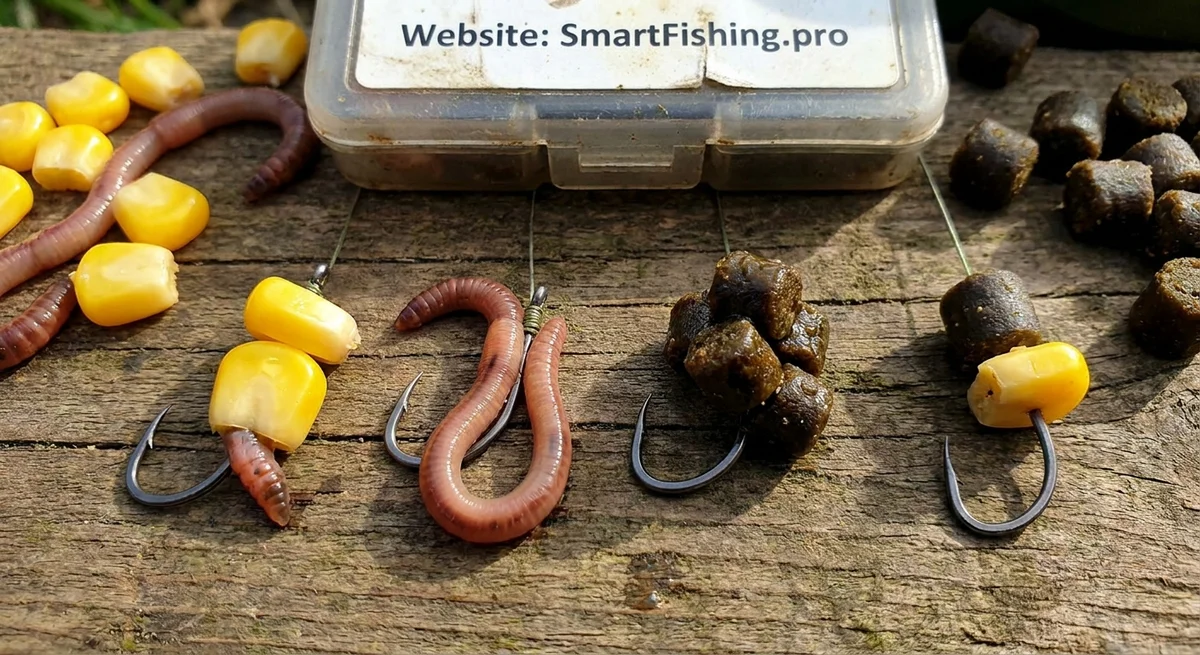
Hookbaits That Hold: Sweetcorn, Worms, Pellets, and Combinations
A good hookbait must do three jobs:
- Stay on the hook
- Release enough attraction
- Look believable to the fish
No single bait wins every job. Worms and softened pellets release strong signals but are fragile. Plastic corn lasts for many casts but gives little natural food signal. Wafters sit between the two: durable, visible, and lightly buoyant.
This guide compares sweetcorn, worms, pellets, plastic corn, and flavored wafters for roach, skimmers, bream, and mixed coarse fishing.
Important evidence note: There is very little direct scientific research comparing retail hookbaits on roach and skimmers. The advice below combines fish-feeding research, species biology, manufacturer data, and practical field-testing methods.
What Fish Notice First
Fish do not use only one sense when they feed. They may use sight, smell, taste, touch, and water movement. Smell can help fish find a bait from a distance, while taste helps them decide whether to swallow or reject it. Fish sensory systems review (pubmed.ncbi.nlm.nih.gov)
Water clarity changes the balance between these senses. Suspended particles scatter light and can shorten the distance at which fish see food. However, the effect is not the same for every species. Some fish continue feeding well in moderate turbidity, while others take longer to find food. Environmental changes and fish feeding White bream turbidity study (pmc.ncbi.nlm.nih.gov)
Roach may continue feeding in some turbid conditions, but other studies show that higher turbidity can reduce their feeding efficiency. This means there is no simple rule that says “clear water needs visual bait” or “dirty water needs strong flavor.” The best bait gives fish more than one clue: contrast, scent, taste, and natural movement. Roach feeding efficiency study (pubmed.ncbi.nlm.nih.gov)
Quick Hookbait Comparison
The table below gives useful starting estimates for bank fishing. These are not laboratory measurements. Hook size, casting force, fish size, water temperature, and bait brand can change the result.
| Hookbait | Durability | Leakage profile | Visual appeal | Best use |
|---|---|---|---|---|
| Real sweetcorn | Fair | Fast first release, then slower | Bright, natural yellow | Clear water, light feed, mixed fish |
| Live or cut worm | Poor to fair | Strong burst, especially when cut | Natural movement | Cold water, cautious fish, skimmers |
| Hard pellet | Very good | Slow and steady | Usually dark or natural | Repeated casting, warmer water |
| Expander pellet | Fair | Fast and cloudy | Soft, natural finish | Active fish, pole and short-range work |
| Plastic corn | Excellent | Very low unless flavored or dipped | Strong and easy to see | Long sessions, nuisance fish, murky water |
| Flavored wafter | Very good | Moderate and controlled | Many color choices | Fishing over corn, pellets, or groundbait |
| Real corn + plastic corn | Excellent | Natural burst plus long-lasting profile | High | A strong all-round combination |
Sweetcorn: Natural, Bright, and Easy to Use
Durability
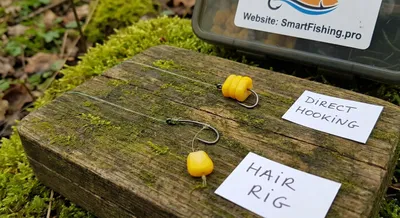
Real sweetcorn is soft. A direct-hooked grain can split during a hard cast or be stripped by small fish. Hair-rigging usually gives it a longer life because the hook does not tear through the grain.
A single grain is usually the most natural choice. Two grains create a larger target and make the bait easier to see, but the extra size does not automatically stop roach or skimmers. Hungry small bream can still take surprisingly large food items.
Leakage
Sweetcorn gives a short, mild food signal. The liquid around the grain can wash away quickly, while the skin and starch remain. Dipped or flavored corn gives a stronger first signal, but repeated soaking can soften the bait.
For a stronger leak without losing too much durability:
- Use one real grain with one plastic grain.
- Make a tiny cut in the real grain.
- Add only a light coating of liquid.
- Do not leave real corn soaking for hours unless you want a very soft bait.
Visual Appeal
The yellow color of corn is useful because it is easy to see against dark silt, green weed, or brown groundbait. In very clear water, bright corn can look too clean or too obvious, especially if fish have seen it many times.
Try:
- Natural yellow over yellow groundbait or real corn.
- Washed-out yellow or pale beige in clear, pressured water.
- White or bright yellow in low light or cloudy water.
The correct color is the one that gives contrast against the bottom. It is not always the brightest color.
Best Sweetcorn Rigs
- Single grain: roach, skimmers, mixed fish.
- Two real grains: larger bream, tench, carp, or when small fish are stripping singles.
- One real grain plus one plastic grain: better durability and a larger profile.
- Two plastic grains: maximum durability, but less natural food value.
Worms: Maximum Life, Movement, and Scent
Durability
Worms are soft and easy for small fish to damage. A long tail may look attractive, but it also lets roach nibble the bait without taking the hook.
A small piece often lasts longer than a whole worm. Thread the worm onto the hook several times and leave only a short tail. Government fishing guidance also recommends using a shorter section and hooking it securely when small fish are present. Missouri Department of Conservation bait guide (mdc.mo.gov)
A worm is most durable when:
- It is kept cool and damp.
- It is hooked through the thicker head end.
- It is threaded neatly up the shank.
- The dangling section is short.
- The hook point remains clear.
Leakage
A worm gives a strong natural signal through:
- Body fluids
- Mucus
- Movement
- Small pieces breaking away
- Earthy and animal odors
A cut worm normally gives a faster scent release than a whole worm. That can be useful in turbid water, but it also makes the bait disappear faster.
Visual Appeal
Worms are not mainly visual baits. Their strength is movement and natural behavior. This makes them especially useful when fish are close to the bottom or feeding on natural invertebrates.
Common bream feed heavily on bottom organisms such as insect larvae, while roach may eat vegetation, insect larvae, and small mollusks. This is one reason worms can attract both species. Bream and roach diet study (fal.infish.com.pl)
Best Worm Presentations
- Small worm section: good for cold water and cautious fish.
- Worm plus one grain of corn: adds color and makes the bait easier to see.
- Worm tip on a hard pellet: useful when you want animal scent but better durability.
- Two short worm pieces: gives movement without creating a long, easy-to-nibble tail.
Worms are excellent for catching fish, but they are usually poor for avoiding skimmers. If skimmers are the problem, use a larger and tougher bait.
Pellets: Two Very Different Hookbaits
“Pellet” can mean a hard feed pellet or a soft expander pellet. They behave very differently underwater.
Hard Pellets
Hard pellets are dense and can last through many casts. Some are designed to break down slowly and contain fish oil or other food ingredients. Sonubaits Hard Pellets (sonubaits.com)
Their leakage pattern is usually:
- A small release as the surface wets.
- A slow food and oil trail.
- Gradual softening from the outside.
- Final breakdown after extended soaking.
Hard pellets are useful when:
- You need to cast often.
- Small fish are stripping soft baits.
- The water is warm enough for fish to feed actively.
- You want a bait that matches loose feed.
A 6–8 mm hard pellet can reduce very small roach bites, but it will not stop bigger roach or skimmers.
Expander Pellets
Expander pellets are soft and porous. They take on water quickly and usually release more food signal than a hard pellet. They are also easier to damage.
Some modern hookable expanders are designed to be soaked overnight and still remain usable. Sonubaits Pro Expander Pellets (sonubaits.com) Pre-prepared expanders are also sold for skimmers, bream, carp, and other small commercial-fish situations. Sonubaits Hookable Expander Pellets (sonubaits.com)
Their usual pattern is:
- Fast water absorption
- Fast flavor release
- Soft texture
- Lower casting life
- High attraction to small fish
Use expanders when the fish are already feeding confidently. Use hard pellets when you need the hookbait to hold together.
Plastic Corn: The Durable Safety Net
Plastic corn has one major strength: it stays on the hook.
Artificial corn is available as floating, slow-sinking, and sinking versions. Some products are made in several colors and have flavor added during production. Korda’s slow-sinking corn, for example, is designed to sit with lighter feed while still being easy for fish to suck in. Korda Slow-Sinking Corn (kordatackle.com)
Nash also describes floating corn as a durable hookbait that can be used alone, in stacks, or with other baits. Nash Floating Sweetcorn (nashtackle.co.uk)
Leakage
Plain plastic corn has almost no natural food leakage. It may still catch fish because:
- It looks like loose feed.
- It can be balanced correctly.
- It may carry a manufacturer-added flavor.
- Fish may suck it in while feeding on nearby particles.
You can add a light dip, spray, or liquid coating. However, too much liquid can make some artificial baits slippery, overly buoyant, or less natural.
Visual Appeal
Plastic corn is excellent when you need a clear target. It works well:
- Over dark silt
- In weed
- Over a bed of real corn
- In a PVA bag
- When the hookbait must survive nuisance fish
Its weakness is that it can look too perfect. In clear water, use a duller color or mix it with a real grain.
Flavored Wafters: Balanced, Tough, and Flexible
A wafter is a hookbait made to sink slowly or sit lightly on the bottom when attached to the hook. This can make it easier for a fish to suck in than a heavy bottom bait.
Many wafters have a tough outer skin and are made to last for long periods in the water. CC Moore lists some of its wafters as having a durable skin lasting 24 hours or more, with balanced buoyancy and a mix designed to release attractors. CC Moore Yellow Dumbell Wafters (ccmoore.com)
Leakage
Wafters normally give a steady, controlled release rather than the sharp burst of a cut worm or soaked expander. This makes them useful when fish are cautious.
A light booster coat can increase the first signal. Repeated heavy coating may change buoyancy, so test the bait in a tub before fishing. CC Moore NS1 Wafters (ccmoore.com)
Flavor Intensity
Strong flavor does not always mean more bites. Fish species can respond differently to the same chemical. Research on carp and crucian carp shows that some amino acids increase feeding, while others are neutral or even deterrent. Concentration also matters. Crucian carp feeding stimulants Common carp taste response (sciencedirect.com)
For roach and skimmers, treat flavor as a tuning tool, not a magic switch:
- Start unflavored or lightly flavored.
- Increase the strength only if the bait is being ignored.
- Use a stronger scent in turbid water or warm water.
- Reduce the flavor in cold, clear water.
Single Baits, Double Stacks, and Combinations
Single Real Corn
Best for: natural presentation and mixed fish.
Advantages:
- Small and easy to swallow
- Matches loose feed
- Good in clear water
- Simple to rig
Disadvantage: small fish can remove it quickly.
Double Real Corn
Best for: more visibility and a larger mouthful.
Two grains give a longer profile, but fish can still attack the grains one at a time. A double stack is not the same as one solid 10 mm bait.
Use it when:
- Roach are stripping single grains.
- The water is slightly cloudy.
- You want more visual attraction.
- Larger fish are present.
Single Plastic Corn
Best for: long sessions and repeated casting.
It gives little food signal, so fish must be attracted by nearby feed or by the visual match.
Real Corn Plus Plastic Corn
This is one of the most useful combinations.
The real grain provides:
- Food smell
- Taste
- Natural softness
The plastic grain provides:
- Durability
- Extra color
- A larger profile
- Buoyancy control
Use a slow-sinking plastic grain if you want the stack to sit naturally on the bottom.
Double Plastic Corn
This gives the longest bait life and the strongest visual target. It is useful in turbid water or when crays, small fish, or repeated casting destroy real bait.
It is less natural in clear water, so use a washed-out color or fish it over matching particles.
Wafter Plus Plastic Corn
This can create a very visible and balanced bait. It works best when the buoyancy is checked carefully.
If the rig lifts the hook point, the presentation may become poor. Test the combination in the margin before casting.
Selectivity Against Roach and Skimmers
Flavor alone rarely creates strong species selectivity. Bait size, hardness, buoyancy, and fishing location usually matter more.
Common bream have a more protrusible mouth and are well adapted to feeding on bottom organisms. Roach have different mouth and feeding mechanics, but both species can eat soft pellets, worms, and corn. Common bream feeding morphology (edepot.wur.nl)
If you want to reduce small roach:
- Replace a 4 mm soft pellet with a 6–8 mm hard pellet.
- Replace a long worm tail with a short worm section.
- Try one 8–10 mm wafter.
- Use real corn plus plastic corn.
- Fish slightly tighter to the bottom.
If you want to reduce small skimmers:
- Use a tougher 10–12 mm wafter.
- Try a larger hard pellet or pellet-style hookbait.
- Avoid loose, soft worm pieces.
- Reduce the amount of fine feed.
- Do not expect flavor alone to keep skimmers away.
If larger bream are the target, remember that a larger bait may reduce small-fish bites but can also reduce the total number of bites. Use the smallest bait that solves the nuisance-fish problem.
Three Simple Hookbait Experiments
Experiment 1: Color and Contrast
Goal
Find out whether fish prefer a natural color or a high-contrast color in your water.
Test baits
Use hookbaits of the same size and shape:
- Natural yellow corn
- Washed-out yellow or beige
- White, pink, or orange artificial corn
- One colored wafter
Method
- Keep the hook, line, rig, and casting distance the same.
- Fish each color for 10–15 minutes.
- Change the order each session.
- Repeat the test on both clear and turbid days.
- Record:
- Bites per hour
- Missed bites
- Roach
- Skimmers
- Larger bream
- Fish size
Expected result
In clear water, natural or washed-out colors may look safer. In cloudy water, the best bait may be the one with the strongest contrast against the bottom. This is a testable idea, not a fixed rule, because turbidity can affect fish species in different ways. Fish feeding and turbidity review (pmc.ncbi.nlm.nih.gov)
Experiment 2: Flavor Intensity
Goal
Find the point where more flavor stops helping.
Test levels
Use one bait type, such as a wafter or cooked sweetcorn:
- Level 0: no flavor
- Level 1: quick dip or light spray
- Level 2: five-minute soak
- Level 3: 30-minute soak or two light coats
Follow the product instructions if the liquid has a recommended mixing rate. Keep the color and bait size identical.
Method
- Use separate tubs for each flavor level.
- Do not pour used liquid back into the main bottle.
- Fish each level for the same amount of time.
- Record both bite numbers and fish size.
What to look for
- More bites but smaller fish may mean the flavor increases attraction but not selectivity.
- Fewer bites on the strongest level may mean the bait has become too intense.
- The best level may change with water temperature and clarity.
Fish taste responses are species-specific, so results from carp or crucian carp should not be treated as proof for roach or skimmers. Crucian carp feeding study (sciencedirect.com)
Experiment 3: Soak Duration and Bait Life
Goal
Measure how soaking changes leakage and durability.
Test times
For pellets:
- 0 minutes
- 10 minutes
- 30 minutes
- 60 minutes
- Overnight
For real corn and wafters, start with shorter times:
- 0 minutes
- 10 minutes
- 30 minutes
Home test
Place equal-sized baits in separate cups of water taken from the fishing venue.
Check them at each time:
- Does the water become cloudy?
- Has the bait changed color?
- Has it become soft?
- Does it still hold on the hook?
- Can it survive five or ten casts?
- Does it still sink or balance correctly?
Weighing the bait before and after soaking can also show how much water it absorbs.
Likely pattern
- Cut worm: strong early signal, low durability.
- Expander pellet: fast softening and fast release.
- Real corn: moderate release, moderate softening.
- Hard pellet: slower release and stronger durability.
- Wafter: controlled release and good durability.
- Plastic corn: very little release unless dipped or flavored.
This simple test will often tell you more about your exact bait brand than general advice.
Seasonal Hookbait Rotation
Fish are cold-blooded, so water temperature affects metabolism, digestion, and feeding behavior. As water cools, fish usually need less energy and may feed more slowly. As it warms, feeding activity often rises, although spawning, oxygen, and natural food can change the pattern. Temperature and fish feeding review (pmc.ncbi.nlm.nih.gov)
Roach feeding activity has been linked with higher summer temperatures in field research, while bream feeding can change during spawning and across the seasons. Roach seasonal feeding study Common bream seasonal diet study (onlinelibrary.wiley.com)
The temperature bands below are useful starting points, not strict rules.
| Water temperature | Clear water rotation | Turbid water rotation |
|---|---|---|
| Below 8°C | Small worm, single natural corn, small unflavored wafter | Small worm piece, pale plastic corn, light dip |
| 8–14°C | Single corn, worm, 4–6 mm pellet, washed-out wafter | Real corn plus plastic corn, lightly flavored worm, yellow or white wafter |
| 14–20°C | Double corn, 6–8 mm hard pellet, 8–10 mm wafter | Brighter wafter, flavored pellet, cut worm, slow-sinking plastic corn |
| Above 20°C | Fish early or late; use medium-sized bait and light feed | Use a durable bait with a moderate scent trail; avoid overloading the swim |
Cold and Clear
Start small and natural:
- Single corn
- Short worm section
- 4–6 mm hard pellet
- Small washed-out wafter
Use little or no added flavor. Fish may inspect the bait for a long time, so a soft, natural-looking presentation is more important than a strong smell.
Cool and Cloudy
This is a good time for combinations:
- One real grain plus one plastic grain
- Small worm plus corn
- Lightly flavored wafter
- Softened pellet on a short cast
Use a color that stands out, but avoid making the bait much brighter than the loose feed.
Warm and Clear
Fish often feed more confidently, but clear water can make them cautious. Try:
- Double corn
- 6–8 mm hard pellet
- 8–10 mm wafter
- Lightly flavored yellow or washed-out bait
If small roach dominate, increase bait hardness before increasing flavor.
Warm and Turbid
Use a bait that offers several clues:
- Strong contrast
- Moderate scent
- Enough size to avoid tiny mouths
- Good casting life
A real corn and plastic corn stack, a flavored wafter, or a 6–8 mm hard pellet are good starting points. Sonubaits and other manufacturers also sell liquid products designed to color or flavor corn and pellets, but use them lightly until your own tests show a benefit. Sonubaits Haze Liquids (sonubaits.com)
Conclusion
The best hookbait is not always the one with the strongest smell or brightest color.
Use this simple order of decisions:
- Make the bait hold.
- Match its size to the fish you want.
- Choose a color that contrasts with the bottom.
- Add a light food signal.
- Increase flavor only after checking presentation.
For most mixed coarse fishing, start with single real corn, a short worm piece, one hard pellet, and one real-plus-plastic corn stack. Add a small flavored wafter when you need better durability or a more selective bait.
If the hookbait disappears, improve durability. If it remains untouched, change the color or position. If every bite is a roach or skimmer, increase bait size and hardness rather than simply adding more flavor.