 Auto
Auto
Fishing Timing for Summer Tench
During hot summer days, tench often refuse to bite in the heat and bright sun. Many anglers find that low-light periods – early morning (dawn), evening (dusk), or even late night – can be much more productive. As one UK coarse-fishing guide notes, “Dawn is the most important session,” with tench feeding heavily in the 30 minutes before sunrise and the following 2–3 hours (theriverbend.co.uk). By contrast, on warm summer days tench often stop feeding by midday and can be very hard to catch (theriverbend.co.uk). Evenings offer a secondary feeding window (about the hour before dark) that can produce bites when conditions are right (theriverbend.co.uk). Importantly, cloudy, humid conditions or light rain can extend activity – one angling source advises that on overcast summer days tench may feed “throughout the day,” even when they’d be in a lull under full sun (theriverbend.co.uk).
Fish physiologists explain these patterns as well. Warm water holds much less dissolved oxygen than cool water, and fish metabolism rises in heat (ask.ifas.ufl.edu). For example, water at ~32°C (90°F) tops out around 7.4 mg/L O₂ (vs ~11.9 mg/L at 7°C) (ask.ifas.ufl.edu), so hot afternoon waters can deprive tench of oxygen and quiet them down. Night and twilight bring cooler water and stable oxygen, allowing tench to feed again. In low light, tench (like many calm-water freshwater fish) feel safer and forage actively along edges, weedbeds, and shallow shelves (canalrivertrust.org.uk) (theriverbend.co.uk). Conversely, bright midday sun often sends them deeper into cover. Given these facts, dawn and dusk are usually prime times in summer – as fisheries expert Carl Nicholls notes, “Early mornings and late evenings are the best time to catch tench” (canalrivertrust.org.uk).
Environmental Factors
Light and Time of Day
Most tench feeding occurs at dawn or dusk. Anglers often use the term crepuscular to describe fish that feed in twilight. In practice, this means starting about half an hour before sunrise and fishing through the early morning hours yields the highest catches (theriverbend.co.uk). Similarly, the hour leading up to full darkness can produce a mini-spike of feeding (theriverbend.co.uk). Deep summer days with bright sun tend to create a midday lull – as one guide puts it, tench “stop feeding and become very difficult to catch” by noon (theriverbend.co.uk). If you find no action by late morning, it’s often worth waiting for late evening before trying again.
However, weather can alter the light strategy. Overcast or rainy conditions effectively extend the darker-feeding window. A uniformly gray, humid day (especially with light rain in June/July) can lead to almost all-day activity (theriverbend.co.uk). In short: sunny, high-pressure days push tench into hiding at midday, while cloudy or stormy periods may keep them feeding longer in the day or trigger a night bite.
Water Temperature and Oxygen
Tench are warm-weather fish, but even they have temperature ranges that affect activity (theriverbend.co.uk). Angling observations indicate a “prime” feeding range around 16–20°C (theriverbend.co.uk). In this range, dawn bites are especially strong. Above 20°C, tench tend to feed only in cooler hours (dawn/dusk) (theriverbend.co.uk), because the day’s heat and lower dissolved oxygen drive them deeper. In very hot water (above ~22–24°C), tench may stay under weedbeds or close to oxygenated inlets and take bait only in low light or when water temperature dips.
These patterns match basic aquatic science. Warm water holds less oxygen, and fish breathe through gills. As the University of Florida notes, at ~32°C water can hold far less dissolved O₂ than at 7°C (ask.ifas.ufl.edu). Yet warm water also raises tench metabolism, so they need more oxygen just when it’s scarce. As a result, tench often exhibit prolonged afternoon inactivity on hot days. In contrast, mornings and evenings bring a break in heat and higher oxygen levels, triggering feeding.
Barometric Pressure and Weather Trends
Many anglers also watch the barometer (air pressure) and weather changes. In general, rapidly falling pressure (indicating an approaching storm) can provoke a feeding spree. A popular fishing guide explains that a fast-dropping barometer often coincides with an angling “feeding frenzy,” as fish gorge themselves before a front arrives (www.mercurymarine.com). During this pre-storm window, tench may bite aggressively on attractive baits. On the flip side, only when the low pressure settles in for days do fish shut down. Meteorologists note that under entrenched low pressure and bad weather (especially in summer), fish often move deep and feeding slows dramatically (www.mercurymarine.com).
When pressure starts rising after a storm, fish activity often stays slow until they re-adjust. But a couple of days after the weather stabilizes, when pressure is moderate, fish revert to normal patterns (www.mercurymarine.com). Conversely, long stretches of high, stable pressure with clear skies (hot, calm summer days) tend to suppress feeding (www.mercurymarine.com). Indeed, anglers have noted that days after a high-pressure spell often require finesse and patience, as many fish stay low or inactive (www.mercurymarine.com).
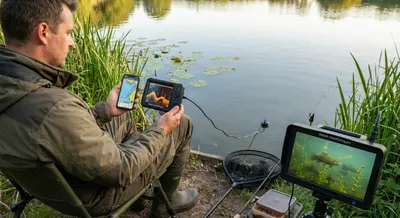
Overall, it’s best to treat pressure as one factor among many. Stable small changes generally mean predictable results, while sharp pressure swings can cause short bursts or lulls. Whatever the case, log the trend – many smartphone weather apps graph barometric trends – so you know if a drop or rise is happening during your planned session.
Rotating Short Sessions: A Testing Plan
To figure out your lake’s unique rhythm, use a systematic testing plan. Don’t plan all-night marathons at random; instead run short, focused sessions at each candidate time and log everything. Here’s an outline strategy:
- Plan 3 Main Time Slots: Focus on (1) Pre-dawn (roughly 30 min before sunrise to a few hours after), (2) Dusk (the hour before until dark), and (3) Midnight/Late Night (around 10pm–1am).
- Duration: Keep each session short (1–3 hours). This concentrates effort when you expect feeding, and lets you rotate times easily. For example, on Day 1 fish dawn, Day 2 fish dusk, Day 3 fish midnight, then repeat the cycle.
- Consistency: Within each slot, always fish at about the same clock time. E.g. if sunrise is 5:30am, start at 5:00am each dawn outing. For dusk, maybe 7pm–9pm; for midnight, 11pm–1am (adjust seasonally).
- Pre-Baiting: If possible, lightly pre-bait each spot a day or two ahead (especially before dawn or dusk sessions). One guide suggests feeding the swim the night before a dawn session helps fish lock onto your spot (theriverbend.co.uk).
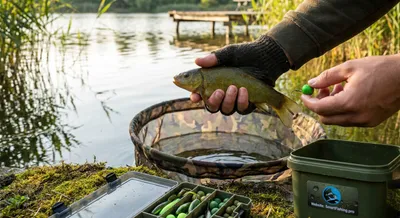
- Bait and Tackle: Use consistent rigs and baits (e.g. corn, maggots, worm) across sessions so your catch rate directly reflects fish activity, not gear.
Logging Conditions and Results
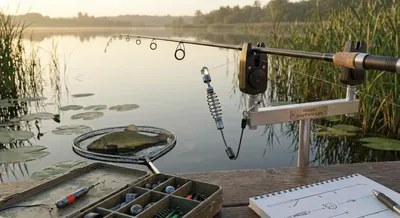
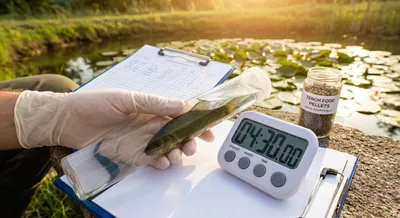
During each session, record the following in a fishing log or notebook:
- Time and Date: e.g. “June 10, 4–6am.”
- Session Slot: (Dawn, Dusk, or Night).
- Weather: Note cloud cover (sunny/overcast/rain), wind strength/direction, and recent changes (is a front moving in?). Record barometric pressure (some apps or portable barometers do this) and whether it’s rising/falling.
- Temperature: Measure or note air and water temperature if possible. Even a rough estimate (cool, warm, very hot) can help.
- Light Conditions: Describe light level (just before sunrise, twilight, moonlight, etc).
- Catch Results: How many bites or fish caught (or how long until first bite). Also note any fish activity seen (like surface rolling or bubble trails).
After a week or two (and ideally repeating under different weather patterns), review your log. Look for patterns, for example:
- Which slot gave the most bites or biggest fish?
- Does a certain combination (e.g. cool air + falling pressure at dawn) stand out?
- Did night sessions score any fish when dawn and dusk failed?
- Are cloudy dawns better than clear dawns?
Anglers sometimes even graph catch rates against light intensity or pressure trend. For instance, try noting the sky brightness (percentage cloud cover or just a note like “hazy dawn with 50% cloud”) and see if cloudy dawns beat clear dawns. Compare catch totals when pressure fell vs rose vs steady (www.mercurymarine.com) (www.mercurymarine.com). Over time, these records reveal your lake’s “feeding hours.”
Conclusion
By targeting dawn and dusk in summer, anglers align with tench’s strongest feeding periods. Even so, every lake is a bit different. A disciplined rotation of short morning, evening, and midnight sessions – with careful notes on weather, light, temperature and catches – will quickly show which slot works best on your water. Many anglers find dawn generally wins, but a humid twilight or a hot night bite can surprise you. In short: fish the cool hours, keep it short, and write it down. By doing so, you’ll learn the water’s rhythm and know exactly whether dawn, dusk, or the dead of night is your secret to cracking stubborn summer tench.