 Auto
Auto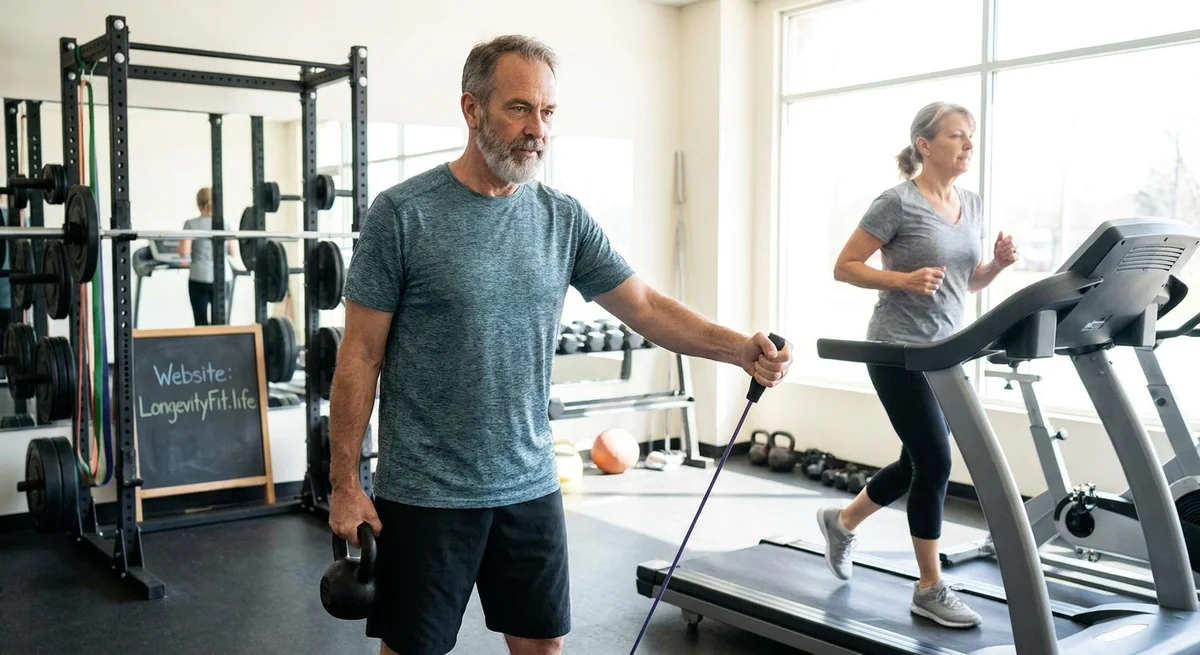
Exercise for Life: Combining Walking and Weight Lifting to Live Longer
We all know staying active is good for our health, but people often wonder if lifting weights really adds more benefit when you already do plenty of walking or running. Experts recommend that adults get about 150 minutes of moderate exercise each week (like brisk walking or dancing) and also do muscle-strengthening activities (like push-ups or lifting light weights) on at least 2 days each week (www.cdc.gov). However, many people skip the strength part: in one U.S. survey only about one-third of men and a quarter of women did strength exercises twice a week (www.cdc.gov). So researchers asked: If you already meet the walking/running goals, does adding a couple of weight workouts help you live even longer? And vice versa: if you lift weights, does adding cardio help further?
Recent studies have looked at large groups of people to answer this. They found that any exercise is helpful, and doing both types together tends to be best. For example, one big review found that people who did recommended amounts of weight workouts were about 10–17% less likely to die early and also had lower chances of getting heart disease, diabetes or even lung cancer (pmc.ncbi.nlm.nih.gov). Another study of 416,000 U.S. adults found just 1 hour of walking or jogging per week cut the risk of early death by about 15% (pubmed.ncbi.nlm.nih.gov), and doing up to 3 hours per week cut it even more. Yet the benefits did not rise indefinitely – beyond about 3–4 hours a week the extra gain was small. Importantly, that same study saw that doing weight exercises in addition gave extra benefits: one weekly session with weights lowered death risk further (by roughly 11% more) (pubmed.ncbi.nlm.nih.gov). In short, **walking and weight-lifting **help add up: each one alone helps you live longer, and doing both is even better.
More recent research used smart analyses to compare four groups of people: (1) those who did no exercise at all, (2) those who did only aerobic exercise (like walking/running), (3) those who did only muscle-strengthening (like weight training), and (4) those doing both cardio and strength. They adjusted for things like age, diet, smoking and health conditions so the comparison is fair. The results show a clear pattern: the biggest drop in risk is in the group doing both types of exercise. One analysis found that people who did a mixed routine had about 40–50% lower risk of death from any cause and major diseases, compared to inactive people (pmc.ncbi.nlm.nih.gov) (bjsm.bmj.com). For example, participants doing around 30–45 “MET-hours” of cardio per week (about 5–7 hours of brisk walking) plus about 1–2 hours of weight training had only about half the death risk of sedentary people (bjsm.bmj.com). In plain language, that is a much longer life expectancy if you exercise in both ways.
Of course, even doing just one type of exercise is very good. People who reached the aerobic goal but skipped weights still had much lower risk (for example, those with very high cardio alone had 47–53% lower death rates (bjsm.bmj.com)). And those who only did strength workouts also did better than doing nothing: for instance, doing about 90–120 minutes of weight exercises per week was linked to a roughly 13% lower death rate (bjsm.bmj.com). This means that if someone prefers walking, it is still very helpful, and if someone prefers lifting, that also helps a lot. However, the extra bonus of adding the second type can depend on how much of the first you are already doing. If you are already exercising a lot with one style, the added gain from the other style is smaller. But for most people, who do a moderate amount of each, combining them shows true synergy.
In terms of major diseases like heart attacks, strokes, and cancers, the combined routine again wins. Studies show that doing both cardio and strength leads to significantly lower rates of heart disease and cancer than doing none (pmc.ncbi.nlm.nih.gov) (pmc.ncbi.nlm.nih.gov). In fact, people doing both were about 46% less likely to die from heart disease and 28% less likely to die from cancer than inactive folks (pmc.ncbi.nlm.nih.gov). By contrast, missing out on weights or on cardio meant missing some of that protection. The takeaway is that both parts of fitness matter for long life and health.
So what does this mean for your weekly schedule? Here are some friendly recommendations, based on age and health:
-
Healthy Adults (say ages 30–60): Aim for at least 150–300 minutes of moderate cardio per week (for example, brisk walking 30 minutes a day on 5 days (www.cdc.gov)). Also include at least 2 days of strength exercises (like bodyweight squats, push-ups, or light weight training). A sample week could be: walk briskly or bike on Monday, Wednesday, Friday (total ~90 minutes), and do strength workouts on Tuesday and Thursday (using light weights or resistance bands for about 20–30 minutes each session). If you have time and energy, add more: for example, another short walk or an extra day of weights can give even more benefit (pubmed.ncbi.nlm.nih.gov) (bjsm.bmj.com).
-
Older Adults (65+): Older bodies respond well to even gentle exercise. Try to stay moving most days: even two 10–15 minute walks per day add up. Do muscle-strengthening twice a week with care – this could be lifting cans, using resistance bands, or simple exercises like sit-to-stands from a chair. This helps maintain muscle and bone strength. For example, you might go for a 15-minute walk after breakfast and dinner on weekdays, and on Monday/Thursday do some light arm and leg exercises. Studies show even a small amount of exercise cuts health risks significantly (and more if you can do more) (pubmed.ncbi.nlm.nih.gov) (pmc.ncbi.nlm.nih.gov). Also include balance exercises (like standing on one foot) to stay steady.
-
People with Health Risks (heart disease, diabetes, obesity, etc.): Movement is medicine — even slow walking or gentle cycling is very helpful if you have health issues. If clearing it with your doctor, try to get walking or similar activity on most days (even 15–20 minutes daily is a big help). Strength exercises are also good even if just lifting groceries or doing household chores carefully counted as “resistance”. Aim for at least a couple of short strength sessions weekly: for example, do wall push-ups or light weight exercises two times per week. Studies find that people at high health risk often get large gains from starting or increasing exercise: the first few weeks of moving can lower blood sugar, blood pressure, and improve heart health noticeably. So start low and go slow, then build toward the 150-minute and 2-day strength goal over time.
No matter how young or old, fit or not, the rules apply: move more, and lift when you can. Even small steps count – the very first increment of exercise lowers risk. If you do zero exercise, just adding a 10-minute walk daily will help you live longer (www.ncbi.nlm.nih.gov) (pubmed.ncbi.nlm.nih.gov). If you already walk a bit, try adding a set of 5–10 push-ups or a minute of squats, and see how you feel. If you lift weights now, try a short brisk walk each day or some light bike time. These changes can seem small, but science shows they add up to real extra years of life and health.
The bottom line: To live your best and longest life, try to meet or beat the exercise guidelines and include some balanced mix of cardio and muscle workouts. Experts suggest 150 minutes of moderate cardio plus 2 days of strength-training per week (www.cdc.gov) (digitalcommons.uri.edu). With that as a base, you can fine-tune: for example, moving a bit harder or adding another gym session if you like. Remember, any increase in activity is good, so start at your own pace. People who do both kinds of exercise enjoy the greatest health boost – overall, their brains stay sharper, bodies stronger, and they tend to avoid serious illnesses longer than those doing only one type or none (pmc.ncbi.nlm.nih.gov) (bjsm.bmj.com).
Keep it positive and realistic. Pick activities you enjoy (walking with friends, dancing, light weight games, yoga, etc.) so it feels fun, not like a chore. Every extra step, every extra lift, is adding days to your life.