 Auto
Auto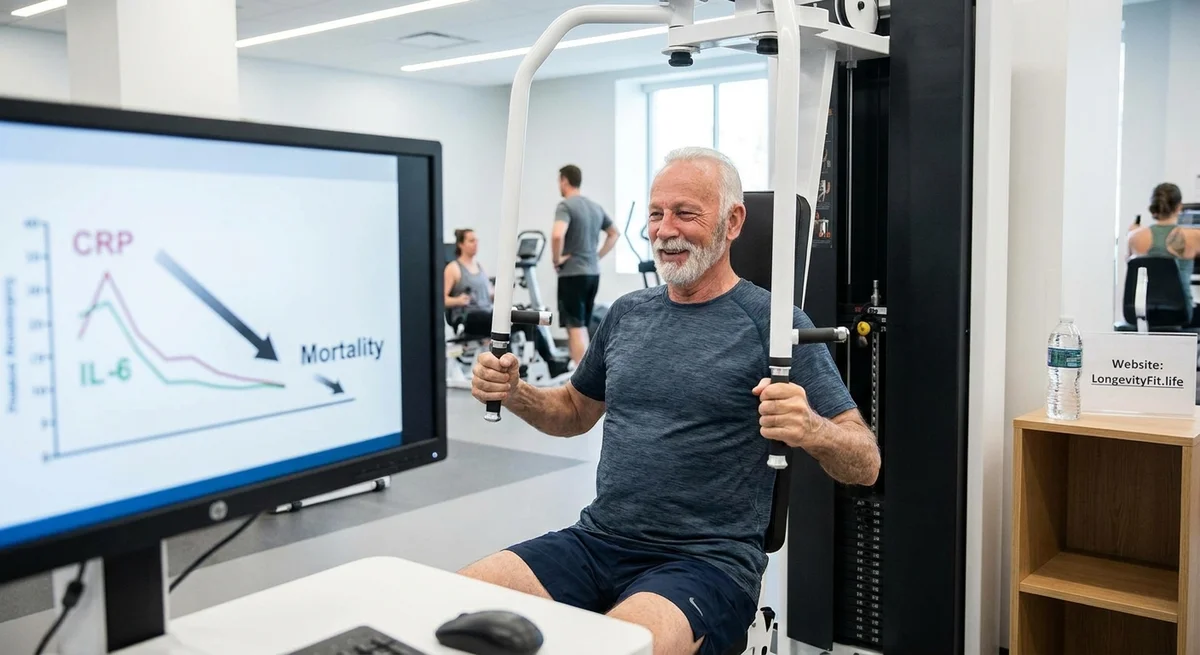
Inflammation and Heart Health
Our bodies have a kind of fire alarm called inflammation. When we get sick or hurt, inflammation helps us heal. But sometimes the alarm stays on too long, causing damage. Scientists can measure this “fire alarm” by looking at proteins in the blood. Two important ones are C-reactive protein (CRP) and interleukin-6 (IL-6). These rise when the body has chronic inflammation. High CRP or IL-6 means the body is quietly inflamed.
Why does that matter? Long-term inflammation is linked to heart disease and early death (pmc.ncbi.nlm.nih.gov) (pmc.ncbi.nlm.nih.gov). For example, a big study of 160,000 people found that those with higher CRP had much higher risk of heart attacks, stroke, or even dying from any cause (pmc.ncbi.nlm.nih.gov). Another review showed that higher IL-6 was tied to more heart attacks and other heart troubles (pmc.ncbi.nlm.nih.gov). Even serious illnesses like cancer or dementia are related to this hidden inflammation (pmc.ncbi.nlm.nih.gov). In short, chronic inflammation is bad news for health.
The great news is exercise can help put out this fire of inflammation. In particular, resistance training – that means lifting weights or doing body-weight exercises like push-ups or squats – has been shown to lower these inflammation markers. Many studies have looked at people doing weight exercises and measured CRP and IL-6. The results are promising. One large review of training trials in older adults found that resistance training strongly reduced CRP levels compared to no exercise (pmc.ncbi.nlm.nih.gov). In simpler terms, seniors who lifted weights saw their CRP go down. In the same review, IL-6 levels showed a bit of drop as well, though not as clear as CRP.
Another analysis of almost 60 trials confirmed this effect on CRP (onlinelibrary.wiley.com). It found that after weeks or months of regular strength workouts, CRP was a little lower. The drop was not huge, but it was consistent. (“Resistance training instigates small but significant reductions in CRP…,” the authors said (onlinelibrary.wiley.com).) IL-6 did not fall much in that pooled data, but even small changes in inflammation can be helpful. Importantly, both reviews agree: lifting weights can turn down the inflammation dial in our blood.
Lowering CRP and IL-6 is important because it can protect the heart. If resistance training is cooling inflammation, it may partly explain why people who lift weights live longer and have healthier hearts. Indeed, population studies back this up. A 2019 analysis found adults who did resistance training had about 21% lower overall death risk than those who did no exercise (journals.sagepub.com). They also tended to have lower heart-related deaths (though that link was a bit weaker). In another big study of 216,000 older Americans, even doing any weight training (versus none) was linked to about 6–8% lower risk of dying, including an 8% lower risk of dying from heart disease (pmc.ncbi.nlm.nih.gov). People who combined cardio plus weights had the best survival, but even weights alone helped.
These findings suggest a powerful chain of benefits: Weight training → lower inflammation → better health and longer life. Lower CRP/IL-6 means less wear on organs and blood vessels. Over time, that can mean fewer heart attacks and longer life span. (Scientists are studying this chain closely to be sure of the exact links (pmc.ncbi.nlm.nih.gov) (pmc.ncbi.nlm.nih.gov).) At the same time, we know that exercising often lowers fat and improves metabolism. Since fat tissue itself makes inflammation signals, losing fat through exercise gives extra benefit (pmc.ncbi.nlm.nih.gov). In other words, lifting weights can kill two birds with one stone: it burns fat (which lowers inflammation) and it builds muscle (which helps health in many other ways).
How Resistance Training Helps
Resistance training fights inflammation in a few ways:
-
Burning Fat: Fat cells release inflammatory substances. As one review explains, obese people have more inflammation because fat cells pump out these signals (pmc.ncbi.nlm.nih.gov). By helping you lose fat or keep a healthy weight, resistance exercise cuts that fat-driven inflammation.
-
Building Healthy Muscle Signals: Muscles also send out their own signals. When you do strength training, muscle fibers talk to the immune system in a way that, over time, lowers the baseline level of inflammation.
-
Improving Metabolism: Resistance workouts often improve insulin sensitivity and cholesterol (pmc.ncbi.nlm.nih.gov). Better metabolism indirectly lowers inflammation too. This is one reason doctors recommend strength training for people with obesity or diabetes.
All these effects add up. Even if you do not lose much weight, the muscle work itself sends positive signals. One study found that people with high starting CRP and IL-6 enjoyed big improvements from strength training, whether they did it once or three times a week (pmc.ncbi.nlm.nih.gov). So the body works to heal itself when we give it exercise. The bottom line: weight exercises help calm the flames of chronic inflammation.
What the Research Says
-
Lower CRP Levels: Many trials confirm that resistance training lowers C-reactive protein. For instance, a meta-analysis of 18 trials with older adults clearly showed CRP fell in those who did strength workouts (pmc.ncbi.nlm.nih.gov). Another review of 59 studies in mixed-age adults agreed that CRP was on average a bit lower after weight training (onlinelibrary.wiley.com).
-
Mixed Results for IL-6: The same reviews show less change for IL-6. One found only a slight trend to lower IL-6 (pmc.ncbi.nlm.nih.gov), and the other saw no clear IL-6 drop (onlinelibrary.wiley.com). Why? Exercise can cause a short spike in IL-6 (from working muscles), which might hide longer-term drops. Still, even if IL-6 falls only a little, the overall inflammation burden is lower.
-
Health Benefits: The link from training to health is supported by big studies. As mentioned, Saeidifard et al. (2019) found about a 20% drop in overall death risk for people doing resistance training (journals.sagepub.com). Shailendra et al. (2024) confirmed that any weight training was tied to lower all-cause and heart disease deaths in older adults (pmc.ncbi.nlm.nih.gov). These effects are similar in range to the reductions seen for other risk factors, suggesting weight training has real impact on longevity.
-
Confounders: Researchers try to be sure the effect is not just “exercise = weight loss = better health.” They use methods (like joint modeling) to separate the effect of exercise from fat loss (pmc.ncbi.nlm.nih.gov). The consensus is that both matter. Resistance training helps by building muscle and by helping with body weight. Even if weight doesn’t change much, the muscle work itself helps drop inflammation.
Exercise Guidelines to Lower Inflammation
To get the anti-inflammation benefit, how you train makes a difference. Here are practical tips based on studies and expert advice:
-
Frequency: Aim for 2–3 full-body workouts each week. Evidence suggests more frequent training helps more. In one 16-week study of overweight women, those training 3 times a week managed to keep their CRP from rising, while the 1- and 2-times-per-week groups saw CRP levels creep up (repositorio.unesp.br). For healthy adults, even training once or twice per week helps, but three times seems best if possible.
-
Intensity (Weight/Resistance): Use a weight or resistance level that makes the last few reps of each set challenging. A good rule is to pick a weight you can lift about 6–12 times (this is often called 60–80% of your one-rep max). For example, one program had older adults do 7–9 different exercises per workout, each with 2–5 sets of 4–12 reps (pmc.ncbi.nlm.nih.gov). As you get stronger, gradually increase the weight so you still feel effort by the last rep. Even moderate weights can lower inflammation (onlinelibrary.wiley.com).
-
Exercises: Focus on major muscle groups each session — legs (squats, lunges), back (rows), chest (push-ups or presses), arms (curls or presses), and core (planks). A full-body routine covers more muscles and boosts metabolism. In research, a typical session included 7–9 exercises like these (pmc.ncbi.nlm.nih.gov). You can use free weights, machines, resistance bands, or just your body weight.
-
Sets and Reps: Try 2–4 sets of each exercise. A set means doing one move in a row (for example, 10 squats in a row is one set). Rest 1–2 minutes between sets. Keeping to 6–12 reps per set is a good range: this means muscle-building effort without going to total exhaustion.
-
Progressive Overload: Key to strength training is gradual challenge. At first, you might do lighter weights. Slowly add weight or do more reps over weeks. This steady increase tells your body to keep adapting, which helps fight inflammation.
-
Rest and Recovery: Give muscles time to rest. It is fine to do full workouts 2–3 days a week, but not the same muscles hard-pressed on back-to-back days. For example, you could exercise on Monday, Wednesday, and Friday. This helps your body recover and become stronger for the next session.
-
Consistency: Benefits come from staying at it. Even short workouts (20–30 minutes) done regularly add up. The reductions in inflammation are seen over weeks and months of consistent training (pmc.ncbi.nlm.nih.gov) (onlinelibrary.wiley.com).
-
Additional Tips: Warm up a bit before lifting (e.g. a few minutes of walking or gentle motion). Focus on good form over heavy weight to avoid injury. If you are new to lifting, consider supervision or guidance at first. As one review noted, resistance work is generally safe and effective for older adults (pmc.ncbi.nlm.nih.gov).
Putting It All Together
Imagine a 65-year-old, Anna, who had a high CRP and was worried about her heart. She starts lifting light dumbbells and doing push-ups against a wall twice a week. She also watches her diet to lose some extra pounds. After a few months, her doctor sees that Anna’s CRP has gone down. She feels stronger and more energetic, and her heart health markers are better. While individual results vary, this story matches what science finds: resistance training can cool down chronic inflammation and protect the heart.
Action Steps:
- Start Simple: Begin with bodyweight exercises (like wall push-ups, chair squats) or light weights.
- Build Routine: Schedule strength workouts 2–3 times per week.
- Stay Positive: Focus on feeling stronger and healthier, not just on the numbers. Even small progress helps.
- Combine Habits: Pair exercise with a balanced diet and enough sleep. Reducing pink or fatty foods also helps tame inflammation.
Resistance training is more than building big muscles. It is a pathway to better health. By lowering key inflammatory markers like CRP and IL-6, lifting weights helps guard against heart disease and other illnesses (pmc.ncbi.nlm.nih.gov) (pmc.ncbi.nlm.nih.gov). And it boosts strength, balance, and mood. The research is clear: strength workouts save lives. So keep at it, and let your body’s own defense system get stronger and calmer.
Conclusion
Chronic inflammation drives heart disease and early death. Resistance training – regular weight or muscle-strengthening exercises – lowers inflammation markers (especially CRP) and is linked to a lower risk of dying and fewer heart events (journals.sagepub.com) (pmc.ncbi.nlm.nih.gov). To get the most benefit, aim for full-body strength workouts 2–3 days a week, using challenging but safe weights (pmc.ncbi.nlm.nih.gov) (repositorio.unesp.br). Even if you start small, consistency is key: over time those weekly workouts add up to a calmer immune system and a stronger heart. The lesson is hopeful: by lifting weights, you can help “train down” the hidden flames of inflammation, giving you a real edge in living a longer, healthier life (pmc.ncbi.nlm.nih.gov) (pmc.ncbi.nlm.nih.gov).