 Auto
Auto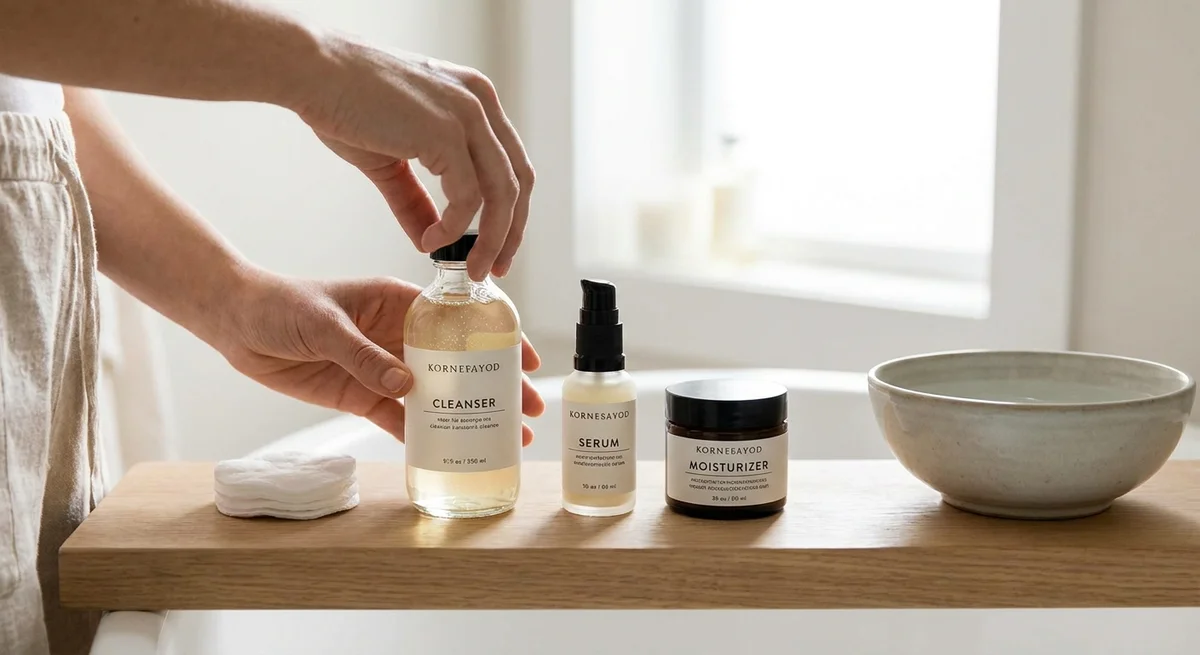
Skincare Clarity: Three Steps, Not Thirty
Skincare has become a shopping problem disguised as a health problem.
Across public skincare threads, users often describe the same struggle: too many products, conflicting advice, confusing ingredient combinations, and routines that require a calendar. Some users list several acids, retinoids, brightening serums, toners, masks, and moisturizers, then ask how to fit everything together. Beginner threads often ask for only two or three affordable products. These conversations are not a scientific survey, but they show a clear product gap: people do not need more skincare content. They need better decisions. (reddit.com)
The good news is that the evidence is much simpler than the social media feed suggests. The American Academy of Dermatology recommends a basic routine built around cleansing, moisturizing, and protecting the skin. It also warns that using many products can cost more, irritate the skin, and make it harder to know what is working. (aad.org)
The right answer is not thirty steps.
It is three jobs: cleanse, correct, and protect.
Product idea: Upload a clear selfie, choose your main skin goal, and receive a simple three-step routine made from evidence-backed products that are available to buy in your area.
What Overwhelmed Skincare Users Are Really Asking
Most users are not asking for a larger product list. They are asking four practical questions:
- What do I actually need?
- Which ingredient should I use first?
- Can I find the product at a normal store?
- How do I avoid making my skin worse?
The current influencer model often answers a different question: What can I sell, feature, or make exciting?
A product can be popular and still be a poor fit for a person’s skin. A before-and-after photo does not show the full routine, lighting, filters, prescription treatments, or time involved. It also does not prove that a product caused the improvement.
One analysis of sunscreen videos on TikTok found that 62 percent promoted specific products, while only 6 percent directly mentioned reducing skin cancer risk. The study also found that misleading content can receive unusually high engagement because it is surprising or emotional. (journals.plos.org)
At the same time, people still want social media advice. A 2025 study of 100 acne patients found that 67 percent searched for acne information from social media influencers, even though 97 percent said they would trust a dermatologist when the advice conflicted. This suggests that the problem is not a lack of trust in experts. It is a lack of easy, useful expert guidance. (pubmed.ncbi.nlm.nih.gov)
The Minimum Effective Skincare Routine
A simple routine should cover three needs:
1. Cleanse
Use a gentle, non-abrasive cleanser. Apply it with your fingertips and lukewarm water. Avoid scrubbing, rough cloths, and harsh alcohol-based formulas. Most people only need to wash twice a day and after heavy sweating. (aad.org)
People with very dry or sensitive skin may only need cleanser in the evening and a water rinse in the morning.
2. Correct
Choose one treatment for your main concern.
Do not begin with a retinoid, exfoliating acid, vitamin C, several brightening serums, and a strong acne wash at the same time. If your skin reacts, you will not know which product caused the problem.
3. Protect and Repair
Use a moisturizer that matches your skin type. In the morning, apply a broad-spectrum sunscreen with a sun protection factor of 30 or higher. A sunscreen labeled broad spectrum helps protect against both ultraviolet A and ultraviolet B rays. The American Academy of Dermatology also recommends water-resistant sunscreen when appropriate. (aad.org)
At night, the third step is usually moisturizer.
This means the routine can look like this:
Morning: Cleanse or rinse → correct if needed → sunscreen
Evening: Cleanse → one treatment → moisturizer
The goal is not exactly three bottles. The goal is three clear jobs instead of thirty confusing layers.
The Minimum Routine by Skin Concern
The best routine depends on both the concern and the person’s tolerance. Here is a practical starting point.
| Main concern | Start with | Simple routine | Important note |
|---|---|---|---|
| No major concern | Gentle cleanser, moisturizer, sunscreen | Cleanse → moisturize → protect | This is enough for many beginners |
| Blackheads and clogged pores | Adapalene or salicylic acid | Cleanse → one acne treatment → moisturize | Begin slowly; do not add several exfoliants |
| Inflamed pimples | Benzoyl peroxide or adapalene | Cleanse → one acne treatment → moisturize and sunscreen | Benzoyl peroxide may cause dryness and can bleach fabric |
| Acne plus dark marks | Azelaic acid or a retinoid | Cleanse → one treatment → sunscreen | Treating new acne helps prevent new marks |
| Dry, rough skin | Fragrance-free moisturizer with a richer texture | Gentle cleanse → moisturize → sunscreen | Skip exfoliating acids until the skin feels calm |
| Stinging or redness | Gentle cleanser, bland moisturizer, mineral sunscreen | Cleanse → moisturize → protect | Avoid scrubs, toners, fragrance, and strong acids |
| Dark spots or uneven tone | Sunscreen, azelaic acid, retinoid, or vitamin C | Cleanse → one brightening treatment → sunscreen | Dark marks often take months to fade |
| Fine lines and rough texture | Retinol or another retinoid | Cleanse → retinoid at night → moisturize and sunscreen | Start with a low-strength product and use it every other night |
Acne and Clogged Pores
Current American Academy of Dermatology acne guidelines support several topical treatments, including benzoyl peroxide, topical retinoids, salicylic acid, and azelaic acid. These ingredients work in different ways, so the right choice depends on the type of acne. (aad.org)
- Adapalene, a topical retinoid, can help unclog pores and treat blackheads, whiteheads, and pimples. In the United States, it is available without a prescription.
- Benzoyl peroxide helps reduce acne-causing bacteria and is often useful for inflamed pimples.
- Salicylic acid helps open clogged pores and is commonly used for blackheads and whiteheads.
- Azelaic acid can help with acne, inflammation, and the dark marks left after acne clears.
The practical rule is simple: choose one active ingredient first. Give it enough time to work before adding another. Over-the-counter acne labels also warn that using multiple acne medicines at once can increase dryness and irritation. (accessdata.fda.gov)
Painful, deep acne, acne that scars, or acne that does not improve should be evaluated by a dermatologist rather than managed through product experimentation.
Dark Spots and Uneven Skin Tone
The first treatment for dark spots is not a brightening serum. It is sun protection.
The American Academy of Dermatology recommends tinted sunscreen containing iron oxide for people who are prone to hyperpigmentation, especially people with darker skin tones. Visible light can worsen dark spots, and iron oxide may help provide protection against that light. (aad.org)
After sunscreen, choose one treatment ingredient:
- Azelaic acid
- A retinoid
- Vitamin C
- A carefully selected exfoliating ingredient
If acne, eczema, or another condition caused the dark marks, that condition must be controlled first. Otherwise, new marks may continue to appear. The American Academy of Dermatology notes that common dark spots may take six to twelve months to fade. (aad.org)
This is where influencer advice can be especially risky. Imported skin-lightening products have sometimes contained unlisted steroids or mercury. A product recommendation system should avoid unverified products and prioritize clear ingredient labels and reputable sellers. (aad.org)
Dry Skin
Dry skin usually needs fewer active ingredients, not more.
A gentle cleanser and a fragrance-free moisturizer are the foundation. A randomized clinical trial found that a consistent routine using a mild cleanser and moisturizer improved dryness, scaling, skin redness, and itch-related quality of life. (pubmed.ncbi.nlm.nih.gov)
Look for a moisturizer with ingredients such as:
- Glycerin
- Ceramides
- Petrolatum
- Dimethicone
The exact ingredient list matters less than whether the formula is comfortable enough to use every day.
Sensitive Skin and Redness
Sensitive skin may sting or burn after products are applied. It is not a reason to build a more complicated routine. It is a reason to simplify.
For sensitive or rosacea-prone skin, dermatologists recommend:
- A mild cleanser
- A fragrance-free moisturizer
- Broad-spectrum sunscreen
- Gentle application without scrubbing
- No exfoliating brushes, harsh scrubs, or unnecessary toner
If sunscreen stings, a product containing zinc oxide or titanium dioxide may be easier to tolerate. The American Academy of Dermatology also advises people with rosacea-prone skin to stop exfoliating if it causes irritation. (aad.org)
Persistent flushing, burning, rash, or eye symptoms should not be treated as a normal skincare problem. They may require medical care.
Fine Lines and Texture
Sun protection is the most important daily step for preventing future sun damage. A retinoid can be added at night for mild acne, uneven texture, uneven tone, and fine lines. The American Academy of Dermatology recommends starting slowly because retinoids can irritate the skin. (aad.org)
A practical schedule is:
- Use a low-strength product.
- Apply it every other night at first.
- Use a small amount.
- Follow with moisturizer.
- Stop or reduce use if the skin becomes very irritated.
Retinoids should not be used during pregnancy. Anyone who is pregnant, trying to become pregnant, or breastfeeding should ask a health professional about suitable ingredients. (aad.org)
Skin Type Changes the Product Texture, Not the Strategy
Skin type should help choose the product vehicle. It should not create a completely different routine for every person.
Oily Skin
Choose a lightweight, non-comedogenic moisturizer. “Non-comedogenic” means designed not to clog pores. A gentle foaming cleanser may feel better than a rich cream cleanser, but oily skin still benefits from moisturizer. (aad.org)
Dry Skin
Choose a creamy cleanser and a richer moisturizer. Avoid washing with hot water and avoid frequent exfoliation.
Combination Skin
Use a light moisturizer across the face and a richer product only on dry areas if needed. The routine does not need separate products for every zone.
Sensitive Skin
Choose fragrance-free products with short, simple ingredient lists. Add one new product at a time.
Normal Skin
Choose products based on comfort, price, and consistency. There is no need to add active ingredients unless there is a clear goal.
Influencer Recommendations Versus Evidence-Based Choices
| Influencer-driven approach | Evidence-based approach |
|---|---|
| Buy the product that is trending | Start with the concern and choose the active ingredient |
| Use more steps for better results | Use the fewest steps that cover the need |
| Stack several active ingredients | Start with one active ingredient |
| Trust a dramatic before-and-after image | Look for clinical evidence and realistic timelines |
| Treat “natural” as automatically gentle | Check the full formula, especially fragrance and essential oils |
| Recommend the same product to everyone | Adjust the texture and schedule for skin type and sensitivity |
| Ignore price and availability | Show products that are in stock and within budget |
| Let the algorithm diagnose the skin | Use the selfie as a support tool, not a medical diagnosis |
Evidence does not mean that every product must be expensive. The American Academy of Dermatology specifically notes that products do not need to cost more to be effective. (aad.org)
It also does not mean that every popular ingredient is useless. Niacinamide, vitamin C, and other ingredients may help some users. The issue is priority. They should be optional additions, not automatic requirements for every person.
The Product Opportunity: A Three-Step Routine Builder
The strongest product is not another serum brand. It is a decision layer between confusing skincare content and the store shelf.
The One-Line Product
Upload a selfie, choose your skin goal, and get a three-step routine with evidence-backed products that are in stock, affordable, and available where you shop.
What the User Provides
The product should ask for more than a photo:
- One clear selfie taken without a filter
- Main goal: acne, dryness, redness, dark spots, or fine lines
- Skin feel: oily, dry, combination, normal, or easily irritated
- Budget
- Country and ZIP code
- Fragrance preference
- Current products
- Pregnancy or breastfeeding status
- Known allergies and prescription treatments
The selfie can help identify visible features such as shine, dryness, or obvious redness. However, it cannot reliably identify every skin condition. A photo also cannot reveal medical history, allergies, medication use, pregnancy, or the cause of a rash.
What the User Receives
The result should contain:
- A morning routine
- An evening routine
- No more than one main treatment ingredient
- Exact product names
- Ingredient explanations in plain language
- Current price and stock status
- A nearby or online seller
- A backup product if the first choice is unavailable
- A simple schedule
- A warning about ingredients not to combine
A static article can say, “Use a gentle cleanser.” A useful product should say:
- Which cleanser
- Which size
- Which store
- Current price
- Why it fits the user
- What to buy if it is sold out
That difference turns content into a service.
Use Live Retail Data
Product recommendations should connect to current retailer information. Prices, inventory, packaging, and formulas change. The system should show when the product check was last completed and avoid recommending an item that is unavailable in the user’s location.
It should also separate evidence from advertising. A brand should not rank first simply because it pays more. If affiliate revenue is used, the product should clearly disclose it.
Safety Must Be Part of the Product
A selfie-based skincare tool should not present itself as a dermatologist or make disease diagnoses.
The American Academy of Dermatology has warned that online symptom checkers can be inaccurate because they may not ask enough medical history. In one evaluation, the tested tools correctly diagnosed only 30.8 percent of skin-rash entries. (aad.org)
A routine builder should send users to professional care when it detects or hears about:
- Deep, painful, or scarring acne
- A changing, bleeding, or unusual spot
- A widespread rash
- Severe swelling or infection
- Persistent eye-area symptoms
- Severe burning or allergic reaction
- A condition that is worsening despite basic care
The product should also be tested across many skin tones. Reviews of artificial intelligence in dermatology have found that image quality, limited training data, and underrepresentation of darker skin can reduce performance. One review found that only 30 percent of identified programs reported data on use in people with skin of color. (pubmed.ncbi.nlm.nih.gov)
The safest first version may use a rule-based questionnaire with optional image support, rather than claiming to diagnose skin conditions from a selfie.
Privacy should also be built in:
- Delete selfies by default.
- Do not use images for training without clear permission.
- Do not use facial recognition.
- Explain what the image is used for.
- Give users control over their data.
The First Version Entrepreneurs Should Build
A practical launch plan would be:
Start With Five Common Goals
- Basic skin health
- Acne
- Dryness
- Sensitivity and redness
- Dark spots
Limit the Ingredient Library
Begin with a small, well-supported set:
- Gentle cleanser
- Moisturizer
- Broad-spectrum sunscreen
- Benzoyl peroxide
- Adapalene
- Salicylic acid
- Azelaic acid
- Retinoid or retinol
- Optional niacinamide or vitamin C
Measure Useful Outcomes
Do not measure success by how many products users click.
Measure:
- Routine completion
- Four-week adherence
- Product irritation reports
- Product returns
- Repeat purchases
- Number of users who simplify their routine
- Number of users referred to professional care
The core business insight is simple: people do not need more choice. They need confidence in one good choice.
How to Add Products Without Starting Over
Users should add products slowly. The American Academy of Dermatology recommends testing a new product on a small area twice daily for seven to ten days before applying it broadly. If a product causes a strong reaction, stop using it. (aad.org)
A simple rule is:
Keep the basic routine stable. Add one new treatment. Wait. Observe. Then decide.
This approach makes it easier to identify irritation, measure results, and avoid wasting money.
Conclusion
Skincare clarity is not about finding the perfect thirty-product routine. It is about matching one real concern to one useful ingredient, one comfortable product texture, and one routine the user can follow.
The best personalized skincare product should do three things well:
- Reduce confusion
- Recommend evidence-backed ingredients
- Connect users to products they can actually buy
The winning promise is not “more glow.”
It is:
**Less guesswork. Fewer products. Better follow-through.