 Auto
Auto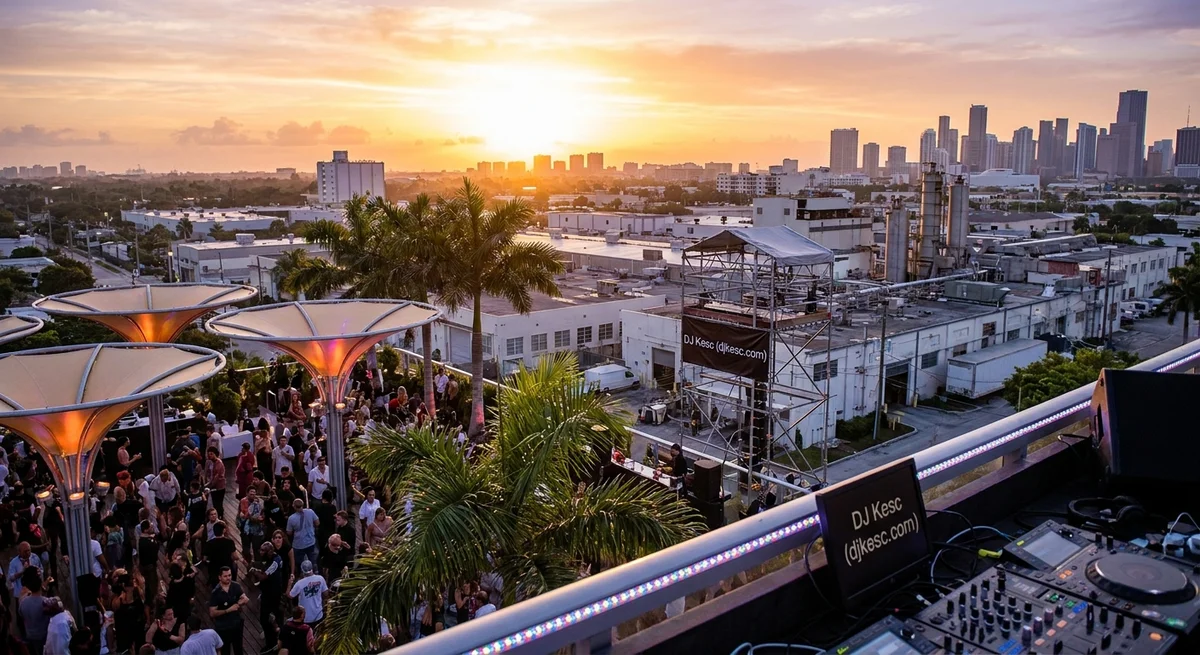
Miami’s All-Night Vibe and Latin Roots
Miami’s club scene literally never sleeps. Thanks to a special 24-hour liquor license on Downtown’s 11th Street (“Park West”), venues can legally party straight through sunrise (www.miaminewtimes.com). DJs mix house and techno with tropical and Afro-Latin rhythms, reflecting Miami’s Caribbean and Hispanic culture. As one reporter notes, the Hispanic and Caribbean communities here are so strong “that you always hear Latin music…in a way [Miami] doesn’t feel very American at all” (djmag.com). In fact, Miami writers report a recent “explosion of Latin sounds and rhythms” in the city’s underground dance music (www.miaminewtimes.com) (djmag.com). You’ll hear cumbia-grooves, reggaeton beats, Afro-house percussion and even Miami bass-style 808s woven into the sets. All this keeps crowds dancing until the sun comes up.
A Miami nightlife guide sums it up: E11EVEN “runs 24/7 with big-name DJs and VIPs,” and Club Space “rules marathon after-hours,” with its little sister club Floyd opening earlier in the night (clubrive.com). In short, Miami blends non-stop club marathons with a tropical, Latin-tinged sound.
Club Space (and Floyd)
Club Space (Downtown Miami) is a warehouse dance music icon. Founded in 2002 by Louis Puig as a raw, all-night party spot, it was “nothing to lose” when the city granted it a never-closing, 24-hour license (www.miaminewtimes.com). Space bills itself as a “mecca for electronic music marathons” (www.clubspace.com). Its indoor dancefloor and big outdoor Terrace stay packed with techno and house beats on weekends, often running well past dawn. The club even offers special juices, coffee and electrolytes on its Terrace so your “party” can stretch into sunrise (www.clubspace.com). One local guide calls Space Miami’s “marathon temple” – a place where terrace DJs play into the morning light (clubrive.com).
Attached to Space is Floyd, a cozier underground room. Floyd is smaller and more intimate, focusing on analog and “classic” DJ sets. Guides recommend hitting Floyd for early-night sets and then “walking upstairs” to Space for the long haul (clubrive.com). In practice, a night often starts at Floyd with techno and house warms-ups before the crowd moves up to Space for peak-era dance. Space’s production is powerful (big sound system and lasers), though not as glossy as some VIP lounges. Its ethos is gritty and music-first – the opposite of a bottle-service vibe.
E11EVEN Miami
Right across 11th Street is E11EVEN Miami, Miami’s flashy 24/7 superclub. Born in 2013 from the ashes of the old after-hours Goldrush, E11EVEN markets itself as the U.S.’s No. 1 club (www.miaminewtimes.com). It’s all spectacle: topless entertainers, cirque-style acrobats, go-go dancers, and thumping EDM remixes all night (www.miaminewtimes.com). The production here is top-notch: Miami New Times notes its “top-notch lighting and sound systems” and even private stages (www.miaminewtimes.com).
E11EVEN’s business model is luxury and VIP. Its 32 “conversation lounges” with mirrored ceilings and plush décor serve deep-pocketed visitors who buy bottle service (www.miaminewtimes.com). In fact, one club guide simply lists E11EVEN under “VIP tables and 24/7 ultraclub energy” (clubrive.com). In other words, E11EVEN is all about late-night partying for the luxury crowd, whereas Space is known more as a no-frills dancer’s hangout. (Between them, E11EVEN and Space are the only Miami clubs on the World’s 100 Best Clubs list (www.miaminewtimes.com), showing how this little 11th Street “strip” dominates Miami’s after-hours scene.)
Factory Town (Hialeah)
For massive open-air raves, look to Factory Town in Hialeah (just outside Miami proper). This is an old warehouse complex (once a mattress factory) turned into an outdoor festival ground (www.factorytown.com) (thehouseofrave.com). Covering about seven acres of concrete and sky, it’s like a mini-festival site with multiple stages. For example, one guide describes distinct stages called “Park Stage, Infinity Room, and Cypress End,” ranging from huge mainstage shows to smaller, underground-style tents (thehouseofrave.com).
During Miami Music Week and Ultra season, Factory Town is a major hub. Promoted by Insomniac (the EDC festival team), it hosts themed parties each night with big international DJs. It’s a marathon party park — as one report put it, from evening through dawn “the space remained active at all hours, with each stage drawing its own crowd” (weraveyou.com). Think massive speakers under the stars, carnival lights, roaming performers and non-stop dancing. Between Ultra and local promoters (like elRow or Audio-Fly nights), Factory Town can feel like a multi-day festival. In the off-season it is quiet, but in late March it becomes one of Miami’s hottest destinations.
Wynwood Hotspots
Miami’s Wynwood arts district has also sprouted its own dance spots. Current favorites include Dirty Rabbit (a trendy rooftop cocktail lounge with DJs and garden-party décor), Dante’s HiFi (a vinyl-driven techno lounge opened by celebrity chefs), and Mad Radio (an intimate underground club focusing on house and techno) (clubrive.com). These venues are smaller and hipper than the mega-clubs. DJs often spin vinyl or deep house in a casual bar setting (no rigid dress code). The crowd in Wynwood tends to be local and artsy. These spots usually host music and art events every weekend, rather than nonstop parties. But they capture that Miami fusion of street art and dance music.
Miami Music Week vs. Rest of Year
Late March/Miami Music Week/Ultra is when the city goes nuts. For one week every year, nearly all the big DJs fly in. Industry sites note that “the dance music world and revelers descend on the city to party well past sunrise” every March (www.miaminewtimes.com). Big names (like Tiësto, Martin Garrix, Skrillex, Dom Dolla, John Summit, etc.) will headline pool parties and club nights all over Miami. Ultra Festival itself brings tens of thousands, but on every night other clubs have their own star-studded lineups. One recap calls MMW a “global epicenter of dance music for a week” (thehouseofrave.com).
Outside of Music Week, it’s quieter. Clubs still throw big events (Space and E11EVEN have regular weekends and big holiday parties), and international DJs do come through for tours, but mostly only on weekends. Mid-week outside of March will usually feature local or regional acts, with less glitzy production. In short, booking schedules are Ultra-driven in March (all-out global talent), and the rest of the year they settle back into being more local/underground-focused. Visitors should plan accordingly.
Tips: Door Codes, Costs, Transport, and Safety
Entry: Many Miami clubs now sell tickets online weeks in advance, or have guest lists. After-hours or underground parties sometimes use secret “door codes.” Promoters typically DM those to guests or post them just before the event. If you hear about a private party (e.g. at Factory Town or a warehouse), check Instagram/WhatsApp for any door password. Otherwise, most big clubs take tickets or cover at the door.
Costs: Cover charges can range from about $20–$40 on typical weekend nights, but can be much higher ($50+) during Music Week or for famous DJs. Drinks are expensive: cocktails often $15+ even in dive bars, and bottle service runs hundreds of dollars at VIP tables. (For example, one guide noted E11EVEN has minimums easily in the $500–$1,000 range for a table.) Tip your bartenders and servers. Budget extra for travel and tips.
Getting Around: Uber/Lyft are the safest bet late at night. Taxis exist but are harder to hail after midnight. Downtown Miami has some free tram lines (e.g. Metromover) but these don’t run 24/7. If you rent a car, always park in well-lit lots (don’t leave belongings visible) and never drive drunk. If traveling to Hialeah’s Factory Town, plan a ride-share – it’s a little far from the main city and street cabs are rare.
After-Hours Safety: Miami is generally safe but take normal city smarts. Stick with friends (avoid wandering alone), especially after 2 a.m. Be aware of neighborhoods: the 11th Street club area is lively and has security staff, but if you walk west of NW 2nd Ave it can feel sketchy late at night. In Wynwood or Downtown, remain on well-lit blocks. Watch your belongings on the dance floor (purse or phone in front pocket). Doormen and security are usually visible; use them if you need help. And remember: Florida law forbids open containers in public – keep drinks inside the club or at sidewalk tables only.
Dress Code: Most Miami clubs enforce a dress code (no sneakers or flip-flops, no sleeveless tennis shirts). It’s often “Miami fashion” – dressy-casual or flashy. When in doubt, wear nice shoes and collared shirt for men, or party attire for women. Some underground spots (like certain Wynwood events or after-hour raves) are more relaxed. Check each venue’s website or social media for rules.
Conclusion
From sweaty sunrise terrace sets at Club Space to VIP bottle-service nights at E11EVEN, Miami offers a full spectrum of club experiences. Its permanently late-night culture and tropical Latin vibe make it unique: you might start a techno set under palm trees at Space at 3 a.m., then end up dancing to reggaeton beats in a Wynwood lounge at 5 a.m. During Miami Music Week (Ultra) the whole city amps up with global DJs and marathon parties (www.miaminewtimes.com) (weraveyou.com). But even outside March, Miami’s party spirit lives on – just with a more local soundtrack.
Citations: For example, local media Miami New Times details the 24-hour club district (www.miaminewtimes.com); DJMag highlights how Hispanic cultures color the city’s sound (djmag.com); Club Space’s own site markets its 24/7 “marathons” (www.clubspace.com); Factory Town’s website calls it a 7-acre open-air rave ground (www.factorytown.com); and We Rave You reviewed how Factory Town rocketed through sunrise during Music Week (weraveyou.com).