 Auto
Auto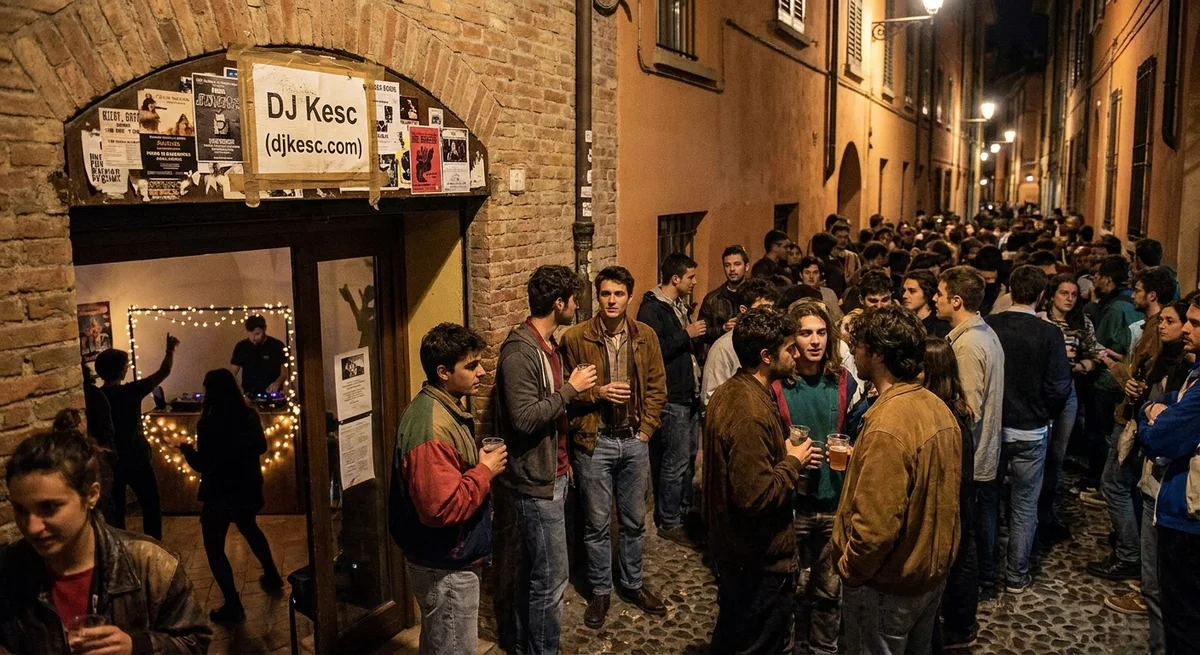
Bologna, Italy: Student-Driven Nights and DIY Club Culture
Bologna’s nightlife is not built around one famous club. It is built around a large student population, music collectives, social centers, independent venues, and a city government that is still trying to balance nightlife with neighborhood life.
The result is a scene that can move from a cheap student event near the university to a hard-techno night, an indie concert, or a social-center party. Some nights feel polished and professional. Others feel handmade, political, and close to the people who organize them.
My view: Bologna is most interesting when you do not treat it as a normal “club city.” Its best nights come from moving between different worlds.
Why students shape Bologna nightlife
The University of Bologna was founded in 1088 and remains one of the major forces in city life. The university community included more than 97,000 students across its five campuses in the 2024–25 academic year, including more than 11,000 international students. The university also supports a formal network of student associations that organize cultural, recreational, and social activities. (unibo.it)
In the city center, the university is not hidden behind a distant campus. Students live, study, eat, and socialize around streets such as Via Zamboni, Via delle Belle Arti, Piazza Verdi, Piazza Aldrovandi, and Via Petroni. This makes nightlife feel woven into ordinary city life.
Student groups also provide:
- Event promoters and DJs
- Small concert organizers
- Political and cultural collectives
- Volunteer crews
- Art, film, and music projects
- Low-cost social events
- A steady audience for new bands and electronic artists
The university’s official student-association system helps create a pipeline from student ideas to public events. The important point is that students are not only customers. They are often the people booking artists, designing flyers, managing doors, running bars, or building the next small music night. (unibo.it)
The role of centri sociali
A centro sociale is a self-managed social and cultural space. These places are often linked to left-wing politics, mutual aid, housing campaigns, anti-racist work, feminism, labor organizing, and local community projects. But they are also music spaces.
Bologna’s current social-center network includes Làbas, TPO, and Offside Pescarola. Làbas describes itself as a self-managed social municipality with cultural, political, educational, and community activities. Its weekly program can include social meals, political meetings, markets, workshops, and music. The same network identifies TPO, on Via Casarini, as a space for concerts, major events, cultural work, food collections, after-school programs, and popular sports. (labasbologna.org)
The city itself recognizes that Bologna’s social centers have contributed to its cultural, creative, social, and political life over several decades. (comune.bologna.it)
Why this matters for club culture
Social centers help create a different idea of nightlife:
- The event may be connected to a social cause.
- The bar may help fund community work.
- The audience may include activists, students, musicians, migrants, and neighborhood residents.
- The music may be part of a wider cultural evening rather than the entire product.
- Entry can be cheaper or based on a contribution.
- The atmosphere may be more relaxed and less focused on dress codes or status.
This does not mean every social-center event is free, or that every event is an unlicensed rave. Many events are organized through associations and must still deal with public-safety rules, capacity, noise, and local permits.
A good example of the bridge between social-center culture and club culture is Link. Link grew from a social and cultural association formed in 1994 and now presents itself as a large music and cultural space with electronic-music education, workshops, club nights, and concerts. Its official goals include promoting music, organizing performances, and creating cultural meetings. (link.bo.it)
From techno to indie: Bologna’s main nightlife lanes
Bologna’s genres overlap, but visitors can think of the scene in four broad lanes.
1. Techno and electronic music
For techno, hard techno, trance, and electronic nights, look at venues such as:
- Kindergarten
- Link
- Red Club
- Temporary events at DumBO
- Special outdoor or warehouse-style projects
Kindergarten event listings show the range clearly. A 2026 hard-techno night advertised early tickets from €6, later releases up to €17, a €20 door price, and a discounted €5 student entry before 1 a.m. Another event listed early tickets from €6 and a €20 door price. These events were marked 18+, and some specifically stated that no membership card was required. (ra.co)
Red offers a more mainstream party model on some nights, with multiple rooms, commercial music, tech house, performers, and late hours. One 2026 event advertised €12 in advance or on a list and €15 after 12:30 a.m. Some Red events also include a drink with a special web ticket. (redbologna.it)
Link is harder to place in one category. It can host major electronic artists, house, bass, hip-hop, and experimental club nights. That variety comes from its history as both a social-cultural project and a serious music venue. (link.bo.it)
2. Indie, rock, punk, and alternative music
For indie and guitar music, Covo Club and Locomotiv Club are central names.
Covo describes itself as an indie club and continues to book alternative rock, post-punk, darkwave, experimental pop, screamo, and emerging artists. Recent event examples show door prices from about €5.25 to €16, with many concerts between €10 and €13. (covoclub.it)
Locomotiv is a live-music club and cultural association in the Dopolavoro Ferroviario area. Its program includes concerts, parties, comedy, independent artists, and touring acts. Recent listings included events around €13.80 to €20.70, while a special performance listed a price close to €30. (locomotivclub.it)
These venues are usually better for people who want to listen to a band, not just dance until morning. The crowd often arrives earlier, and the main event may begin around 9:30 or 10 p.m.
3. Student and social-center nights
Student events are often found through:
- University associations
- Instagram pages
- Telegram channels
- Social-center calendars
- Local promoters
- Posters around the university area
The lineups may include DJs, local bands, spoken-word artists, film screenings, political talks, or dinners. A social-center night may feel less like a commercial club and more like a community gathering that happens to have a powerful sound system.
The downside is that information can be less centralized. Some events are announced late, moved to another venue, or changed because of permits, weather, or neighborhood concerns.
4. Outdoor and temporary events
Bologna also uses parks, courtyards, former industrial sites, and cultural spaces for seasonal music. The city’s Bologna Estate program includes electronic music, concerts, and temporary clubbing projects at places such as DumBO and other cultural sites. A 2026 Kindergarten event at DumBO offered free registration before a certain time, followed by a €10 door ticket, subject to capacity. (cittadellamusica.comune.bologna.it)
These events can be excellent for visitors because they combine music, food, and open space. They are also more exposed to weather, sound restrictions, and capacity limits.
Mainstream clubs versus DIY spaces
The difference is not simply “expensive versus cheap.” It is a difference in how the night is organized.
Mainstream or large dedicated clubs
These venues usually offer:
- A clear ticketing system
- Larger capacity
- Professional security
- More predictable schedules
- Stronger production and lighting
- Multiple rooms or a headline DJ
- Higher prices on popular nights
- More formal ID and entry checks
The door may be faster if you buy a ticket online, but a busy event can still reach capacity. Mainstream clubs may also use guest lists, early-entry discounts, drink bundles, or different prices after midnight.
DIY and self-managed spaces
These spaces usually offer:
- More local artists
- Stronger links to social and political projects
- Lower or flexible entry costs
- A more mixed audience
- Less formal presentation
- Events organized by collectives
- More unusual combinations of music, food, talks, and activism
The trade-off is uncertainty. The venue may have fewer facilities, the timetable may be flexible, and the event may depend heavily on volunteers.
The best part of Bologna is the middle ground. Covo, Locomotiv, Link, and some social-center projects show that a venue can be professionally organized while still supporting local artists and independent culture.
Licensing, sound limits, and neighborhood pressure
Bologna’s nightlife exists inside a real legal and social compromise. Clubs need to deal with:
- Public-entertainment rules
- Capacity and safety requirements
- Association or membership rules
- Noise regulations
- Event permits
- Outdoor sound limits
- Waste and glass rules
- Closing times
- The rights of residents to sleep
The city’s regulation for temporary noisy activities sets different categories for events and establishes conditions for amplified sound, timing, and permits. Outdoor music is therefore not simply a matter of bringing speakers into a square. The type of event, location, equipment, schedule, and expected crowd all matter. (comune.bologna.it)
The rules are enforced. In September 2024, Bologna’s municipal police reported a pub fined €400 for playing loud music after midnight without authorization. A private club in the Stalingrado area had exceeded legal noise limits, and its music equipment was sealed after entertainment continued despite an order to stop. (comune.bologna.it)
This is why the phrase “private club” does not mean “outside the rules.” A membership system may control access, but it does not remove responsibilities relating to noise, safety, or neighbors.
Neighborhood sensitivities
The most sensitive areas are often not the large clubs on the edge of the city. They are the streets where nightlife mixes directly with homes.
The university area around Piazza Verdi and Via Zamboni is a major example. Residents have complained about shouting, crowds, litter, glass bottles, and late-night noise. In summer 2026, the city temporarily banned access to Piazza Verdi with drinks in glass containers from 6:30 p.m. to 6:30 a.m., Thursday through Saturday, from June 18 through September 30. (comune.bologna.it)
Piazza Aldrovandi also received temporary crowd-management measures in summer 2026, including controlled access during busy evening hours and restrictions on part of the square at night. (comune.bologna.it)
The lesson for visitors is simple: do not treat the street outside the venue as an extension of the dance floor. Keep voices down when leaving, do not smash or carry glass into public squares, and move away from apartment entrances.
Typical prices in Bologna nightlife
Prices change by artist, season, and event. The following figures are useful planning ranges based on published 2025–26 event listings.
Entry and cover charges
-
Free or donation-based events: €0–€5
Common for small cultural events, early-entry promotions, and some student or neighborhood programs. -
Grassroots and smaller club nights: about €5–€12
Early tickets can be cheaper, while door prices rise later. -
Indie concerts and alternative clubs: about €10–€16
Covo examples range from €5.25 for a small post-punk bill to €16 for an international alternative-rock show. (covoclub.it) -
Techno nights: about €6–€20
Early-bird tickets may be very cheap, while last-release and door prices are often €15–€20. Student promotions can reduce the price. (ra.co) -
Popular touring artists: €20–€30 or more
Locomotiv’s published listings show that special performances can cost more than ordinary club nights. (locomotivclub.it)
Membership fees
Some venues use an association model.
- Covo: the HOVOC membership card for the 2025–26 season costs €5 and is required for entry. (covoclub.it)
- Locomotiv: the 2025–26 AICS membership costs €8. (locomotivclub.it)
- Red: access is reserved for ARCO/ENTES members, with pre-registration required before the event. (redbologna.it)
- Link: membership and event registration are handled through the association’s own system, so check the specific event page. (link.bo.it)
Remember that a membership fee may be separate from the ticket price.
Drinks
A realistic budget is:
- Beer: about €4–€7 in casual or association-style settings
- Spritz: about €4.50–€7
- Simple mixed drink: about €6–€9
- Cocktail: about €7–€10, with premium spirits costing more
Published Bologna menus show beer from €2.70 to €6, spritz from €4.50 to €6, long drinks around €7, and cocktails around €8. Large clubs and special events may charge more. (minibar.bar)
For a normal night, plan on:
- €20–€35 for an inexpensive student or small-club night
- €30–€50 for a club night with entry and two or three drinks
- €45–€65 for a concert, membership fee, food, and drinks
These are planning figures, not fixed prices.
Door and ID policies
Bring a physical passport or national identity card. A phone photograph may not be accepted, and international visitors should not rely on a driver’s license alone.
Check four things before leaving:
- Is the event 18+?
- Is a membership card required?
- Is pre-registration needed?
- Does the ticket include a drink?
Kindergarten techno events commonly list an 18+ rule. Covo allows minors to request membership only with a signed parental or guardian authorization. Locomotiv requires its AICS membership, and Red requires association registration. (ra.co)
Arrive early if:
- You need to register for membership.
- You have a foreign ID.
- You are attending a popular artist.
- The event uses a limited-capacity guest list.
- You want a student discount before a set time.
Dress codes are generally more relaxed at alternative and self-managed spaces. Large commercial parties may still use a door policy based on crowd control, safety, or the event’s style.
Practical advice for getting around at night
Cycling
Bologna is a useful city for cycling between bars and venues. The city has expanded its RideMovi bike-sharing service, and in 2025 the fleet was being increased toward about 4,000 bikes. Bologna also restored a broader 30-kilometer-per-hour city limit on 258 kilometers of roads from April 20, 2026. (comune.bologna.it)
Good cycling habits at night:
- Use lights and reflectors.
- Lock a personal bike properly.
- Expect pedestrians to step into cycle lanes near bars.
- Avoid cycling after drinking.
- Check the bike-share app before assuming a bike will be available at 3 a.m.
- For a distant club, cycle one way and use a night bus home only if the route and bike rules allow it.
Night buses
Bologna’s night buses are one of the best improvements for clubgoers. The city reports eight N lines running every 30 minutes between midnight and 6 a.m. on Friday and Saturday nights and before public holidays. On ordinary nights from Sunday through Thursday, lines 61 and 62 provide overnight service. (comune.bologna.it)
The network reaches areas outside the center. A new Canali stop on N3 was added near Link, and Covo has also highlighted N3 as a useful route for reaching the club. (comune.bologna.it)
Check the TPER app or official timetable on the night itself. Construction and seasonal timetable changes can affect routes.
Safety and Nottambula
Bologna is lively, but normal city precautions still matter. Keep your phone and wallet in a secure pocket, stay with friends when possible, and avoid walking alone while heavily intoxicated.
The city’s Nottambula project uses street hosts in nightlife areas. They provide information, mediation, harm-reduction advice, and walking accompaniment. The 2025–26 service can be contacted by phone or WhatsApp at 353 4834517, and street hosts are active on busy nights in areas such as the university zone. (comune.bologna.it)
For an emergency in Italy, call 112. (protezionecivile.bo.it)
In 2026, Bologna also launched the “Tutta mia la notte” protocol, which asks nightlife venues to improve staff training, respond to harassment, use de-escalation, and connect people with specialist support services. (comune.bologna.it)
Late-night food
Do not assume that a traditional restaurant will serve food at 2 a.m. Restaurant kitchens often close much earlier than clubs.
Useful late-night choices include:
- Pizza by the slice
- Kebab
- Piadina
- Panini
- Porchetta sandwiches
- Fried snacks
- Bakeries and takeaway counters
A few verified examples:
- Babilonia on Via del Pratello lists hours until 5:30 a.m. on Friday and Saturday, although it accepts cash only. (babilonia.eatbu.com)
- PizzAltero on Via Indipendenza is open until 2 a.m. on Saturday and until 1 a.m. on Friday. (bolognawelcome.com)
- Piadina Pratello lists weekday service until 1 a.m., with shorter weekend hours. (latuapiadinapratello.it)
- La Prosciutteria Pratello serves takeaway sandwiches and porchetta until 1 a.m. on Friday and Saturday. (laprosciutteria.com)
Hours change during holidays and summer closures, so check the venue’s own page before walking across town.
A good Bologna night plan
For a first visit, try this:
- Start with a drink or cheap food near the university area.
- Choose one event rather than trying to visit five clubs.
- Arrive early if membership or student entry is involved.
- Keep a physical ID and some cash.
- Use a bicycle for short trips, but do not ride after drinking.
- Take the N bus home when the route fits.
- Eat before leaving the club, or save a late-night food option in your phone.
- Leave residential squares quietly.
Conclusion
Bologna’s club culture is powered by a student audience and a network of people who make culture themselves. The University of Bologna supplies constant energy, international connections, and new audiences. Centri sociali add political purpose, mutual aid, affordable events, and a strong DIY spirit. Independent clubs turn that energy into regular concerts and nights of dancing.
The city’s challenge is keeping this culture alive without turning residential streets into all-night party zones. Noise rules, capacity limits, glass restrictions, night buses, street hosts, and neighborhood agreements are all part of that struggle.
For visitors, the best approach is to respect the city’s rhythm. Start with the student and community side of Bologna, then follow the music. That is where the city’s real nightlife begins.