 Auto
Auto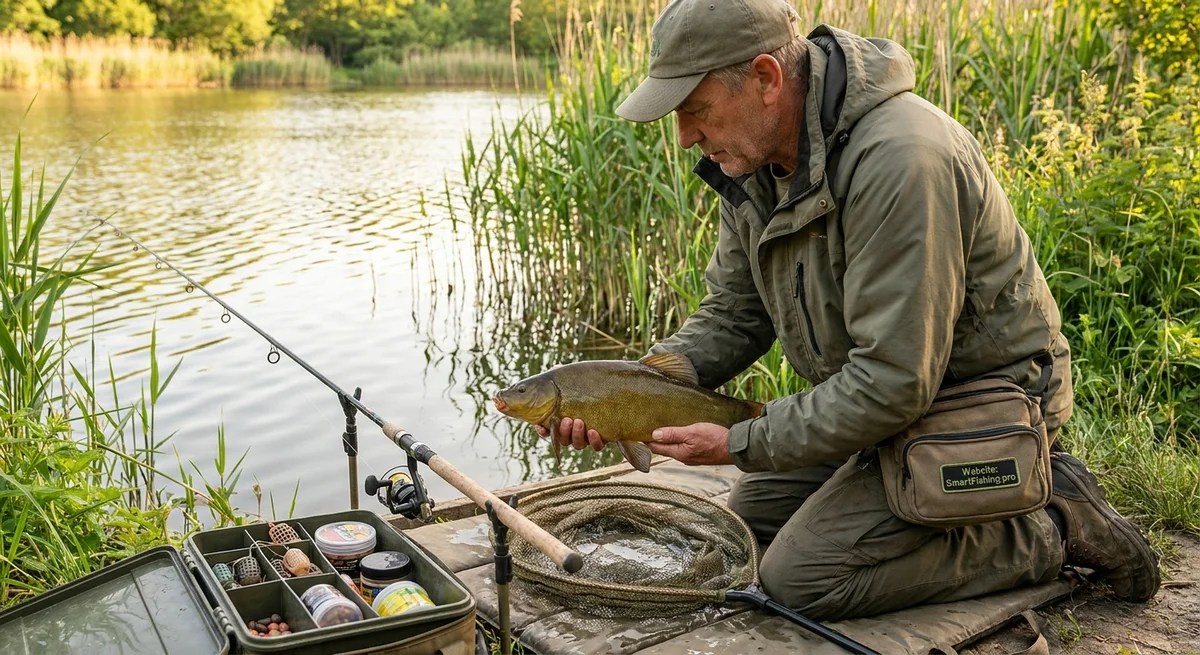
Method Feeder Mastery for June Tench
Introduction: In early summer, tench are active and feed enthusiastically, making June an ideal time to use the Method Feeder technique. This method combines a small cage or block feeder packed with groundbait and loose feed, with a short hookbait hair rig nestled inside. The goal is to create a concentrated food spot that attracts tench. Successful summer tench fishing with a method feeder depends on getting the groundbait mix consistency right, choosing the right hookbaits, timing your recasts, and reading the bites correctly. In this article, we break down each aspect with practical advice and examples.
Formulating the Method Feeder Mix
A key to success is preparing the groundbait so it holds together in the feeder during casting but breaks down steadily in the water.
-
Moisture and Compression: Add water gradually to your groundbait mix and knead it until it forms a firm ball. A simple “ball test” helps gauge this. Make a ball and press a finger (or knuckle) into it: the ball should dimple under pressure but still hold its shape (www.fishingmagic.com). If it crumbles apart easily, add a touch more water and re-knead. If it stays perfectly solid, you may need a little more water. This balance ensures the bait will “burst” open underwater, creating a smelly cloud to attract fish (www.fishingmagic.com).
-
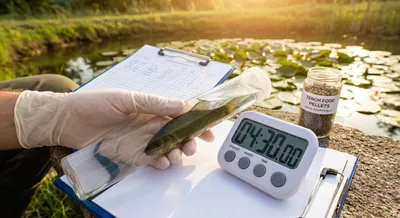
Breakdown Times: Water temperature affects how quickly the mix breaks down. In warm June waters (e.g. 18–22°C), groundbait will slump apart faster – often in 5–10 minutes once on the lakebed. In colder water (<12°C), it can take 15–20 minutes or more to fully disperse. Observing your feeder is helpful: time a test cast and check how long chunks last. In practice, if you notice fish feeding immediately, the mix may be a bit soft, so tighten it slightly. Conversely, if it hardly breaks up after many minutes, the mix was too dry or over-compressed. Adjust by adding or reducing water accordingly.
-
Temperature Tips: Fish metabolism is higher in warm water, so tench may home in on the bait isle more aggressively. Anglers often feed more frequently in summer, recasting every minute or two to build up a bait patch (dynamitebaits.com). In early June’s warm water, use a wetter mix (while still passing the ball test) so the scent and particles release quickly. As pike or carp anglers Mark Cree notes, during summer he would recast a method feeder every 90–120 seconds to build a bait island (dynamitebaits.com). If fish keep nibbling, let the fish eat for a few minutes and then recast again to refresh the mix.
Hookbait Choices for Selectivity
Hookbait pairing is crucial for targeting tench specifically, while avoiding smaller species. Three options stand out:
-
Sweetcorn (on a band/hair): Bright yellow sweetcorn is cheap and can trigger sharp bites on hungry tench. Fish a single corn kernel on a short hair rig or using a silicone band to secure it. Tench are known to eat corn readily, especially in summer (dynamitebaits.com). However, use corn sparingly: if you broadcast too much, small roach and skimmers may arrive en masse. On richer waters or near the bank, consider fake corn kernels or bright wafters instead. As one angler notes, using “a pair of fake corn” or tiny pop-up baits on a method feeder is ideal on waters with many small fish that steal bait (strikeandcatch.com). These insist tench feed on the big, bright targets you present.
-
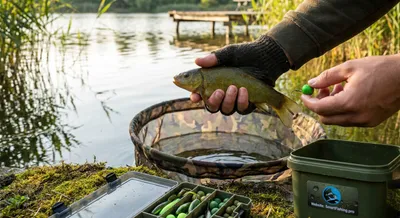
Mini Wafters (small buoyant pellets/boilies): Tiny pop-ups or “wafters” (e.g. 6 mm bright yellow boilies or buoyant pellets) are very visible and attractive in clear June water (dynamitebaits.com). Paul Garner finds that bright yellow mini boilies are consistently effective because tench “feed much more by sight” than we often think (dynamitebaits.com). A 6 mm yellow wafter on a short hair will slowly hover above the bottom. Small silverfish often ignore these buoyant baits, whereas a big tench will spot and inhale it. Mini wafters also match the small loose pellets or groundbait you’ll use, making the presentation uniform.
-
Worm Segments (worm kebab): For gravel pit tench or spots rich in natural food, chopped earthworms are often hard for tench to resist. Thread several small pieces (half-inch long segments) of a redworm or dendrobaena onto a hair-rig (often called a “worm kebab”). An effective method uses a tiny plastic bead on the hair with 4–5 worm halves pushed up against it, held in place by a bait stop (decoyangling.co.uk). This presents a wobbling, natural food chunk. One experienced angler caught dozens of big tench on such a worm-kebab rig over a short summer period (decoyangling.co.uk). Worm is a selective bait – many coarse fish relish it, but its long shape and movement seem especially irresistible to tench.
In practice, many anglers carry a mix of these hookbaits. For example, you might put a yellow mini wafter on one rod and a worm kebab on the other. If you notice mostly small fish taking one bait, switch to the other to “outsmart” them. Also remember that tench have been seen taking maggots and casters, but in summer these often attract minnows or skimmers. Synthetic granules (waxworms, trout pellets) can be tried as well in a hair rig for variety. Always match your hookbait to the groundbait – if you feed worms and maggots through the feeder, use a worm hookbait. If feeding fine pellets or groundbait, bright artificial baits can cut through the nutrition cloud to catch bigger tench (dynamitebaits.com) (strikeandcatch.com).
Optimizing Recast Intervals
Knowing when to recast is about matching the bait availability to fish activity. There isn’t a fixed schedule, but you can use the bait breakdown and bite patterns as a guide:
-
Feeder Emptying Curve: When you cast, note how quickly the bait pile dissipates. In warm June water, a well-packed mix often releases most of its particles in ~5–10 minutes of constant feeding. Mark the time when the feeder lands and check how much bait remains after a few minutes. Over successive casts, tench may start to eat it down faster. If you see big lumps left and few fish, the mix might be too solid or fish are spooked. Ideally, recast just as the last bits of the bait begin to disappear. In open summer water, that could be every 5–10 minutes if bites died off. On cooler or very deep waters, it could stretch to 10–15 minutes.
-
Bite Clustering: Tench often feed in groups. When a cluster of fish arrives, you may get several bites in a short span (e.g. 3–4 bites over 5 minutes). Use these clusters as cues: once the bite rate slows significantly, recast to freshen the spot. As one angler points out, feeding too little can “cut your own catch rate.” In winter he could wait ~20 minutes per cast (www.anglingtimes.co.uk), but in summer he casts much faster (dynamitebaits.com). In June, if you notice nothing for over 5–10 minutes, it’s time to rebait. Conversely, if you get regular takes every few minutes, you are on a feeding area: let it run 5–10 minutes or until the feeder slackens, then recast to attract more fish.
-
Practical Tip: Watch your line or quiver tip closely. When the feeder lands, reset your indicators. Often, tench take the bait within minutes. If you see occasional bobbler or tip twitches, stay put. But if the rod lies still for more than 10 minutes, pick up, form a new ball of bait and recast. A good strategy is to always hand-feed occasional pinch of pellets or groundbait every 3–5 casts in June to keep a neat bait patch, rather than overfeeding each cast (dynamitebaits.com) (www.anglingtimes.co.uk).
Detecting Bites: Liners vs Takes
Identifying the difference between a liner and a full take on your tip or alarm is vital for hooking tench in cold, clear water.
-
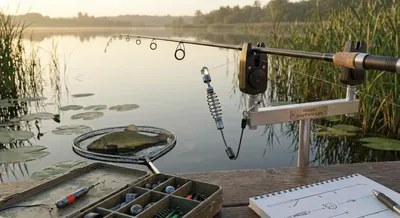
Quiver Tip Signals: A liner is a light, tentative nip – often tench just mouthing the bait. You might see the tip deflect slightly (few millimeters) or shear sideways slowly. A take is sharper: the tip will suddenly dip hard or slide down. For metric guidance, note that a true take often bends the tip vertically by a quarter turn or more, whereas a liner might only twitch a bit to the side. Some anglers watch how much line moves: a small liner might only snatch 0–5 cm of line, while a take drags 10 cm or more. Don’t strike immediately on slight movement – instead, watch for momentum.
-
Bite Alarms: On alarms, liners usually cause a soft “peep” or the light to flicker. A solid take will make the alarm “bark” loudly or sound multiple beeps. Many alarms (and separate receivers) have sensitivity and tone settings. Start with high sensitivity on summer tench (so you hear the slightest knocks), but learn your gear: if the bobbins wobble a bit and you get single peeps, that’s a liner. Two or three peeps or any spool-scrape noise means set the hook. Some anglers count alarm beeps: one beep = liner, two or more = take. Over time you’ll learn your specific alarm’s tone differences.
-
Actionable Metric: One method is to mark how far the tip bends. With your rod cradled and line taut, a genuine take often overbends the spring-loaded tip downwards as the fish meets resistance. If you rest the rod in a fixed position, note that a liner might use less than 10% of the tip’s range, while a take moves most of the tip through 20–30% of its range. On alarms, listen carefully. Modern bite alarms are very sensitive, but they usually still differentiate – a liner may not even trigger the lowest sensitivity setting, whereas a real take will always cause a clear alert.
In practice, wait a moment when you see a milder signal. Give the fish a second to flick the bait. If the tip continues to move strongly or the bobbin jerks, strike. If the tip stabilizes or returns slowly, keep it in place; sometimes a tiny knee-jerk flinch is enough to hook a cautious tench once the bait is firmly held in its mouth. Always be ready: big tench often bolt fast.
Conclusion
Seasoned anglers know that June tench fishing with a method feeder combines science and instinct. By mixing your bait to the right consistency, choosing bright or natural hookbaits (corn, wafters, worms) wisely, and timing your recasts to the fish‘s feeding rhythm, you dramatically increase your chances. And don’t forget bite detection: distinguishing a tentative liner from a solid take can be the difference between a missed fish and a trophy tench. With practice and observation – backed by tips from experts (www.fishingmagic.com) (dynamitebaits.com) – you’ll soon master the method feeder in summer conditions. Remember, procedural precision and patience win the prize. Keep detailed notes of what works each session (bait mix, moisture, timing), and adjust day by day. This strategic approach will help you consistently put more June tench on the bank.