 Auto
Auto
Fish Digestion and Bait in Warm Water
Tench are warmwater fish that slow down in cold, but get hungry and active in summer (about 16–22 °C). In warm water, a tench’s body works faster. That means they digest food more quickly. In fact, research shows that cool, cold water slows fish digestion, while warmer water speeds it up (pmc.ncbi.nlm.nih.gov). For example, one review found that a fish at ~20 °C processed food in far fewer hours than when it was cold (pmc.ncbi.nlm.nih.gov). In practical terms, this means a tench can gobble bait, digest much of it within hours, and be ready to eat again sooner in summer weather.
Warm water also speeds up the fish’s metabolism – the energy they get from food. Higher metabolism means tench use food faster for moving and growing. One aquatic biology article explains that at higher temperatures, fish burn through meals faster and spend less time digesting (pmc.ncbi.nlm.nih.gov). In short, at around 20 °C a tench will empty its gut quicker than in chillier water, so bait more frequently in warm weather.
Plant vs. Animal Bait
Anglers use two big bait types: plant-based (like corn, bread, cereals) and animal-based (like worms or maggots). These make tench feel full (satiated) differently:
-
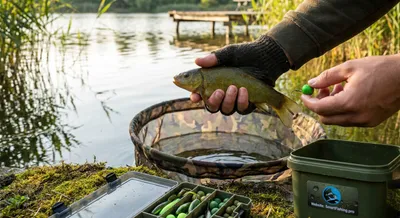
Animal protein baits (worms, maggots): These are rich in protein and fat, which fish digest very well. Studies in carp (a fish like tench) show they can absorb about 85% of the protein from maggot bait (www.mendeley.com). That means most of the energy in a worm or maggot goes into the fish. Such high-energy food gives fish a quick burst of nutrition. However, because it is so digestible, a fish might eat and then, after a few hours, get hungry again. In other words, animal baits fill a tench up fast but also leave its stomach ready for more.
-
Plant baits (corn, bread, cereals): These tend to be mostly starch and fiber. Fish digest starchy plant food more slowly and not as completely. A lot of plant bait often goes through the fish without giving much usable nutrition. For example, as one fish nutrition text notes, only part of food is absorbed and “some is not absorbed and is lost via the feces” (pmc.ncbi.nlm.nih.gov). The fiber in plant baits bulks up the gut. That makes a tench feel fuller for longer, but with less actual energy gained. So with plant baits, tench may stay around nibbling slowly, and they often return less frequently for another bite because they feel more satiated by the fiber.
In summary, animal baits hit hard and fast: fish eat them eagerly and get strong, ready to feed again after a few hours. Plant baits provide bulk: fish graze on them and feel full longer, but they may not come back for a new bait as quickly. Mixing bait types can be smart: the tasty animal protein draws fish, and the hearty plant bait keeps them hanging around.
Watching for Waste Clues
A useful trick is to watch the water in your swim for fecal clues. Fish do not use every bit of food: as mentioned, some passes straight out as waste (pmc.ncbi.nlm.nih.gov). Tiny white or brown trails in the water, or bits of fecal matter on the bottom, mean fish have been feeding on your bait. Anglers often look for cloudiness or debris after feeding; this means the tench have eaten and are pooping it out. If you see fish waste, that tells you the bait is working! If you don’t see any activity (fish or poop), fish might not be coming up, so you may need to try a different spot or bait. In short, seeing poop is good evidence the tench are digesting your bait (pmc.ncbi.nlm.nih.gov).
Feeding Schedule: Short Sessions
When you only have a short time to fish (say 1–2 hours), you want tench eating quickly. Here’s a quick plan:
- Feed frequently. In warm water, fish digest their last meal fast (pmc.ncbi.nlm.nih.gov), so they’ll be ready for more soon. In a short session, start by baiting heavily at first to get tench interested (for example, spread bait every 10–15 minutes).
- Use tasty baits. Include animal baits (worms, maggots) to get fast bites from hungry fish. These give fish quick nutrition and encourage repeat feedings.
- Keep portions small. Don’t dump all bait at once. Give small handfuls so fish keep nibbling. If you see the hits, continue baiting steadily (every 15–20 min). If bites stop, scatter a bit more bait to re-energize them.
- Watch their response. If tench seem full (slow or no response), drop the amount or switch spots. Otherwise, frequent small feedings work best in a short, warm session.
This short-session plan means the fish eat often on your schedule, giving you more chances at a bite.
Feeding Schedule: Long Sessions
For a long day at the bank (3+ hours), spread out the food:
- Start moderate. Begin with a solid feed at the start to draw fish in, but not too much to overwhelm them.
- Regular intervals. Then add bait every 30–60 minutes. Fish at ~20 °C will clear earlier meals in a few hours (pmc.ncbi.nlm.nih.gov), so this schedule keeps them interested without overfeeding.
- Blend baits. Use a mix: incorporate plant bait (like corn) among your worm baits so fish stay around chewing the slower food after they chow down the protein. The slower plant bait keeps them lingering in the swim.
- Adjust by watching. Use the poop indicator: if after a feed you see plenty of waste, the tench might be satisfied, so wait a bit longer before the next bait. If you see little or no activity after feeding, you may need more bait or a different type.
For example, on a 5-hour outing, you could put bait in at 0, 45, 90, 150, 210 minutes (roughly every 45 minutes). That gives fish time to finish each meal before the next. Keep an eye on how they react and adjust — if they taper off, slow down on feeding; if they stay hungry, feed a bit more often.
Conclusion
In warm summer water (16–22 °C), tench metabolism runs high and their gut transit time is relatively fast (pmc.ncbi.nlm.nih.gov). This means fish digest food quickly and will eat often. Animal-based baits (worms, maggots) give quick, high-energy meals, making tench bite hard but return sooner. Plant-based baits (corn, pellets) fill tench up for longer, with slower digestion (and more waste) (pmc.ncbi.nlm.nih.gov). Watching for poop and cloudiness in your swim will tell you how well your baiting is working. Finally, adapt your baiting schedule: offer frequent small feedings in a short session, and steady intervals over a long session, always matching the fish’s digestion speed. Using these tips will help keep tench happy and your trap bait in front of hungry fish all day.