 Auto
Auto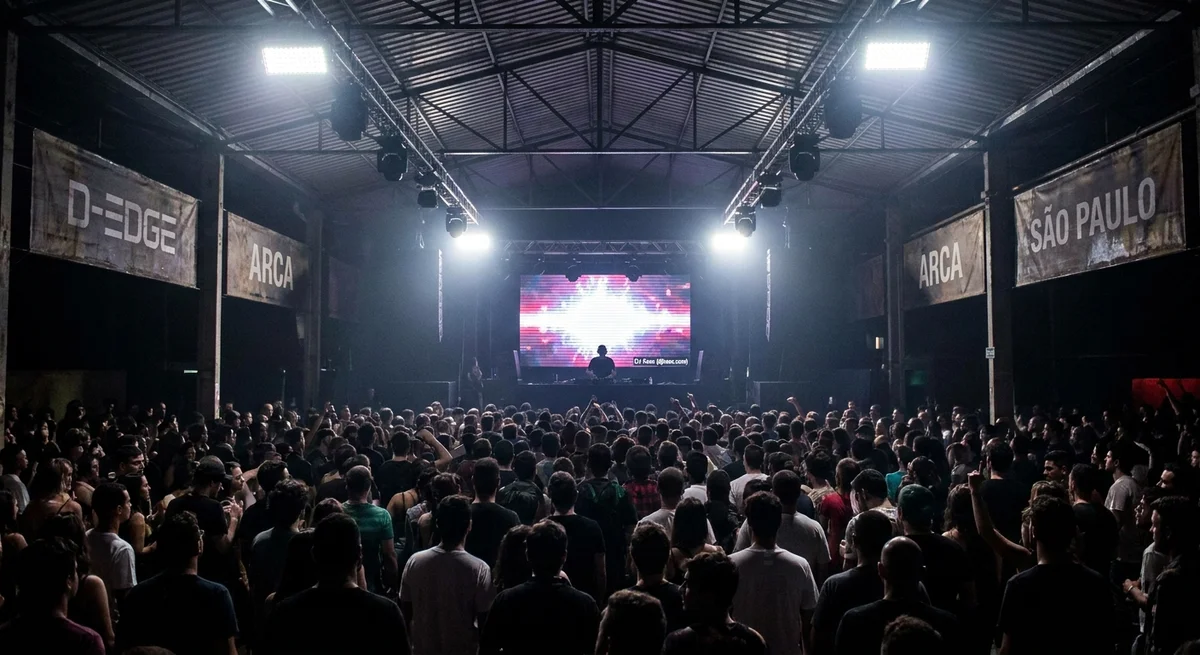
São Paulo’s Electronic Pulse: Big Clubs, Warehouse Spaces, and Local Flavor
São Paulo’s nightlife never sleeps. In Brazil’s largest city people treat sleep as optional, and the city’s clubs reflect that seven-days-a-week energy (www.irlculture.com). World-class festivals and homegrown beats mix with international techno and house. Clubs stay open past dawn, crowds pile in well after midnight, and partying often runs until Sunday. Airports buzz with DJs and dance fans – everything from baile funk to Afrohouse to deep São Paulo techno is part of the soundtrack (www.irlculture.com). This guide surveys São Paulo’s top venues (both big rooms and punk lofts), leading clubs like D-EDGE, ARCA, Audio, and more. We look at their lineups, sound systems, door policies, and how local flavor and festival events shape the scene.
Big Clubs & Converted Warehouses
D-EDGE (Barra Funda). Long-running and iconic, D-EDGE is a 20+-year veteran of SP’s electronic scene (www.irlculture.com). Housed in a converted warehouse, it has a blazing LED-lit dance floor, wrap-around video screens, and a 650 m² soundstage with high-end audio (baressp.com.br). Veja São Paulo notes its Funktion-One PA is like “the Ferrari of loudspeakers” (vejasp.abril.com.br), and the club frequently hosts techno legends and house pioneers (from Ricardo Villalobos and Richie Hawtin to Sven Väth) (baressp.com.br). Programming is diverse: one night might be “mais cabeça” techno, the next a more “dancey” house fête (www.grupodicas.com). The club runs late (doors ~11:30pm to 6–7 am (www.grupodicas.com)). Note: cover is usually R$80–150 and tends to sell out early (www.irlculture.com). Tickets are best bought in advance, as even being on the list “does not guarantee entry” if capacity is reached (blacktag.com.br).
Audio Club (Barra Funda). Just blocks from D-EDGE, Audio is São Paulo’s larger multi-room danceplex. Its flagship room booms with a massive sound system (IRL Culture even calls it “brutal in the best possible way” (www.irlculture.com)) and a five-story climbing wall-turned-DJ booth. Audio’s lineups skew hard into Brazil’s scene: local heroes and rising stars keep people dancing at 7am after international openers wrap up (www.irlculture.com). The club has a huge outdoor courtyard (for summer nights) and multiple floors. Doors open late and the music often goes on until nearly noon. Expect covers around R$60–120 (www.irlculture.com). Word to the wise: as one travel guide notes, go early to secure a spot in Audio’s outdoor area if it’s warm – that’s where serious dancers often convene (www.irlculture.com).
ARCA (Vila Leopoldina). A newcomer on the scene, ARCA occupies a former industrial warehouse turned high-tech event space (wegoout.com.br). Touted as “the most differentiated events space in SP” with a focus on innovation (wegoout.com.br) (wegoout.com.br), ARCA’s super-structure is modular for huge shows and multimedia experiences. (It even doubled as an art expo venue in 2022 (arca.squarespace.com).) While still building its club calendar, ARCA aims for capacity in the thousands for festival-style parties. The venue is praised for its spacious, versatile layout (wegoout.com.br). Production-wise, promoters can install giant sound rigs and visual displays in an open loft – an audio engineer described it like “a blank canvas” for producers. (Door rules are strict: no minors, and photo ID is always checked (blacktag.com.br).)
Cais 11 (Bom Retiro). Housed in a repurposed riverfront warehouse by the Port of SP, Cais 11 channels South American beats alongside roomy disco vibes (www.irlculture.com). After a venue remodel it was embraced as SP’s answer to Brooklyn or London docks spaces. Its booking mixes techno/house with lots of Afro-house, disco and Brazilian funk (www.irlculture.com), drawing a trendy 25–35 crowd. Entry runs about R$60–100 (www.irlculture.com), and doors open later (advised to arrive before 2am or you might wait, especially on packed Saturdays (www.irlculture.com)). In a statement of dancing-covering ethos, the club’s lineup includes Afro-Latin-flavored sets, providing a very different vibe from straight-ahead EDM nights.
Nos Trilhos (Mooca). A truly unique spot, Nos Trilhos is an open-air railway yard in São Paulo’s Mooca district made into a party space (www.grupodicas.com). Old locomotives and tracks sit around the big outdoor stage. It hosts cultural festivals, art shows, and themed electronic parties. Artists there spin everything from deep house to Brazilian bass – it’s a favorite for crowds who want a festival vibe on city grounds (www.grupodicas.com). (As one feature notes, it’s exactly the kind of “atypical” spot where history meets nightlife (www.grupodicas.com).)
Others. Dozens of smaller venues — old factories, rooftop patios, warehouse lofts — come alive each weekend. For example, the underground Boate Disco in Consolação is a 300-cap club specializing in Italo-disco and Brazilian boogie (www.irlculture.com) (no phones on the dance floor!). On the opposite spectrum, enormous festival grounds like the Sambódromo or Neo Química Arena host events (like Time Warp) for 10,000+ fans.
Techno, House and Local Flavor
São Paulo’s lineups cover the full gamut of styles. Clubs like D-EDGE routinely book world-famous techno acts (Âme, Ricardo Villalobos) and house greats, alongside top Brazilian DJs, offering “the full range” of styles (www.irlculture.com). The city’s own roots show up too: some parties fuse electronic beats with Brazilian ingredients. For example, the weekly Freak Chic night at D-EDGE tends toward indie-house and melodic techno, while other nights at the same club feature pure avant-garde techno (www.grupodicas.com). Notably, local talent often brings Afro-Latin rhythms on the floor: DJ Danilo Stellet is known for blending Afrobeat into techno and deep house sets (sesh.sx), and DJ Cris D. regularly mixes Afro-House with Brazilian percussion and melodies (musicnonstop.uol.com.br). In short, underground sets frequently include local “Brazilidance” flavors (musicnonstop.uol.com.br) (musicnonstop.uol.com.br).
By contrast, the commercial EDM side (big festivals and high-energy raves) is relatively separate. Once or twice a year São Paulo hosts major dance festivals (like Time Warp Brasil, Só Track Boa, etc.) that bring big-room techno and EDM-headliners in stadiums. For example, Time Warp Brasil 2025 is set for May 2–3 at Vale do Anhangabaú with international names like Joseph Capriati B2B Vintage Culture and Sven Väth (istoe.com.br). Such festivals draw tens of thousands – Time Warp alone reported over 72,000 attendees in 2022–23 (with 32% traveling from outside São Paulo) (www.housemag.com.br) – and their schedules dominate the spring calendar. On those dates, big-club bookings usually avoid clashes (so locals can attend both club gigs and festival days). Meanwhile, smaller clubs on weekend nights focus more on underground house/techno shows (often with a Brazilian twist) rather than pop-EDM DJs.
Sound, Production and Residents
São Paulo’s clubs are known for top-tier production. Many venues invest heavily in sound. For instance, Veja São Paulo magazine noted Disco Club spent R$300,000 on a 25,000-watt Funktion-One PA (vejasp.abril.com.br), and D-EDGE itself features a state-of-the-art, custom-built Funktion-One system (www.irlculture.com). These rigs are so powerful that engineers brag they can run at full blast for hours without distortion (vejasp.abril.com.br). D-EDGE’s immersive sensory design was created by art director Muti Randolph, with LED everything (walls, floors, terraces) synced to music (baressp.com.br). Audio’s sound is similarly colossal – locals say “it punches far above its size” especially outdoors. Even smaller venues like Boate Disco pack an outsized sound for their footprints (www.irlculture.com).
Behind the decks, clubs rely on loyal residents and local promoters. D-EDGE’s founder Renato Ratier personally curates much of its music policy and runs the associated D-EDGE Records label to highlight homegrown producers (alataj.com.br). Audio has its own crew of house and techno DJs (often local stars) who run marathon sets into the morning. Weekly parties are often put together by trusted names in town (collectives like Freak Chic, Trilha, In The Park, etc.). Many promoters double as label owners: for example, D-EDGE incubates Brazilian electronic talent via its labels OLGA and D-EDGE Records (alataj.com.br). And collectives like Mamba Negra and Festa Rara tour between clubs and warehouse events, bringing international names and local talents together.
Entry Rules, Prices, and Timing
Getting into São Paulo’s clubs is easy to do wrong – arrive too early or underdressed, and you’ll wait in line! Most venues have a strict dress code (smart casual; no sportswear or flip-flops), and security will ask for government photo ID (no one under 18 admitted) (blacktag.com.br). Even if you’re on a guest list, clubs warn that a name on the door list “does not guarantee entry” if the place is full – the easy fix is to buy tickets online in advance (blacktag.com.br) (www.irlculture.com). Cover charges vary widely: the biggest rooms like D-EDGE are R$80–150 on big nights (www.irlculture.com), mid-size clubs and warehouse parties might charge R$60–100 (www.irlculture.com), and some intimate vinyl-only spots (like Boate Disco) are around R$40–60 (www.irlculture.com). Often there are cheaper early-bird rates before midnight, so check the event pages.
Because São Paulo never sleeps, timing is key. “Nobody arrives before midnight,” warns one nightlife guide (www.irlculture.com) – indeed, doors often say “11pm” but don’t really kick off until 2–3am (www.grupodicas.com). As a rule, go late: you may get discounts for arriving at 1am, whereas early arrivals sit in empty spaces (www.grupodicas.com). On the flip side, clubs run very late – Saturday parties routinely go until 8am, and afterhours events can wind down around noon on Sunday (www.irlculture.com). This affects transport: the metro shuts at midnight, so most people hail an Uber or motorcycle taxi after the trains stop (www.irlculture.com).
Conclusion
For visitors and partygoers, São Paulo’s scale can be thrilling and overwhelming. From the ground-shaking Funktion-One rigs at D-EDGE to the sunrise views at an Audio afterparty, each venue has its own vibe. Local flair is everywhere – whether a samba beat dropped in a dark techno club, or a warehouse party headlined by a Brazilian DJ. Even with gaps in official data, the scene’s richness is clear: new club nights and collectives pop up all the time, and festivals like Time Warp keep the calendar packed. When planning a night out, remember the city’s late hours, bring ID and cash for cover, and embrace the mix of styles. São Paulo is a city where underground and mainstream meet, and the party doesn’t stop until the sun rises.
Sources: São Paulo club websites and music press (www.irlculture.com) (baressp.com.br) (vejasp.abril.com.br) (www.grupodicas.com) (alataj.com.br) (www.irlculture.com) (wegoout.com.br), plus travel guides and festival announcements (www.irlculture.com) (istoe.com.br) (www.housemag.com.br) (musicnonstop.uol.com.br) (blacktag.com.br).