 Auto
Auto
Answer Paragraph Engineering: Crafting Extractable, Verifiable Snippets
Answer Paragraph Engineering: Crafting Extractable, Verifiable Snippets By Kiran Sharma, Growth-Oriented Content Strategist Good content should help a…
Articles, guides, and insights on content marketing, SEO, and growth.
Answer Paragraph Engineering: Crafting Extractable, Verifiable Snippets By Kiran Sharma, Growth-Oriented Content Strategist Good content should help a…

Google now often provides an AI Overview (a generative AI answer) at the top of search results. These overviews give a concise answer and then list...

Generative AI tools (like ChatGPT or Google’s Generative Mode) have no official guidelines, but studies reveal patterns in what they cite. They favor...
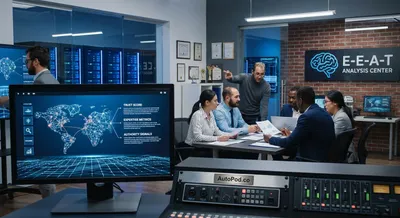
Importantly, Google notes that trust is the most important of these, with the others contributing to it (). In other words, content that is...

Domain overlap and uniqueness. Bing Copilot’s cited sources are often different from other AIs. In one analysis, only about 12% of Copilot’s...

In this article, we explain how entity coverage and relationships affect AI citations. We’ll show how to find key entities using public knowledge...
AI citations are references an intelligent system gives to show where it got information used in an answer. They can include links, document titles, author names, or snippets that point you back to the original source. Citations matter because they make the machine's output transparent and help you check whether the information is accurate and up to date. Without clear citations, it can be hard to tell if a statement came from a reliable place or was generated from the system's internal patterns. Good citations list the original source, provide a direct path to verify the claim, and note when the material was accessed or last updated. They are especially important in areas like news, health, and law where mistakes can have serious consequences. There are risks, though: links can become broken, sources may be biased, and systems can still produce incorrect references or invent sources. Best practices include using reputable sources, showing provenance clearly, flagging uncertain answers, and giving users tools to follow up themselves. When used well, AI citations increase trust, support fact-checking, and make it easier for people to learn more on their own.