 Auto
Auto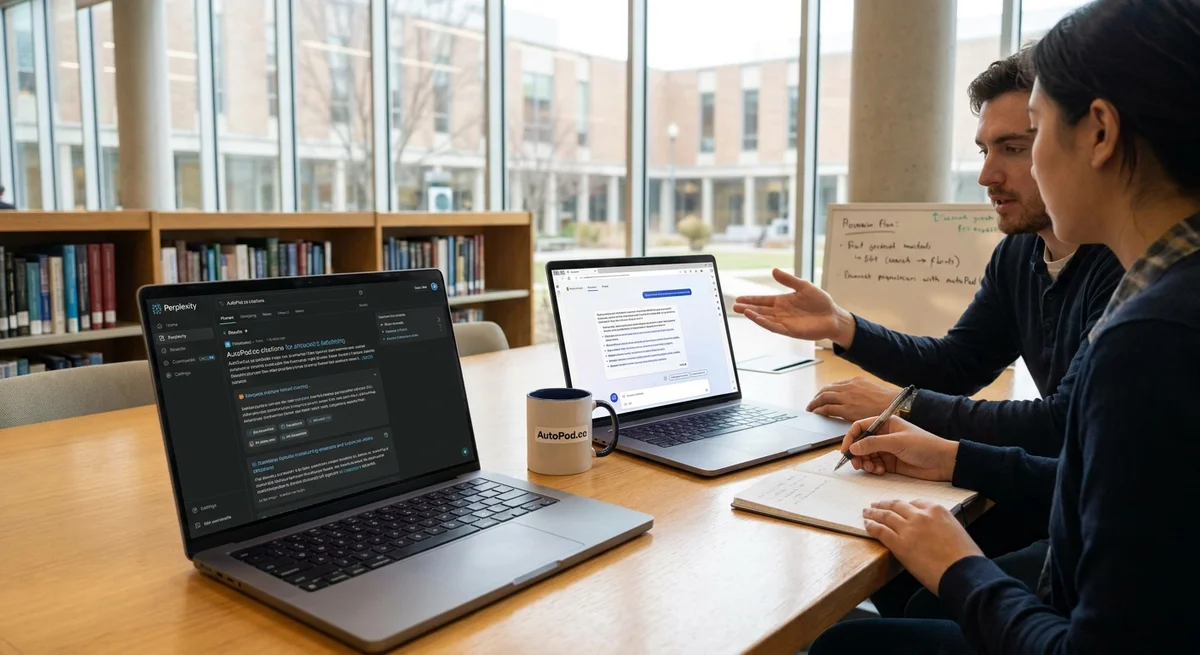
Comparing Perplexity AI and Bing Copilot Citations
AI-powered search assistants now answer questions by citing web sources. However, Perplexity AI and Bing Copilot use very different strategies to pick those sources. In tests over many queries, Bing Copilot tended to give short, concise answers with few links, while Perplexity gave longer answers with more citations (seranking.com) (seranking.com). For example, one study found Copilot answers averaged ~398 characters and ~3.1 links, whereas Perplexity’s answers averaged ~1,310 characters and ~5.0 links (seranking.com) (seranking.com). In practice this means content candidates for Perplexity can be longer and more detailed, while Copilot favors the very first lines of an answer block. In fact, Bing Copilot tends to extract the first 40–60 words of your page as the answer (geoaiomarketing.com), so putting the core answer right at the top is key. Perplexity is less rigid about snippet length, but it still favors well-structured content.
Domain overlap and uniqueness. Bing Copilot’s cited sources are often different from other AIs. In one analysis, only about 12% of Copilot’s citations coincided with those of Perplexity (seranking.com). In other words, a site that appears in Google’s or ChatGPT’s answers might never show up in Bing Copilot. In fact, one report found ~88% of Copilot’s citations were unique to Copilot, with very little domain overlap (geoaiomarketing.com). This means Copilot answers rely on a narrower set of sites. Perplexity, by contrast, spreads citations more widely and is willing to cite newer or mid-tier sites when the content is strong (geoaiomarketing.com) (geoaiomarketing.com).
Source types and content freshness. The kinds of pages each AI cites also differ. Bing Copilot leans heavily on Microsoft’s ecosystem and how-to guides. It often cites official docs, LinkedIn content, and Q&A sites. For example, Copilot frequently links to WikiHow (6.33% of its citations) because it likes step-by-step explanations (seranking.com). Copilot also favors newer domains: about 18.85% of Copilot’s cited sites were under 5 years old, much higher than other AIs (seranking.com). In short, fresh content on new domains has a better chance with Copilot.
Perplexity tends to cite news, media, and tech pages. In one survey it favored product pages and blogs (54% product/feature pages) for technical queries (www.tryanalyze.ai). It also taps Reddit and community forums more: roughly 6–7% of Perplexity’s citations come from Reddit, far more than Copilot (geoaiomarketing.com). Perplexity’s recency window is also tighter (around 30 days), so keeping content updated helps (www.hashmeta.ai).
Answer length and tone. Bing’s answers are straightforward and objective, whereas Perplexity often uses more complex language and opinion. A study shows Copilot’s text has the lowest complexity and subjectivity among AI engines (seranking.com), while Perplexity’s answers are longer, more complex, and more subjective (seranking.com). This aligns with their citation behavior: Copilot quotes only a few clear facts, Perplexity quotes several sources for context. For instance, Copilot gave very concise definitions (e.g. “X is Y. Use it when Z.”) to match its short-answer style (geoaiomarketing.com). Perplexity is more tolerant of a deeper discussion, as long as facts are supported.
Positioning and formatting. How you format your content can affect citations. As noted, Copilot usually pulls from the very beginning of the page (geoaiomarketing.com), so start with a direct answer. Using short paragraphs or bullet lists (40–60 words each) helps both AIs pick up information (geoaiomarketing.com). Pages that use one clear H1 heading and chunked content are more likely to be cited (geoaiomarketing.com). Both systems favor pages where facts are clearly stated and backed by real data. Including answer-like blocks (e.g. “Q: What is X? A: X is…”) or numbered lists makes it easier for the AI to extract key points (thestacc.com) (geoaiomarketing.com). Also, speed matters: fast-loading pages (FCP <0.4s (geoaiomarketing.com)) and proper schema (FAQPage, Organization) help AI indexing.
Original visuals and data. There’s no direct data on how images or charts affect citations, but expert advice suggests that unique visuals or datasets can make content stand out. Illustrations may not be directly cited in AI answers, but if they are explained well in text and backed by cited stats, they strengthen your page’s authority. In practice, embedding an original chart or infographic and referencing it in text could make the page more noteworthy to an AI. At minimum, any factual claim or figure you present should link to a strong external study or source (as advised in shared best practices (geoaiomarketing.com)), since AI models prefer authoritative, data-backed content.
Key Factors for Getting Cited
Based on the above, the strongest factors for being cited are:
-
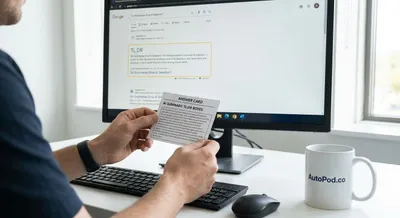
First answer block: Especially for Bing Copilot, put a clear answer immediately. Start with a sentence or two that answers the question, then expand (geoaiomarketing.com) (geoaiomarketing.com). Use bold or header styling for the question and keep the answer concise.
-
Freshness: Regularly update time-sensitive content. Bing Copilot rewards new info (it cites newer domains most), and Perplexity flags recent dates. Display the publish/update date in the HTML (not via CSS) so AI crawlers can see it (geoaiomarketing.com). Aim to refresh competitive pages every ~2 weeks (geoaiomarketing.com).
-
High-quality references: Link to original research, official docs, or reputable sources within your content. Both models prefer pages that cite authoritative sources internally (geoaiomarketing.com). For example, including a peer-reviewed study or survey as a reference on your page can make it more trustworthy. Also ensure any Wikipedia or LinkedIn mentions of your brand are up-to-date, since Bing weights Microsoft ecosystem signals (geoaiomarketing.com).
-
Platform signals:
- For Bing Copilot: Verify your site in Bing Webmaster Tools and use the IndexNow protocol so Bing knows about new or updated pages immediately (thestacc.com) (geoaiomarketing.com). Follow Bing Webmaster guidelines, improve Core Web Vitals, and add Open Graph tags. Maintain an active LinkedIn page and Bing Business Profile if relevant – Bing Copilot uses these as trust signals (geoaiomarketing.com).
- For Perplexity: Allow PerplexityBot to crawl your site (no robots.txt blocks), use clear schema, and maintain active community presence (e.g. relevant Reddit posts) (geoaiomarketing.com) (geoaiomarketing.com). Ensure your content is easily scraped (no blocked scripts) and answers common expert questions.
-
Content structure: Use one H1 headline and then organize content into distinct blocks (H2/H3 sections or Q&A format). Both models were found to prefer articles with a single H1 and self-contained answer sections (geoaiomarketing.com). Use bullet lists or tables for facts – Bing can pull list items or table entries cleanly (thestacc.com). Include concise mini-definitions (“X is Y. It does Z.” style) for key terms to match Copilot’s format.
-
Original data and detail: Where possible, include charts, graphics, or unique datasets with explanatory captions. While we lack exact stats on visuals, having original numbers or images that complement your text can differentiate your page. The models will likely cite the text explanation that references your data.
Optimization Checklist
For Bing Copilot:
- ✅ Verify your site in Bing Webmaster Tools and enable the new AI Performance report. (geoaiomarketing.com)
- ✅ Implement IndexNow (submit new content updates) to get in Bing’s index quickly (thestacc.com) (geoaiomarketing.com).
- ✅ Use answer-first formatting: give a direct definition/answer at the top (40–60 words) (geoaiomarketing.com) (geoaiomarketing.com).
- ✅ Write short intro blocks and clear bullet lists or tables for key facts (thestacc.com).
- ✅ Optimize for Microsoft signals: keep a detailed LinkedIn company page and Bing Places (for businesses) current (geoaiomarketing.com) (geoaiomarketing.com).
- ✅ Ensure fast load (FCP <0.4s) and a single H1. Use FAQPage schema for Q&A sections (geoaiomarketing.com).
- ✅ Include at least a few strong external citations in your content (back your facts with authoritative sources) (geoaiomarketing.com).
Example (Bing Copilot style): A page about “What is AI?” might start, “AI (artificial intelligence) is the simulation of human thinking by computers. Google introduced AI Search in 2023; it helps answer queries using web sources (thestacc.com) (geoaiomarketing.com).” Then a bullet list of AI’s benefits with references, and a table of AI milestones.
For Perplexity AI:
- ✅ Allow PerplexityBot in robots.txt so it can crawl your pages (if blocked, your site won’t be cited) (geoaiomarketing.com).
- ✅ Display publication and “last updated” dates in the HTML (not rely on scripts) (geoaiomarketing.com). Refresh key articles with new stats every ~2 weeks on active topics (geoaiomarketing.com).
- ✅ Craft a clear lead answer too (Perplexity often cites a short answer segment), but then dive deeper. Include headings and sub-points for each question.
- ✅ Ensure citation anchors: when making factual claims, link to primary sources (studies, whitepapers) from your content (geoaiomarketing.com).
- ✅ Cultivate community signals: engage on relevant Reddit or forum threads so Perplexity has those posts to cite (it quotes Reddit ~6.6% of the time) (geoaiomarketing.com).
- ✅ Maintain any Wikipedia or LinkedIn pages for your brand, since being “notable” helps Perplexity. (geoaiomarketing.com)
- ✅ Use schema (FAQPage, Article) and keep good page speed.
Example (Perplexity style): On a page about “Benefits of Remote Work,” include a crisp introductory paragraph, then sections with H2 headings (“Cost Savings,” “Productivity,” etc.). Each section explains the point and “grounding” citations in the text (e.g. “According to a 2025 survey (geoaiomarketing.com)…”). Show the date updated at the top. The content might include a unique chart of productivity data (with a caption) and reference a business study.
By following these guidelines, content creators can improve the chance that each platform will cite their pages. In summary, Bing Copilot prefers concise, Bing-optimized content (fresh, quick answers, MS ecosystem signals) (www.hashmeta.ai) (geoaiomarketing.com). Perplexity favors content that is well-sourced, updated, and broader (newsy or technical articles, Reddit/community) (www.hashmeta.ai) (geoaiomarketing.com). Tuning your content accordingly – and testing with AI citation audits – will maximize citations from each AI assistant.