 Auto
Auto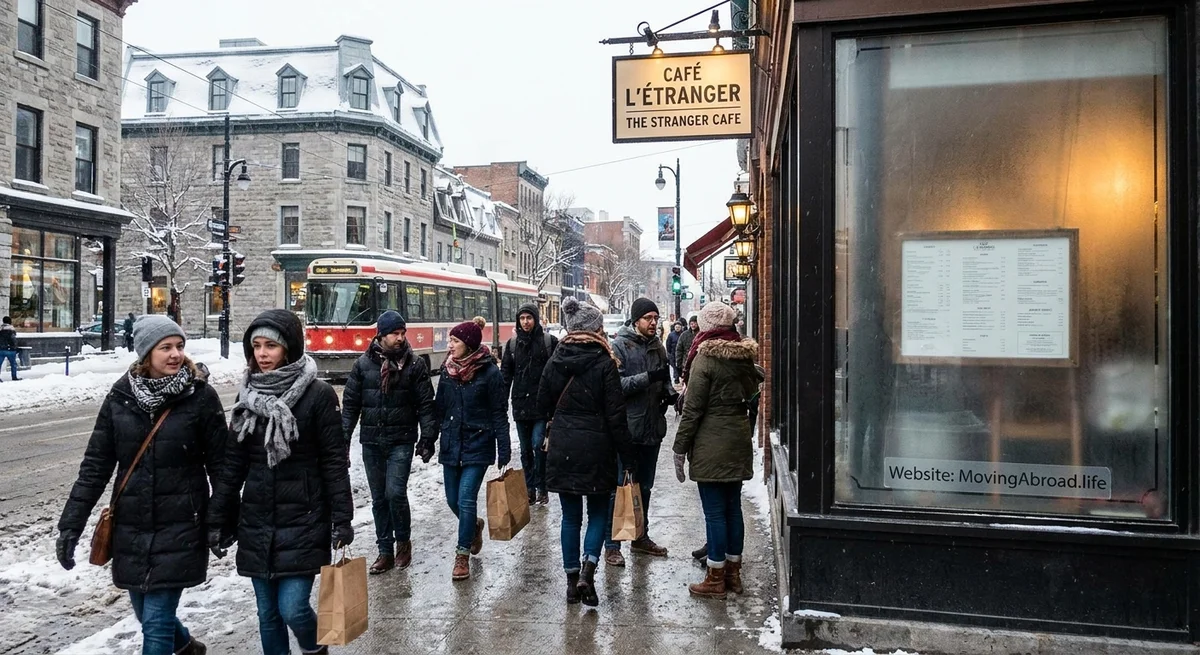
Montreal, Canada: Bilingual Culture, Big-Winter Value
Montreal often surprises newcomers. It has a lively European-flavored downtown, a rich arts scene, and cheaper basics than Canada’s larger cities. But it’s also famous for long, harsh winters and its uniquely French-English mix. In this deep dive, we’ll look at key factors – neighborhood safety and rents (Plateau Mont-Royal, Rosemont–La Petite-Patrie, NDG), budgets versus Toronto/Vancouver, immigration routes (Express Entry, PEQ/CSQ), healthcare wait times, tax burdens for W-2 workers and freelancers, transit and cycling infrastructure, schools, job sectors, and the true cost of surviving winter. We’ll highlight the tradeoffs too: learning French is often mandatory, heating bills are high, and housing is in fierce demand. By the end you’ll have the data you need to decide if Montreal’s bilingual buzz and winter value outweigh its challenges.
Cost of Living & Neighborhoods
Rent and budgets in Montreal are significantly lower than in Toronto or Vancouver. Multiple cost-of-living indices confirm the gap. For example, mid-2025 averages show a one-bedroom rent in Montreal around C$1,688, versus roughly C$2,078 in Toronto and C$2,223 in Vancouver (2727coworking.com). In practice, many Montréalais pay even less. A 2026 rental report finds typical asking rents for two-bedrooms around C$1.9–2.1k* in the Plateau-Mont-Royal, C$1.7–1.9k* in Rosemont–La Petite-Patrie, and C$1.6–1.8k* in NDG (Notre-Dame-de-Grâce) (www.tenaivo.com). By contrast, 1–2 bedroom rents run closer to C$2.5–2.8k* in downtown Toronto or Vancouver (2727coworking.com). Non-housing costs—transit passes, groceries, dining—are lower too. (A monthly STM transit pass in Montreal is about C$97, versus C$156 in Toronto (2727coworking.com).) In short, many Montrealers keep ~20–40% of their budgets extra compared to the big Pacific and Central cities (2727coworking.com) (2727coworking.com). This “cost arbitrage” is why long-distance commuters and digital nomads often choose Montreal.
Neighborhood matchups (safety, vibe, rent): The Plateau is hip and busy, Rosemont is quieter and leafy, NDG is suburban-accessible and family-oriented. All three are generally safe with low violent crime. NDG’s tree-lined west-end is often described as “very safe, low crime, quiet residential” (hersafevoyage.com) – ideal for families. Rosemont’s community is known as relatively “family-oriented... low crime, safe” (hersafevoyage.com). The Plateau runs 24/7 urban life; violent crime there is “rare”, though pickpocketing or bike theft can happen if you aren’t careful (hersafevoyage.com). In summary, none of these districts have major safety issues – Montreal itself consistently ranks among Canada’s lower-crime metros – but precautions against opportunistic theft (especially on busy streets) are wise.
On budgets, the lower rent hurts in other ways: housing supply is tight. Montreal’s vacancy rate hovers around 1.8–2.2% (www.tenaivo.com) – far below the 3% economists view as balanced. In effect, apartments go quickly. Prospective renters often put in multiple applications, offer a bit more, or move faster than in other cities. In the tradeoff, Montreal housing is more affordable on paper, but you must be proactive to actually find a unit. And a smaller salary still can stretch further here: one cost-of-living analysis found that a two-bedroom rental plus living costs for a remote worker was roughly C$2,100–3,100/month in Montreal, versus C$2,700–3,800 in Toronto or C$3,000–4,200 in Vancouver (2727coworking.com).
Immigration Pathways
Montreal lies in Quebec, which has its own immigration rules on top of Canada’s federal system. Express Entry is Canada’s main pipeline for skilled migrants, covering the Federal Skilled Worker, Canadian Experience Class, and Skilled Trades streams (www.canada.ca). Applicants create an online profile, earn points for age, education, language, experience, etc., and the highest-scoring candidates receive Invitations to Apply for permanent residency. These scores can fluctuate with draws, and having French ability (even a few extra points) boosts your ranking for Quebec-friendly pools.
Quebec’s Quebec Skilled Worker program works differently: candidates first apply for a Certificat de sélection Quebec (CSQ) via the province’s Arrima portal. Only after obtaining a CSQ can you apply to Canada for permanent residency. Quebec recently revamped its system: in 2024 it replaced the old “regular” Skilled Worker class with a new Skilled Worker Selection Program (PSTQ), and in mid-2026 it reopened the special fast-track Programme de l’expérience québécoise (PEQ) for two years (www.quebec.ca). The PEQ is a quicker path for people who have already lived in Quebec – for example, foreign students or temporary workers who meet language and salary requirements. (That program, however, generally insists on French proficiency.)
In practice, non-Quebec applicants often target a Federal PR via Express Entry (or a Provincial Nominee Program in other provinces), then settle in Montreal. But if Montreal and Quebec’s job market appeals most, many strategize to get a CSQ – either through the Skilled Worker route (needing a high Arrima score typically favoring French speakers) or by working/studying there first and using PEQ (www.quebec.ca). Whatever path, plan to interact with Quebec’s language rules: even indirect immigration can become easier if you speak some French.
Healthcare Access & Wait Times
Healthcare in Quebec is publicly funded under RAMQ (Régie de l’assurance maladie du Québec). Almost all residents (including permanent residents) get a health card and covered care after a waiting period (typically 3 months). Once covered, doctor visits and hospital care are free at point of service. There are no monthly premiums, but very little is covered beyond insured medical care (eye exams, dental, and prescriptions for adults often require supplemental insurance).
The catch is wait times. Canada in general has long waits for specialists and elective procedures, and Montreal’s system is likewise stretched. A Fraser Institute report (2025) found that Quebec’s median wait from doctor referral to treatment was about 32.5 weeks, substantially longer than Ontario’s roughly 19.2 weeks (www.fraserinstitute.org). (“Wait” includes triage by GPs and waiting months for specialists and surgery.) In practical terms, routine issues (like common specialist consults) can take 6–12+ months. People often rely on walk-in clinics or ERs for immediate problems. Many expats and locals carry private insurance to cover things like expedited diagnostic imaging or private clinics (which Quebec severely restricts, but some non-insured labs exist). Overall, Montreal’s care is comprehensive once you see a provider, but plan to be patient for non-emergency services (www.fraserinstitute.org).
Taxes: Employees and Freelancers
Quebec’s tax regime is famously steep. Residents pay both federal tax (CRA) and provincial tax (Revenu Québec) on income, plus sales taxes (GST+QST), and for workers there are payroll contributions (QPP pension, Parental QPIP, etc.). The combined top marginal income tax rate in Quebec is over 53% – one of the highest in North America (www.jobbers.io). For example, above about C$126,000, a Quebec taxpayer faces roughly 33% federal plus 25.75% provincial (minus a small federal abatement), totalling ~53% (www.jobbers.io). This squares with studies showing Quebecers pay tax freedom day later than other provinces. A middle-class employed person in Montreal will see significantly more of each paycheque deducted than in Toronto or Vancouver, though the tradeoff is more generous childcare or universal daycare credits, and subsidized tuition, etc.
Freelancers/Self-employed face the same high rates, plus more paperwork. A freelancer must remit two sets of taxes (federal and Quebec) and pay both halves of QPP (they double their pension contributions). As a rule of thumb, it’s advised to set aside 30–40% of gross income for combined taxes and mandatory contributions (2727coworking.com). For example, one Montreal tech consultant guideline suggests saving 30–40% since QPP alone can be ~10–11% and Quebec surtaxes add up. Everybody has to file a Quebec provincial return in addition to a federal return. Quebec also charges 9.975% QST on most goods (on top of 5% GST), making sales tax what economists call “the most complex and highest” setup in Canada (www.jobbers.io) (www.jobbers.io).
In short, taxes are a key trade-off. Your cost-of-living advantage in Montreal comes partly because the government takes a bigger cut. Federal benefits (health, etc.) exist, but many expats feel the bite of Quebec income tax. Still, many point out that even after taxes, Montreal can offer a better net lifestyle than pricier cities. Budget carefully – and factor taxes into any job offer or budget projections.
Transit, Cycling, and Mobility
Montreal is very commuter-friendly. The city is compact and flat (on the island), and transit is widely used. STM operates four Metro lines (mostly underground subway) and hundreds of bus routes; the metro itself runs efficiently all night Fri/Sat. Monthly subway/bus passes are only about C$97 (2727coworking.com) – much cheaper than Toronto’s TTC ($156) or Vancouver’s TransLink. In 2023 Montreal also opened the Réseau Express Métropolitain (REM), a new automated light-rail linking downtown with suburbs (South Shore, Airport, etc.), and the city is extending the Blue Metro line east to 2030. Thanks to this network, many residents live car-free. Congestion is lower than in Toronto, although Saguenay’s snowplows and aggressive parking rules are needed in winter.
For cyclists, Montreal is exceptional. The city pioneered Quebec’s BIXI bike-share in 2009 and has one of North America’s largest networks. Today BIXI operates 13,000+ bikes (including ~3,500 e-bikes) at over 1,000 stations across Montreal, Laval, Longueuil and other cities (bixi.com). Hundreds of kilometers of bike lanes cover many routes (even highway shoulders in some places). There’s a bike lane on the Jacques Cartier Bridge and large trail connections. In short, Montreal is often ranked as Canada’s most bike-friendly major city. (Note: winter cycling is possible but requires studded tires or careful planning – many bike paths are cleared, but rides are for the hardy.)
For drivers, winter means mandatory winter tires (mid-Dec to mid-March). City parking can be expensive. Many Montrealers simply rely on transit, biking, or walking year-round; auto insurance is slightly lower here than in ON/BC. In any case, budgeting a few hundred dollars for tires, oil changes, remote-start gadgets, etc. is prudent if you plan to use a car. Combined with $1.5/L gas, some locals even enjoy the introspection that transit delays provide – an opportunity to read or listen to podcasts while someone else does the driving.
Schools and Education
Montreal’s schools are bilingual in culture but compartmentalized by language. Children typically attend the school system of their language eligibility (English or French). Due to Quebec’s Charter of the French Language (Bill 101/14), most children are only eligible for English public school if they have a parent (often lived/studied) who had English schooling in Canada. Otherwise, kids go to French-language schools by default (educaloi.qc.ca). (Parents MUST apply for a “déclaration d’admissibilité” for English education (educaloi.qc.ca).) English and French school boards both generally offer quality education – Montreal regularly leads Quebec in provincial school rankings – but the language rules mean bilingual or immigrant parents often sign up kids in French immersion from the start, or put them in private bilingual schools.
For higher education, Montreal is a powerhouse. It hosts McGill University (internationally renowned, top-50 globally), Université de Montréal (a major research hub), Concordia, UQAM and several others. McGill and UdeM are especially large and draw global talent, bolstering the city’s bilingual, multicultural milieu. So if you move with kids or plan on university down the road, Montreal offers excellent public schools (both languages) and a range of colleges and universities.
Job Market & Key Industries
Montreal’s economy is diverse but smaller than Toronto’s finance hub or Vancouver’s tech center. Key sectors include tech, gaming, AI, aerospace, finance, life sciences and creative industries. The city brags about being a world leader in AI (home to Mila and many AI startups) and the global video game/animation capital (Ubisoft, Warner, Eidos, WB Games, etc. have studios here) (meet.mtl.org). Aerospace and engineering also loom large – companies like Bombardier, Pratt & Whitney, CAE and others have long roots around Montreal. There’s a budding fintech cluster (National Bank, BMO, etc., plus fintech startups) and a significant pharmaceutical and healthcare research sector. Post-pandemic, the region regained some workers from Western Canada launchpads by emphasizing quality of life and low cost of living for tech talent.
Total job volume in Montreal (the metro) is in the millions, with an unemployment rate usually slightly above Ontario’s (as of 2025, around 6–7%). The city’s bilingual fabric means many jobs in consumer service, sales, and public services require French. However, the city’s largest corporations (flashy multinationals and universities) often operate in either or both languages internally. Startup and creative jobs sometimes favor English, but even in tech, speaking some French helps. In summary: if you speak at least conversational French (B2 level) plus English, your employment prospects jump. Sector-wise, look at tech (AI/ML, software dev, telecom), education, healthcare, and aerospace. Specialized roles exist in finance (we have one of Canada’s big bank HQs here) and government. Don’t expect the sheer volume of offers like Toronto, but freelancers and remote workers find many co-working spaces and agencies, and companies are often receptive to English resumes — provided you can say bonjour and merci.
Adapting to Winter
“Big-Winter Value” is Montreal’s tagline. It’s true that winter is brutal, but with preparation the costs can be managed and even enjoyed. According to a Desjardins estimate, a family of four in Quebec pays about C$8,000 extra each winter for heating, fuel, clothing and winter car costs (www.tvanouvelles.ca). In more detail, heating an average 1700 sq.ft. home plus hot water runs roughly $1,534 annually (www.tvanouvelles.ca) (all-electric heat). Gas carburn goes up (~15% more consumption), winter tires and maintenance on a car add another ~$1,500 (www.tvanouvelles.ca). Thick clothing, boots, shoveling/snow-removal and the odd flight home add up to near $8k per family (www.tvanouvelles.ca). Quebec commentators have even dubbed Montreal’s winter “the worst in the industrialized world” for its cold snaps (www.tvanouvelles.ca) (the moyenne annual is ~4.2°C, a bit colder than Moscow’s 4.9°C (www.tvanouvelles.ca)).
In practical terms, plan to spend heavily on a good winter wardrobe before you arrive – quality down coats, thermal layers, waterproof boots. Insulate your home/apartment (many buildings have baseboard heat whose electric bills can surprise you). Most renters budget an extra $100-$150/month in the coldest months. Car-owners must install winter tires by mid-Dec (legally mandatory), and expect to do so again in spring. (Using public transit greatly avoids these costs.) Snowstorms and sidewalk clearing are a regular routine; Montreal is efficient at plowing, but a heavy storm can still disrupt traffic.
Psychologically, a positive way to see it: winter also brings festivals (Igloofest, Montreal en Lumière), sporting culture (hockey, skiing nearby), and the glow of cozy breweries and cafes. But don’t underestimate it. Many residents actually do plan at least one week each January–February to “get away” (otherwise they’d never see the sun for a month). Factor the winter budget into your total cost-of-living – clothing and heating easily cost a couple thousand per person extra each year (www.tvanouvelles.ca).
Trade-offs and Takeaways
Every city has trade-offs, and Montreal’s revolve around its French culture, winter, and tight housing:
-
Language requirements: Though officially bilingual, daily life in Montreal almost requires French. Government services, most healthcare and education, school communications, and many workplaces will be conducted in French. In fact, “[l]anguage requirements: French required for most public-facing business,” whereas English is usually only dominant in Ontario/BC (2727coworking.com). This means to fully integrate (job search, bank deals, rent contracts), brush up on French. Many expats get by with English at large companies, but outside downtown and tourist areas, French predominates. Even if your family speaks English at home, kids will shoulder-tap teachers in French school – or you risk remitting them to French instruction by law (educaloi.qc.ca). On the other hand, native French-speakers appreciate Montreal’s promise of English opportunity. If you’re ready to learn ($\sim$20 hours of class a week, or online modules), there are free French courses and immigrant integration programs to help.
-
Housing availability: Supply is low (see vacancy ~2% (www.tenaivo.com)) and rents keep rising. It can take months of searching – often driving to dozens of viewings – to land a place. Landlords frequently choose based on application order. Budget tip: have documents (pay stubs, references) ready in advance, be flexible on area, or consider co-living for a while. The flip side of tight supply is that once you do get into a lease, Quebec’s rent control will keep increases modest. But choice is limited: suburban/ex-SHK bedroom builds are the main growth areas.
-
Higher taxes & cost of summer life: As noted, Quebec tax rates (and sales taxes) notch up the burden compared to other provinces (www.jobbers.io) (2727coworking.com). You get more social benefits (cheap daycare, subsidized tuition), so evaluate your priorities. Also remember sommeliers: Montreal’s liquor is cheaper than Toronto’s, but groceries can edge higher in winter when local produce is scarce. (Ice hockey, poutine and local microbrew nights will still feel cheap!)
-
Winter costs: The heating/hot water + clothing burden is real (www.tvanouvelles.ca). But it’s also a cultural experience: Montrealers take pride in hunkering down, wearing colourful hats, and emerging to days like the ones with sunlight on sparkling snow. Score a used snowblower or a high-tech parka for extra fun, and treat winter as a feature, not just a bug. Nonetheless, factor ~$1–2k/yr per person beyond normal budgets just for winter necessities (www.tvanouvelles.ca).
-
French culture and identity: Finally, Montreal’s social life often centers on Francophone media, clubs, and norms. Many newcomers are enchanted by Montreal’s European feel – sidewalk chalk art, summer street festivals, French cafes. But also be aware of local sensitivities: Quebecers are protective of their language and ways. That means learning some French (even if half the cafe menus have English too) is a sign of respect that opens doors.
Conclusion
Montreal delivers huge bang-for-your-buck if you’re prepared. Imagine burning <a quarter of the rent that Vancouverites pay, while strolling a gorgeous cobblestone Old Town as snow falls overhead and midnight jazz fills a smoky bistro. That romantic vision is real – to an extent. The data show Montreal is indeed far cheaper for housing, transit, and daily life (2727coworking.com) (2727coworking.com), while offering a dynamic cultural scene. The flip side (pronounced French culture, long winters, and competition for apartments) is equally real. Weigh the “bilingual cultural paradise on a budget” against these tradeoffs.
For an audio moving-abroad guide, remember: Montreal can be magical – but you’ll need warm boots, a bit of French, and patience. If you prioritize affordable living (especially for families), walkable neighborhoods, and a vibrant (if frosty) atmosphere, Montreal may be the city for you. On the other hand, if you need an English-centric environment or can’t tolerate cold, a city like Toronto or Vancouver might feel easier (with higher costs). This analysis has dwelled on the detailed pros and cons so the choice is yours.
Whether you’re a tech worker seeking AI research, a retiree looking for culture on a budget, or an expat hoping to practice French, Montreal holds unique appeal. As one recent expat guide puts it, Montreal offers “the rare combination of big-city opportunity and manageable cost of living” (2727coworking.com). With the numbers and insights above, you can now decide if bilingual Montreal – and its famously maudit hiver – fits your next move.