 Auto
Auto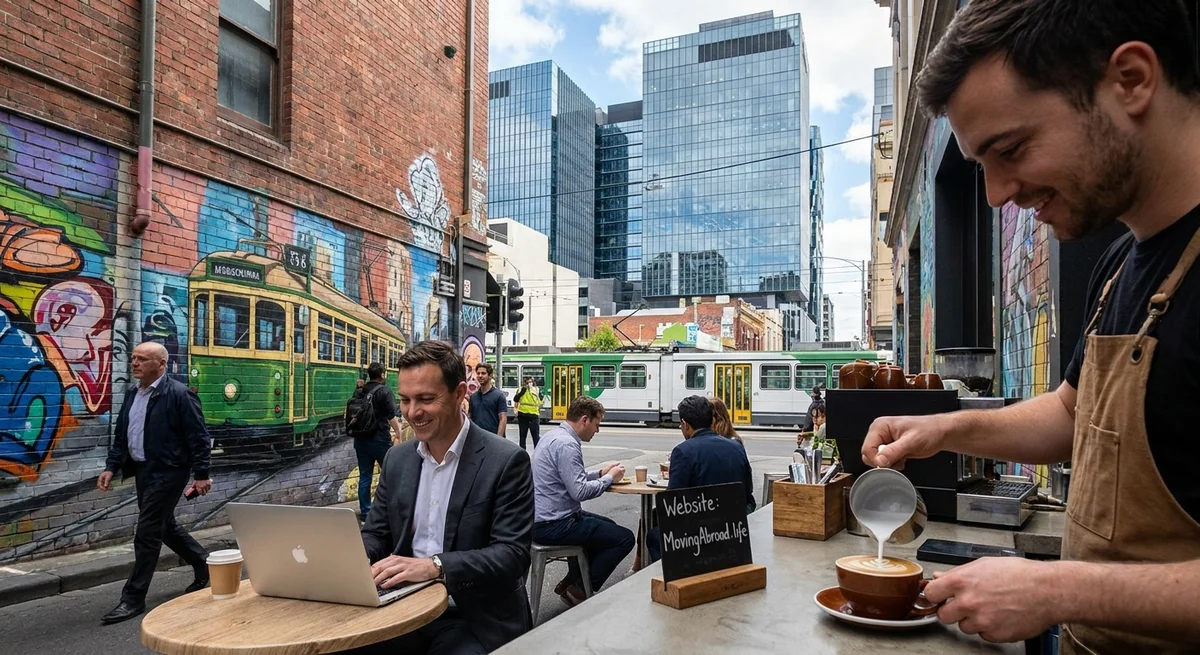
Introduction
Melbourne is Australia’s cultural capital—famous for its art, music, sport and, of course, coffee. The city’s laneways teem with independent cafes, and Melbournians pride themselves on brewing “the best coffee in the world” (ovolohotels.com). At the same time, Melbourne draws professionals with a robust economy (especially in tech and finance) and top universities. But how does living here really compare to other cities like Sydney or Auckland? This deep-dive explores safety, cost of living (rent, housing, budgets), immigration pathways, taxes and superannuation, healthcare access, transport and cycling, schools and jobs, and the trade-offs that come with Melbourne life.
Safety by Suburb
Overall, Melbourne is considered a safe city by international standards. Victoria’s Crime Statistics Agency reports very low crime in many suburbs. For example, eastern and north-eastern suburbs like Warranwood, Croydon Hills and Eltham North see only ~1,100–1,400 incidents per 100,000 people, which is about 80% below the Victoria state average (6,810/100k) (www.auguide.com.au). In general, the safest suburbs cluster in the eastern corridor (e.g. Warranwood, Park Orchards, Donvale) (www.auguide.com.au). These areas tend to be family-friendly with good schools, but also have higher home prices (often well above the city median of ~$1.1M) (www.auguide.com.au) (www.auguide.com.au).
In contrast, parts of inner Melbourne and some outer fringes have higher petty crime and anti-social behavior (as in any big city). But violent crime is rare, and police presence is strong. An international move there generally means feeling secure walking around in most suburbs. (For context, Melbourne’s homicide rate is very low; the biggest crime issues are graffiti and car break-ins in some inner areas.) For families, many of the top-ranked “safest suburbs” have excellent public and independent schools nearby (www.auguide.com.au). Overall, Melbourne’s crime levels are well below the worst urban areas, but as always it pays to research each neighborhood.
Cost of Living: Melbourne vs Sydney and Auckland
Melbourne’s cost of living is high, but still slightly less than Sydney’s. Analyses find Melbourne ranks #2 most expensive in Australia (just after Sydney) (sortedaus.com.au). Daily expenses (rent, groceries, etc.) for a single person typically run on the order of A$3,800–4,800 per month, compared to about A$4,500–5,500 in Sydney (sortedaus.com.au). Rent is the biggest factor: one-bedroom apartments in central Melbourne average A$450–600 per week, whereas similar Sydney units go for A$550–750 (sortedaus.com.au). (By comparison, a one-bed in central Auckland rents around NZ$540–640, roughly A$450–540 (moneybalance.co.nz), so Auckland can be cheaper than both.)
-
Housing costs: Melbourne’s median house price was about A$1.08 million in early 2026 (www.domain.com.au). Sydney’s median was much higher (around A$1.79 M) (www.domain.com.au). Units follow the same pattern (Melbourne ~$610K vs Sydney ~$848K) (www.domain.com.au) (www.domain.com.au). In Auckland, a larger three-bedroom home might run NZ$900–1,000K (roughly A$800–880K), generally lower than Melbourne’s median houses. Overall, buyers will pay a safety premium on housing: many of Melbourne’s safest leafy suburbs (e.g. Park Orchards) have house prices well above the city average (www.auguide.com.au) (www.auguide.com.au).
-
Monthly budgets: In practical terms, an individual living modestly in Melbourne needs roughly A$4–5K per month (including rent) to get by comfortably, whereas Sydney often requires closer to A$5–6K (sortedaus.com.au). A family of four can expect to spend well over A$10,000 per month on rent, food, transport and leisure. By comparison, Auckland is somewhat cheaper: updated estimates say a single person there spends NZ$2,800–3,500 (≈A$3.0–3.8K) per month, a couple NZ$4,500–6,000 (moneybalance.co.nz) — still expensive by global standards, but lower than Australian big-city levels.
-
Rent vs Buy: Melbourne’s rental market is tight. Vacancy is very low (~1% as of early 2026) and rents have mostly plateaued after years of growth (www.domain.com.au) (www.domain.com.au). Recent data show median rents about A$590/week for houses, A$600 for units (www.domain.com.au). Demand is easing due to affordability limits, but Melbourne’s high population means competition stays strong.
In summary, Melbourne offers a high standard of living but at a price. Living costs are on par with other major OECD cities, lower than London/New York but above many Asian and European capitals. Wages in Melbourne are also relatively high: average salaries are among the country’s top three (with Canberra and Sydney) (sortedaus.com.au). Many expats find that Melbourne’s slightly lower costs (vs Sydney) and slightly lower home prices (vs Auckland’s skyrocketing market) help balance things.
Immigration Pathways (Skilled & Employer Visas)
Moving to Melbourne requires Australian immigration through one of the points-tested or employer-sponsored visas. Skilled visas are popular for workers: typically the Skilled Independent (Subclass 189) or State-nominated (Subclass 190/491) streams. Victoria’s State Nomination (Subclass 190 and Regional 491) targets professionals in demand here (often tech, healthcare, engineering, trades). In 2025–26 Victoria had 3,400 nomination spots allocated by the federal government (liveinmelbourne.vic.gov.au) (2,700 for Subclass 190 and 700 for Subclass 491). This is a limited quota, and applicants must meet points and occupation criteria – competition can be stiff. (Victoria’s nominated occupations list changes each year but typically includes IT specialists, engineers, teachers, medical professionals, etc.)
For those with an Australian job offer, employer-sponsored visas are an alternative. The Employer Nomination Scheme (Subclass 186, permanent) and Temporary Skill Shortage visa (Subclass 482) are common routes. Many Melbourne employers sponsor skilled tech workers, healthcare professionals and engineers. However, holding a job offer is often required upfront. In either case, English proficiency, qualifications, and sometimes registration (e.g. nurses) are needed.
Finally, family reunion visas can apply if you have immediate family in Australia, but these are separate pathways (and also backlogged). In essence, Melbourne is reachable for skilled migrants, but you must navigate Australia’s structured visa program. Demand is high, so applicants should research the visa steps thoroughly and consider using a migration agent if needed.
Taxes, Superannuation & Medicare
Australia’s tax system is transparent but can seem high. Income tax is progressive. As of 2025–26, residents pay:
- 0% on income ≤ A$18,200
- 16% on A$18,201–45,000 (dropping to 15% from July 2026) (www.pwc.com.au)
- 30% on A$45,001–135,000
- 37% on A$135,001–190,000
- 45% on income above A$190,000 (www.pwc.com.au).
(There is also a 2% Medicare Levy on most taxpayers. (www.pwc.com.au)) For example, a nurse or mid-career engineer might pay ~20–30% marginal tax, while top tech execs (earning over A$200K) pay ~47% including the levy. Importantly, above-$18K threshold and asset shelters (like super) can reduce your rate. Australians get tax-free thresholds and various rebates, but overall expect a higher bite from tax than in many countries.
Superannuation (forced retirement savings) is mandatory. Employers must contribute on your behalf – 11.5% of your salary in 2024/25, rising to 12% from July 2025 (www.nationwidesuper.com.au). This is locked away until retirement age and (for internationals) generally accessible only when leaving Australia permanently. It’s a significant addition: effectively your paycheck appears bigger, but about 12% goes straight into your super fund.
Medicare is Australia’s public health insurance. Permanent residents (and citizens) can enroll and receive free or subsidized healthcare. Once you gain a permanent visa (Subclass 189/190/491, etc.), you become eligible for Medicare (www.servicesaustralia.gov.au). This covers free public hospital care and rebates on doctor visits (typically 85-100% of the Medicare schedule fee). New Zealand citizens actually become eligible on arrival due to a special arrangement (they meet the “residency” requirement). Visitors from Canada, UK, etc., have partial coverage in emergencies via reciprocal agreements, but most other foreign nationals must either be permanent residents or purchase private health insurance. In practice, many expat workers sign up for a short-term private plan until/if they secure PR, then switch to Medicare coverage.
Summary: Expect to pay roughly 30-40% of pre-tax income to the government (via income tax and Medicare). Factor tax into any salary negotiations. The superannuation guarantee means your employer adds an extra 12% on top of your salary into a retirement fund (www.nationwidesuper.com.au). And once permanent, you’ll enjoy Australia’s excellent universal healthcare.
Transit, Cycling and Infrastructure
Melbourne boasts one of the world’s most extensive public transport networks. The city operates 16 suburban train lines (the “Metro” lines reaching far into suburbs) plus dozens of high-frequency bus routes. In addition, Melbourne has the world’s largest tram network (www.guinnessworldrecords.com): about 250 km of track, 30 routes and over 1,700 stops. Many key corridors (CBD, inner suburbs like St Kilda and Brunswick) are served by trams every 5–10 minutes. There’s even a free “City Circle” tram for tourists through downtown. Fares are unified via the Myki smartcard across trains, trams and buses.
Commuting can be efficient, especially within the inner city. The recent addition of Melbourne’s Metro Tunnel (connecting major lines via new underground stations at Parkville and South Yarra) plus upgraded tracks is improving travel times. However, coverage thins in distant suburbs: some outer areas remain car-dependent. In fact, cars are still common – over 60% of Melburnians drive to work (similar to other big cities). Traffic congestion can be a downside, especially during peak hours on main arterials.
Cycling infrastructure is improving. The City of Melbourne has built dozens of kilometers of protected bike lanes, and big annual “Super Tuesday” bike counts track steady usage. Bicycling to work remains a small share (~2-3%) of trips, but local investment in bike lanes and bike-share schemes is growing. If you enjoy biking, you’ll find dedicated cycle paths along major routes (e.g. Capital City Trail around the inner city). Weather permitting, many Melburnians use bikes or e-scooters for short commutes.
In short, Melbourne’s transport network is strong by Australian standards. Transit is reliable around the city, and there are options for cars, trains, trams and bikes. Road congestion is a trade-off in outer areas, but many residents can live car-free if they choose inner-city or middle suburbs.
Schools and Education
Melbourne’s education scene is world-class at all levels. For K–12 schooling, residents have three main sectors: public (government), Catholic, and independent private. State schools are free for Australian citizens and permanent residents (www.tutero.com). These include ordinary local catchment schools and a few elite “selective entry” schools, such as Melbourne High (boys) and Mac.Robertson Girls’ High, which offer top academic outcomes at no tuition cost. Government schools are generally well-resourced, and most families send children to their local public school.
Private schools charge fees – Catholic schools are the least expensive private option (roughly A$10–20K/year), while elite independent schools can be A$30–48K per year (www.tutero.com). Many expatriates do pay for private education if they want co-educational or international programs (like IB). In short, you’ll find a rich mix: world-ranked public schools downtown, an extensive Catholic system across suburbs, and hundreds of high-quality independent schools. Melbourne also has some of Australia’s top universities: the University of Melbourne (ranked ~#22 globally (www.topuniversities.com)), Monash, RMIT, La Trobe and others. About 40% of University of Melbourne’s 50,000+ students are international (www.topuniversities.com), reflecting the city’s strong education export industry.
Quick schooling takeaways: Public school = free (for PR/citizens), often neighborhood-based. Private school = high fees but smaller classes or special programs. The school zone (catchment area) can greatly affect where families choose to live. School performance indexes and Selective entry exams are an important part of Melbourne’s education landscape (for example, Melbourne High and Mac.Rob are competitive yet fee-free).
Careers: Tech, Healthcare, Education and More
Melbourne has a diversified economy with particular strengths in knowledge industries. In the City of Melbourne (the downtown municipality) the largest employment sector is Professional, Scientific and Technical Services (roughly 22% of jobs) (census2022.azurewebsites.net). This includes IT, engineering, legal, architecture and consulting. Indeed, Melbourne’s tech community is thriving: the Cremorne Digital Hub precinct hosts 700+ tech companies and ~10,000 workers (www.invest.vic.gov.au). Well-known Australian tech firms (Carsales, SEEK, REA Group, MYOB, etc.) and startups are clustered around Cremorne. A $50M state “Cremorne Venture Fund” even invests in local tech entrepreneurs (www.invest.vic.gov.au). In short, software engineering, data science and digital media jobs are plentiful and growing in Melbourne.
The finance & insurance sector is also large (15.7% in the city centre) (census2022.azurewebsites.net) and many banks and fintech firms have offices in Melbourne’s CBD. Public administration and safety (11%) is significant too, reflecting government offices and agencies (census2022.azurewebsites.net).
Healthcare and education are major employers across greater Melbourne. The state’s premier hospitals and research institutes are mostly in Melbourne (especially around Parkville). The Parkville precinct alone employs ~73,000 people in biomedical research, clinical care and education (www.invest.vic.gov.au), making it a national leader in medical innovation. Major hospitals (Royal Melbourne, Alfred, Peter MacCallum, etc.) and biotech labs are based here, so doctors, nurses and researchers find ample opportunity. The education sector (universities and schools) also hires many staff, though our data show City of Melbourne itself has a smaller share (about 6%) in education jobs (census2022.azurewebsites.net) because campuses are spread in the suburbs. Still, Melbourne’s universities are major local employers and draw global talent.
Outside these, other healthy industries include construction (roads, real estate development), creative arts (film, music, design – Melbourne is often called Australia’s creative heart), and hospitality/tourism (cafe, food and events). Job growth in tech, healthcare and professional services has been robust in recent years. For example, post-pandemic hiring surged: Melbourne added +21,900 tech-related jobs and +14,700 healthcare jobs in a recent period (census2022.azurewebsites.net) (census2022.azurewebsites.net).
In summary: Melbourne offers deep job markets in technology/finance, healthcare, higher education and government. Salaries tend to be highest in finance and tech, a bit lower in public sector. Compared to Sydney, salaries are generally similar (sometimes lower in finance but higher in tech), and cost-of-living is slightly less (see above). Auckland, by contrast, is much smaller; corporate headquarters and major tech firms are mostly in Sydney or Melbourne in the Australia/NZ region. So for career-minded migrants, Melbourne’s strength in modern industries and its global universities is a big draw.
Entertainment, Culture and Coffee
No article on Melbourne would be complete without the culture and lifestyle angle! The city’s nickname “Melbourne, I’m kind of a big dill” (a pun on dill pickles) hints at its zany food and arts scene. Melbourne hosts flagship events like the Grand Prix, the Australian Open (tennis), the Melbourne Cup (horse racing), and countless music/film/fashion festivals. Its street art-filled lanes, diverse neighborhoods (Chinatown, Little Italy’s Lygon Street, Greek precinct in Oakleigh, etc.), and more than 95 wineries within an hour’s drive speak to the rich multicultural fabric.
Coffee culture: Perhaps the single most famous Melbourne stereotype is its coffee obsession. Walk down Flinders Lane or Brunswick Street, and you’ll find cafes everywhere. Indeed, many travelers claim “Melbourne serves up the best coffee… not just down under, but in the world.” (ovolohotels.com). This pride isn’t unfounded: Australia’s espresso-driven café scene was pioneered by Italian and Greek immigrants in the 1950–60s (ovolohotels.com). Today nearly every suburb has a local roast. Specialty drinks like the flat white and piccolo latte were honed in Melbourne. If you’re a coffee lover, moving here means breakfast culture: expect to budget roughly A$4–6 per artisan coffee each day (a latte, cold brew or “long black”). Over a week it adds up, but locals consider it a joyful expense — caffeine + social time = daily ritual.
Food and drink: Beyond coffee, Melbourne is famous for its restaurants and bars. “Cuisine capital” claims aren’t exaggerated: you can find anything from award-winning fine dining to tiny hidden-booth ramen spots. Brunch, Asian fusion, vegan bakeries, craft beer pubs and laneway cocktails are all part of daily life. The multicultural mix (almost half the population has immigrant roots (www.abs.gov.au)) means a dizzying array of international choices. Compared to Auckland, Melbourne’s food scene is larger (more chefs, fusion styles) and generally more expensive than capital cities like Kuala Lumpur or Bangkok, but on par with peers like Vancouver or Seattle. Be prepared to spend A$20–30 per person at most sit-down restaurants.
Nightlife and culture: Expect a vibrant arts scene with theatres, comedy clubs and galleries. The National Gallery of Victoria and state library are free. Professional sports (Aussie rules football, soccer, cricket) sell out stadiums and give a distinct local flavor. When it comes to culture and leisure, Melbourne scores very high on “quality of life” surveys — often ranking in the top 5 cities globally for livability. This is due to a combination of safety, infrastructure and rich cultural offerings (though it’s usually eclipsed by nearby Vienna or Auckland in some rankings).
Add attribute: Many people find Melbourne feels European in size but with an Australian lifestyle pace. Coffee in hand, arts and parks around every corner, it’s a city that loves to live up to its cultural reputation.
Trade-offs and Conclusion
No place is perfect, and Melbourne has its trade-offs. Three stand out:
-
High housing costs: While cheaper than Sydney, Melbourne home and rent prices are still very steep by world standards (www.domain.com.au) (www.domain.com.au). Expect to pay a premium for safe neighborhoods and good school zones. Owning a house typically requires a six-figure mortgage early on. This is mitigated somewhat by higher salaries than many regions, but you’ll trade off space (many city apartments are small) or endure a longer commute for affordability.
-
Visa competition: Australia’s skilled visa system is strict. Even if you have in-demand skills, there are caps and cuts. For example, Victoria only nominates 3,400 skilled workers per year (2025–26) (liveinmelbourne.vic.gov.au). Waitlists and paperwork can be stressful. Unlike a tourist visa, any long-term work visa (except a few) means applying well in advance and meeting health, character and quota requirements. Be ready for planning delays and consider getting professional advice.
-
Variable weather: Melbourne’s climate is famously fickle. With an oceanic climate under 38°S latitude, the city gets relatively mild temperatures year-round (annual average ~15°C) (theweather.guide). However, the popular warning “four seasons in one day” is accurate (theweather.guide). A sunny 25°C morning can turn into a chilly 12°C rainy afternoon. Summers bring occasional heatwaves (40°C days are not unheard of) and bushfire smoke haze, while winters are cool (often 8–15°C) and damp. This variability means newcomers should always carry a jacket or umbrella. If you prefer more stable tropical weather (as in Singapore) or warm winters (as in California), Melbourne’s climate may require adjustment.
In conclusion, Melbourne offers an attractive mix: strong economy (tech, finance, healthcare and education jobs), world-class education and healthcare systems, excellent urban amenities, and that one-of-a-kind coffee-and-culture scene. Safety is generally good (especially in its leafy suburbs), and the lifestyle freedoms (nice balance of work and play) are a big plus. In exchange, you’ll pay high housing costs, compete for visas, and weather the famously fickle climate.
For a remote worker or family prioritizing culture and quality of life, Melbourne can be compelling—just be sure to budget carefully. For retirees or anyone on a fixed income, the expenses (health insurance for non-residents, taxes, housing) will require solid planning. No matter your profile (tech professional, healthcare worker, student or empty-nester), researching each factor above will help you decide if Melbourne’s unique charm and opportunities outweigh its challenges.
Sources: Various government, real-estate and research publications (www.auguide.com.au) (www.guinnessworldrecords.com) (www.pwc.com.au) (www.nationwidesuper.com.au) (www.servicesaustralia.gov.au) (ovolohotels.com) (www.domain.com.au) (sortedaus.com.au) (moneybalance.co.nz) provided the data and insights above.