 Auto
Auto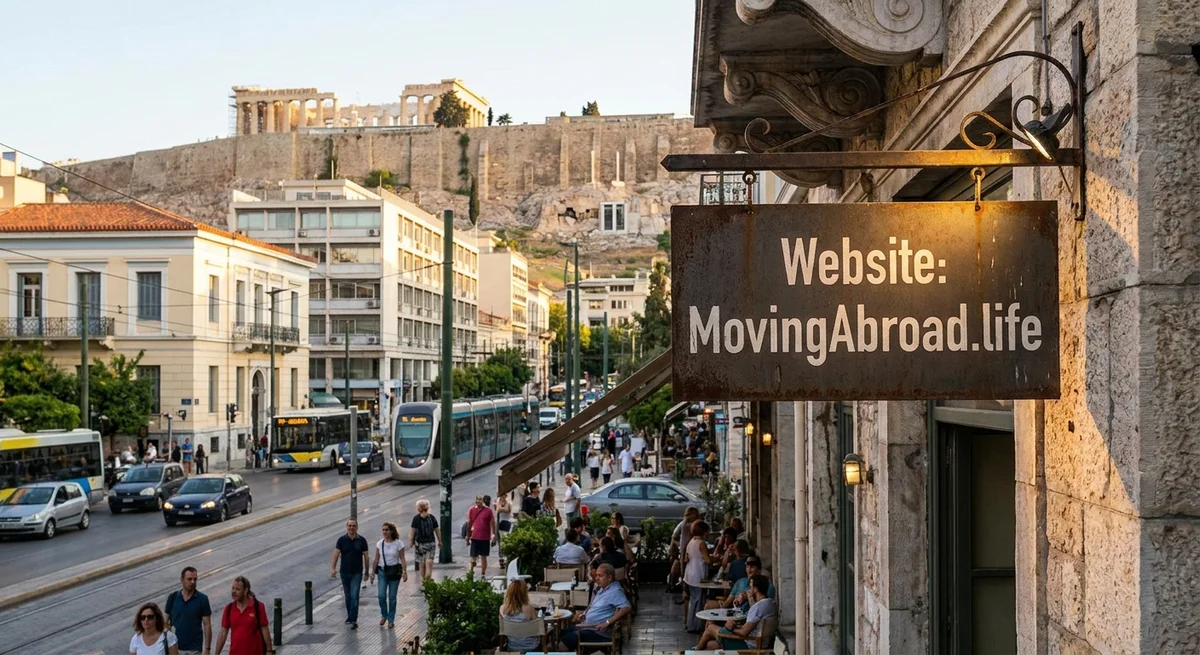
Athens, Greece: Historic Capital in a Modern Reset
Athens combines millennia of heritage with a lively modern scene – and in 2025–2026 it’s rebooting itself as a top destination for digital nomads and retirees. The city offers low costs, sunny climate and serious incentives to attract foreigners (from a new Digital Nomad Visa to a flat-7% tax on foreign pensions). But a move here also comes with Greek-style bureaucracy, summer heat and urban bustle. We’ll give you the data on safety, housing costs, visas, healthcare, climate and more – and even compare Athens to Lisbon and Thessaloniki so you can make an informed choice.
Neighborhoods and Safety
Athens is a big, bustling city – but on the whole it feels moderately safe by European standards (violent crime is low, pickpocketing the main threat) (tripsfromathens.com). Local guides rate Athens’s crime profile similar to Madrid or Lisbon: “low violent crime” and mostly opportunistic theft (tripsfromathens.com). Many popular central quarters – Koukaki, Pangrati and Glyfada – are considered quite safe, especially at night. For example, an Athens blogger lists Koukaki, Pangrati and Glyfada among the neighborhoods that are safe at night (tripsfromathens.com). Another expat guide calls Koukaki “very safe – residential with a strong community feel and well-lit streets” (expatlife.ai). Glyfada (a suburban coastal town in Athens) even scores 88/100 on safety indices, putting it among the city’s top three safest districts (safedistricts.com).
By contrast, a few areas are worth avoiding after dark. The streets immediately west of Omonoia Square (e.g. Sofokleous, Sokratous) and parts of the Patission corridor around Larissa Station are known for drugs or aggressive panhandling (tripsfromathens.com). These pockets are mostly uncomfortable rather than truly dangerous, but it’s wise to stay clear of them at night. In general, though, most residents and visitors feel comfortable walking around late in central Athens (unlike in some larger cities). Parents moving for school will be pleased to know that family-friendly suburbs like Filothei-Psychiko and Kifissia score very high on safety (above 90 on local safety maps) (safedistricts.com).
For comparison, note that Thessaloniki (Greece’s second city) is likewise quite safe and even a bit cheaper overall. Expats report that Thessaloniki is “15–20% cheaper” than Athens for the same lifestyle (expatlife.ai), with a crime climate similarly mild. Lisbon, Portugal also ranks as a safe European capital (Athens is roughly in line with Lisbon (tripsfromathens.com)), though Lisbon has the advantage of mild Atlantic breezes and fewer summer ozone days. In short, Athens is not unusually dangerous: with common-sense urban precautions, it feels as safe as other mid-sized European cities.
Cost of Living & Housing
Athens is known for very affordable living costs by Western standards. Housing, in particular, is a bargain compared to most of Western Europe. Rents vary widely by neighborhood, but here are ballpark figures:
- Pangrati (central-east district): A hip, urban area popular with locals and expats. According to real estate data, a 2–3 bedroom apartment in Pangrati rents for roughly €550–€850/month (beta-globe.com). (One-bedroom flats would be cheaper.) This makes Pangrati far more affordable than many central districts.
- Koukaki (just south of the Acropolis): A trendy and walkable neighborhood. Expat guides list a typical 1-bedroom rent at about €800–€1,300/month (expatlife.ai). Koukaki is mid-range by Athens standards – not the cheapest, but very convenient to the center and lively cafes.
- Glyfada (southern coastal suburb): An upscale beach suburb 20–30 minutes from the center. Rents are higher here: around €1,000–€1,600 for a 1-BR apartment (expatlife.ai). You pay for the seaside location and international schools (more on that below), but Glyfada’s safety and amenities are top-notch.
In practice, most remote workers and retirees find they need roughly €1,200–€1,600 per month for a modest single-person lifestyle, and around €1,600–€2,200 for a comfortable one (greektriplanner.me). This includes housing, food, utilities and local transport (the table below from a 2026 planner site illustrates the differences):
| Expense | Athens (€) | Thessaloniki (€) | Notes |
|---|---|---|---|
| Rent (1-BR, central) | €700–1,200 (greektriplanner.me) | €450–700 (greektriplanner.me) | Prices rise 30–50% in peak season |
| Groceries/month | €200–350 (greektriplanner.me) | €180–300 (greektriplanner.me) | Markets are cheaper options |
| Public transport pass | €30–50 (greektriplanner.me) | €25–40 (greektriplanner.me) | Monthly pass (metro/bus) |
| Dining out (per meal) | €10–18 (greektriplanner.me) | €8–15 (greektriplanner.me) | Tavern lunch with wine |
| Total (modest, single) | €1,200–1,600 (greektriplanner.me) | €900–1,300 (greektriplanner.me) | Monthly (no visa/insurance) |
| Total (comfortable) | €1,600–2,200 (greektriplanner.me) | €1,300–1,800 (greektriplanner.me) | Better apt, more dinners out |
These numbers exclude one-time costs (like a visa application or international health insurance). Indeed, a popular expat site confirms a comfortable single-person budget in Athens as about €1,400–€2,200/month, compared to €2,000–€2,500 in Lisbon (expatlife.ai) (greektriplanner.me). In other words, Athens is significantly cheaper than Lisbon. Thessaloniki is cheapest of the three: roughly 15–20% below Athens (expatlife.ai) (greektriplanner.me).
Monthly Budget Tiers
- Basic/Modest tier: If you rent a small apartment and cook most meals, expect to spend around €1,200–€1,600/month (greektriplanner.me). This covers a center 1-BR (~€700–1,000), local groceries (€200–300), and minimal extras.
- Comfortable tier: With a nicer apartment or more dining out, budgets grow to €1,600–€2,200 (greektriplanner.me). For example, a city-center 1-BR at €900–1,300, plus dining or travel, pushes costs up. Many sources (ExpatLife, Greek Trip Planner, etc.) show this upper range for a hassle-free life in Athens (greektriplanner.me) (expatlife.ai).
- Premium tier: If you insist on luxury (big apartment, frequent restaurants, private schooling, etc.), you can easily exceed €2,500/month – but that’s not necessary, as mid-range options sufficently showcase Athenian lifestyle.
Visa and Tax Incentives
Greece has rolled out attractive programs to lure foreigners. The centerpiece is the Digital Nomad Visa: a Type-D national visa for non-EU remote workers. It lets you live in Greece while employed or freelancing for companies abroad. The key requirements (from the Greek Ministry’s own handbook) are:
- Income: You must demonstrate sufficient resources or a salary of at least €3,500 per month (net, after taxes) if you’re solo (workfromgreece.gr). (That rises by 20% for a spouse and 15% for each child.)
- Duration: The visa itself entitles you to 12 months’ stay; afterwards you can apply for a Digital Nomad Residence Permit, which is valid for 2 years and renewable (workfromgreece.gr). In total you can stay (via renewals) up to 5 years under this scheme according to Greek law.
- Restrictions: You cannot take up work for a Greek employer (nor even freelance for Greek clients) while on this visa (workfromgreece.gr). All your income must come from outside Greece.
In addition to the visa itself, Greece offers tax incentives. The Tax Code’s Article 5C provides a 50% income tax exemption for new residents who qualify – essentially taxing only half your Greek-taxable income for seven years (remotetaxcalc.com). This means remote workers bring home roughly twice as much as if they were full Ethiopian tax rates. Meanwhile, retirees moving to Greece have a special deal: foreign pensioners can opt to pay a flat 7% tax on all their foreign-sourced income, for up to 15 years (www.kathimerini.gr). In practice this 7% flat-rate regime (introduced in 2022) allows a U.S. retiree to transfer an IRA/Social Security to Greece and pay only 7% of it, instead of typical double-digit rates (www.kathimerini.gr) (www.kiplinger.com).
Other incentives are relatively niche. For instance, some remote villages or islands have offered housing and small stipends to newcomers. The tiny island of Antikythera famously offered a free house, a plot of land and €500 per month for five years to attract residents (www.kiplinger.com). (These are local programs for remote communities, not widespread urban policies.) The big draws for most remote workers and retirees are the visa and tax breaks. Greek authorities also maintain residence programs like the Golden Visa (large property investment) and the Financially Independent Person (FIP) permit for retirees with passive income. The FIP permit requires about €3,500/month after tax in passive income (pensions, investments, etc.) (www.machas-partners.com) and grants a 3-year renewable residence, but explicitly does not allow work in Greece (www.machas-partners.com).
In summary, Greece now has a robust package: Digital Nomad Visa + 50% tax rule for remote workers, and 7% flat tax for expatriate retirees (remotetaxcalc.com) (www.kathimerini.gr). Reports note these changes make Greece one of Europe’s most enticing places tax-wise – even compared to Portugal or Italy. (For example, Kiplinger highlights Greece’s 7% flat tax for up to 15 years as a “major draw” given local tax rates (www.kiplinger.com).)
Healthcare Access and Costs
Greece has a universal public health system (ESY) that covers all legal residents who obtain an AMKA social insurance number (expatlife.ai). In practice, as soon as you have the FIP permit or digital-nomad residency and register for social security, you can use public clinics and hospitals (emergency care is immediately available, and routine care is heavily subsidized). However, the public system has been strained by austerity, so many expats supplement with private insurance or out-of-pocket visits.
- Public care: Once you have AMKA, basic GP visits at state clinics are free or nominally priced (expatlife.ai). Public hospitals in Athens (e.g. Laiko, Evangelismos) are well-equipped for emergencies, but wait times for non-urgent treatment can be long. Overall quality is comparable to other southern European countries.
- Private insurance: Most newcomers opt for some private health plan. Basic private coverage for a healthy adult typically costs around €60–€120 per month (expatlife.ai). Comprehensive international plans run higher (€100–€300+/mo depending on age). These give faster access and choice of doctor.
- Out-of-pocket: Private doctor visits are quite affordable. A GP consultation typically runs €40–€80 (expatlife.ai) (many offer same-day appointments). Specialist visits (no referral needed) are about €80–€150 (expatlife.ai). Dental check-ups ~€50–€100, blood tests ~€50–€150. By contrast, similar care in Western Europe or the U.S. would cost far more.
- For EU citizens: The European Health Insurance Card covers emergencies or short-term stays, but long-term residents usually register with ESY.
In short, basic public healthcare access is guaranteed (and usually quite good in Athens), and out-of-pocket prices are low by international standards (expatlife.ai) (expatlife.ai). Still, many expats budget around €100–€200 extra per month for private insurance and occasional private care, just to avoid any hassle.
Climate and Environment
Athens has a classic Mediterranean climate – very hot, dry summers and mild winters. July daytime highs average around 33°C (91°F) (www.weatherapi.com), and heat waves past 38–40°C are not uncommon. Nights remain warm (low ~24°C in July (www.weatherapi.com)), so air conditioning is practically a necessity in summer. The city is one of Europe’s hottest capitals in July. Winters are mild, with January highs around 13–15°C and lows near 5–9°C (www.weatherapi.com); snow is exceptionally rare in central Athens. Spring and fall are very pleasant, often cited as the best travel seasons when it’s sunny and mild.
Air quality is generally acceptable on a normal day, but can suffer in extremes. In summer, stagnant heat and traffic can trap ozone and fine particulates in the basin. Crucially, wildfires have become a real hazard. In June 2025, for example, Athens endured a severe heat wave and a large wildfire south of the city that forced evacuations as temperatures approached 40°C (apnews.com). Again in July 2026, authorities reported dangerous wildfire smoke: Thessaloniki residents were told to stay indoors due to “toxic smoke” from blazes on the horizon (apnews.com), and a fire raced through pine forests just outside Athens. These events underscore that summer climate extremes (deadly heat and forest fires) are rising threats in Greece. On high-smog days, expect lower visibility and warn-of health concerns.
In terms of pollution “hotspots”: the noisiest and smoggiest areas tend to be major traffic corridors. Routes like Kifisias Avenue, Mesogeion/Attiki Odos (the ring road), and central squares (Omonia, Plateia Attikis) carry heavy diesel truck and car traffic, so particulate levels can spike there. By contrast, leafy suburbs (e.g. Filothei, Psychiko) or up on hills (e.g. Mets) are quieter in both sound and air quality. If you are sensitive to pollution, avoid residences immediately adjacent to highways or bus terminals; even smokers find the Athens summer air drier and dustier than Lisbon’s mild Atlantic breeze or Thessaloniki’s winter inversions.
Air quality comparisons: Lisbon generally enjoys cleaner air thanks to Atlantic winds, whereas Athens (in a valley) can see short spikes from dust (Saharan sands) and wildfire smoke. Thessaloniki has its own issues (winter wood-burning and a pollution-hungry valley), but overall all three cities are manageable if you avoid the peak crisis periods (heatwaves and peak winter).
Infrastructure and Transit
Athens is a sprawling metropolis (metro pop. ~3.7 million) but has surprisingly good transit options, especially compared to smaller Greek cities. The Metro has three lines covering much of the city: Line 2 (red) and Line 3 (blue/green) run north–south through the center, and Line 1 (green) runs to Piraeus port. As a result, many neighborhoods are within a 5–10 minute walk of a station. For example, Koukaki has two metro stops within a 10-minute stroll (Syngrou-Fix and Acropolis stations (expatlife.ai)), giving fast access downtown and to the airport (Line 3 goes to the airport). Athens also has a rail link (“Proastiakos” suburban trains) and a coastal Tram line: Glyfada’s new tram terminus is a 40-minute scenic ride to Syntagma Square (expatlife.ai). Over a dozen trolleybus and bus routes fill in the gaps. A monthly transit pass costs only €30–50, excellent value for a city of this size (greektriplanner.me).
Taxis and ride-hailing are also plentiful. Uber operates via a partnership with licensed taxi drivers (similarly to FreeNow), so you can get rides through apps. However, taxi fares are relatively high and drivers sometimes use extra fees (always insist the meter runs). In practice, remote workers living centrally usually don’t need a car: most services, co-working spaces and shops are metro-accessible or within cycling distance. Athens even has bike-sharing (Vio.Me) and a growing e-scooter scene.
Comparison: Lisbon’s transit is similar in that it has a modern metro (4 lines) and a retrofit of trams, though many of its hills make walking less practical. Thessaloniki, in contrast, has no metro yet (one is under construction) – it relies on buses and some soils. This gives Athens an edge if proximity to transit is critical. Roads in Athens can be congested and parking scarce, but for a digital nomad the idea is you usually stay in one spot and commute by metro anyhow.
Schools and Families
For those moving with children, Athens has plenty of schooling options, especially international ones. Many expat families send kids to English-language or other international schools. Notably, Glyfada and the southern suburbs are school hubs: Glyfada alone hosts the American Community School (ACS) and Byron College (both top-rated international schools) (expatlife.ai). Other well-known schools are Athens College (American-oriented college-prep) in Psychiko, the French Lycée in Maroussi, and the German School. These private schools often have long waitlists, so applying early is advised (one Glyfada guide notes “apply early for September enrollment” in ACS or Byron (expatlife.ai)). Greek public schools exist for families living here permanently, but they teach in Greek and typically require local residency paperwork.
By comparison, Thessaloniki has a few international schools (one Franco-Hellenic and one German/English school) but far fewer seats, so imports of teachers help. Lisbon, meanwhile, has a robust network of international schools (American, German, French, and others) with curricula (IB, UK, etc.) that many cosmopolitan families appreciate. All told, Athens is well served for families at every budget range, though expect application fees and private tuition if you go the international route.
Bureaucracy, Real Estate and City Noise
A candid look: Greece maintains an old-school bureaucracy, and many expats warn that paperwork can be a headache. Don’t underestimate the time to set up bank accounts, tax numbers and residency permits. Visiting government offices often involves standing in lines and filling out forms in Greek. (On the plus side, many younger officials and private services speak good English.) As a rule, plan for every permit or registration to take weeks rather than days, and consider hiring a local “fixer” or lawyer to navigate licenses, tax filings and so on.
Buying property requires extra caution. Greece’s land registry is still incomplete (Greece has been digitizing property records only in recent decades), so someone selling you an apartment might not have 100% of heirlooms scanned online. It is strongly recommended to hire a Greek attorney or notary to perform a full title search (νομιμάς έλεγχος) on any real estate. This legal audit will check the local land registry (“ypothekeion” records) and ensure there are no undisclosed liens, back taxes or legal disputes on the property. In cities like Athens, it’s rare but not unheard of to uncover overlapping deeds or unrecorded renovations. A good lawyer is an essential expense – better to pay for confidence than to fall victim to a title dispute years later.
Finally, be aware of noise and pollution hotspots. As in any metropolitan area, certain areas are simply loud and grimy. For example, living right on Omonoia or Patission can mean constant street noise and diesel fumes from buses. The Attiki Odos highway ring (parts of Kifissias Ave, Mesogeion Ave) is busy 24/7, so apartments on those arterials will pick up the roar of traffic. Likewise, some nightlife districts (Psyrri/Gazi) are lively until dawn – great for partygoers, annoying if you want quiet at night. Conversely, calmer residential pockets (like Pangrati’s internal streets or leafy suburbs) are quiet and pleasant. In terms of air quality, avoid living at busy road intersections; even though Athens’s overall pollution is moderate, sensitive individuals notice imperfections when cities continuously burn diesel, especially on hot, still days. (Wildfire smoke is usually peripheral; unless you’re extremely risk-averse, it’s hard to avoid seasonal smog events everywhere in Greece.)
In short, Athens is livelier and somewhat noisier (“grittier”, as one expat site puts it) than Lisbon, and certainly more than small Thessaloniki. But it all depends on your block. In general, expect more bustle and vehicle exhaust on Athens’ main roads, and plan accordingly (good windows and A/C can mitigate heat and noise).
Athens vs Lisbon and Thessaloniki
It’s instructive to benchmark Athens against two peers:
-
Athens vs Lisbon: Both are sunny southern capitals popular with expats, but Athens is distinctly cheaper and bohemian, while Lisbon is more polished. ExpatLife notes that a typical budget is ~€1,400–2,200 in Athens versus €2,000–2,500 in Lisbon (expatlife.ai). Rent is a big factor: central Athens 1-BRs run ~€900–1,300 (expatlife.ai), whereas Lisbon’s are often above €1,500. Safety and amenities are on par. Lisbon’s big pluses are its mild Atlantic climate and top-tier public healthcare, but Athens offers better connectivity by public transit and far friendlier costs for freelancers. Both cities now have digital-nomad visas, but Portugal’s current 10% flat tax (Non-Habitual Resident) compares with Greece’s 7% pension tax and 50% earnings exemption. In practice, Americans retiring might lean toward Lisbon’s 10-year NHR scheme, while working nomads might choose either – Athens simply costs less.
-
Athens vs Thessaloniki: Thessaloniki is smaller (~1.1M metro) and much more student-oriented. Budget-wise, Thess is about 15–20% cheaper (expatlife.ai). A single’s monthly costs in Thessaloniki run roughly €1,100–1,700 (expatlife.ai), versus €1,400–2,200 in Athens (greektriplanner.me). Apartments in Thessaloniki’s center (e.g. in Kalamaria or near the waterfront) can go for €500–900 for a 1-BR – significantly less than downtown Athens (expatlife.ai). Thess also ranks higher on walkability (flat grid streets) and has a vibrant food scene and nightlife fueled by its universities. However, it doesn’t have a metro or airport rail link, and it lacks Athens’ scale of job opportunities and cultural institutions. Expats often say Thessaloniki feels “more relaxed and intimate,” but Athens has the advantage of a world-class international airport, larger expat community, and direct ferry links to the Greek islands. Safety and English fluency are similar in both cities. In short, if budget is king and you love a collegial vibe, Thessaloniki can beat Athens on price – otherwise Athens’ variety of immigrant services and connectivity wins out.
Conclusion
Athens today is a city of contrasts: an ultra-modern EU capital built atop ancient ruins, with everything from co-working cafés to centuries-old taverns. For remote workers and retirees, Athens shines in many ways. The living cost is low, especially versus Western Europe (e.g. Lisbon), and neighborhoods like Koukaki, Pangrati and the southern suburbs are both pleasant and relatively safe (tripsfromathens.com) (safedistricts.com). The new visa regimes and tax incentives mean you can take home much more money: a Digital Nomad Visa (one-year, renewable) comes with only a €3,500 net income requirement (workfromgreece.gr), and income or pensions from abroad can be taxed at only 50% or 7% respectively (remotetaxcalc.com) (www.kathimerini.gr). Public healthcare is free for residents, with high-quality private options at affordable prices (expatlife.ai) (expatlife.ai).
On the other hand, Athens has its quirks. The summer heat can be extreme, with the threat of wildfires or smog episodes in bad years (apnews.com) (apnews.com). Bureaucracy and paperwork are famously slow; a residency or property purchase takes patience. Traffic noise fills many streets, so your specific location matters. Water supply is generally fine, but occasional shortages can occur in drought years (a general issue in Greece). In person, Athens is more chaotic and less polished than Lisbon – the trade-off is that it’s cheaper and feels more “authentically” local.
Ultimately, Athens offers a compelling package for those wanting history, sunshine and value. If you compare with Lisbon, you’ll save a few hundred euros a month (with similar visa perks), though Lisbon’s mild climate and infrastructure are nice. Compared to Thessaloniki, Athens has more housing stock, more transport (and more sprawl) – but Thessaloniki is smaller, cheaper and very walkable. The choice depends on your priorities.
Bottom line: Remote workers and retirees can live very comfortably in Athens on moderate budgets (often under €2,000/month) thanks to low rents and living costs (greektriplanner.me) (expatlife.ai). Safety is generally good outside a few gritty pockets (tripsfromathens.com) (safedistricts.com). Greece’s new visa and tax rules (Digital Nomad visa, 7% pensioner tax, 50% tax exemption) make the financial case strong (workfromgreece.gr) (www.kathimerini.gr). Just be prepared for the Greek way of doing things – stay patient with paperwork, double-check any property purchase, and find an apartment that suits your noise and climate comfort. With those accommodations, Athens can offer a very attractive lifestyle in 2026 and beyond.