 Auto
Auto
Global Jobs Snapshot, July 2026: Where Work Is Growing—and Where Artificial Intelligence Is Reshaping It
Snapshot date: July 27, 2026
Introduction
The global labor market is not in a broad hiring boom. It is in a selective expansion.
Employment remains high in many regions, unemployment is still low by historical standards, and demand remains strong in health care, education, construction, energy, manufacturing, logistics, and digital infrastructure. However, hiring is slower in many white-collar fields, especially for entry-level workers.
The main story is a mix of two forces:
- Cyclical forces—such as interest rates, trade uncertainty, energy prices, and weak business confidence—which are slowing hiring in several advanced economies.
- Structural forces—including population aging, rapid population growth in Africa and South Asia, robotics, digital platforms, and artificial intelligence—which are changing the type of work employers need.
The International Labour Organization projects a global unemployment rate of 4.9 percent in 2026, but also estimates that the global jobs gap will reach about 408 million people. The jobs gap includes people who want paid work but cannot find it, even when they are not counted as officially unemployed. (ilo.org)
A key warning is that official statistics do not yet show a worldwide wave of artificial intelligence-driven job losses. Instead, the clearest early signs are slower entry-level hiring, changing skill requirements, and more automation of routine tasks. The International Labour Organization says generative artificial intelligence has not yet fundamentally reshaped total employment, while the World Bank warns that artificial intelligence may slow hiring in some entry-level occupations. (ivoire-rse.com)
How to Read This July 2026 Snapshot
The data are not all from the same month:
- Official national data: Mostly through June 2026.
- International Labour Organization regional estimates: Full-year 2026 modelled estimates, prepared in November 2025.
- European vacancy data: First quarter of 2026.
- LinkedIn hiring data: Mostly through May 2026 or early 2026, depending on the report.
- Indeed job-posting data: Through June 2026.
- Lightcast data: The latest global data release was completed on June 17, 2026.
This means the tables below provide the best available July 2026 picture, not a single synchronized monthly survey.
The International Labour Organization estimates use broad regional groups. In this article, “Europe” refers to the organization’s Europe and Central Asia group, “Middle East” refers to the Arab States, and “North America” refers to Northern America, which includes the United States and Canada but not Mexico.
Comparable Regional Labor Market Scoreboard
| Region | Employment in 2026 | Employment-to-population ratio | Unemployment rate | Labor force participation rate | July 2026 reading |
|---|---|---|---|---|---|
| North America | 190.9 million | 58.8% | 4.8% | 61.8% | Cooling, but still relatively strong |
| Europe and Central Asia | 427.9 million | 54.6% | 5.5% | 57.8% | Stable headline numbers, major skills shortages |
| East Asia | 868.0 million | 61.5% | 4.4% | 64.3% | Aging pressure and slower manufacturing growth |
| South Asia | 808.0 million | 51.8% | 4.6% | 54.3% | Employment expanding, with major quality and skills challenges |
| Africa | 592.3 million | 60.8% | 6.2% | 64.8% | More jobs, but population growth keeps pressure high |
| Latin America and the Caribbean | 311.1 million | 59.4% | 5.2% | 62.6% | Gradual improvement, but hiring remains uneven |
| Middle East, represented by Arab States | 63.0 million | 44.7% | 9.5% | 49.4% | Very large gap between Gulf and non-Gulf economies |
Source: International Labour Organization modelled estimates for 2026. These are annual estimates, not direct July observations, and may differ from newer national data. (ivoire-rse.com)
The main regional differences
- North America is moving from a tight labor market toward a low-churn market. Employment is still high, but hiring is cautious.
- Europe has a combination of labor shortages and labor surpluses. Employers may struggle to find nurses, electricians, welders, and cooks while some office occupations face weaker demand.
- East Asia has low unemployment by global standards, but aging populations and weaker manufacturing employment are becoming more important.
- South Asia has one of the largest pools of new workers in the world. The main challenge is creating enough productive, formal jobs.
- Africa is adding workers and jobs at the same time, but the working-age population is growing faster than the supply of stable, formal employment.
- Latin America and the Caribbean show the clearest cyclical improvement in the International Labour Organization data, with unemployment projected to fall to 5.2 percent in 2026.
- The Middle East has a sharp divide: Gulf economies have very low unemployment, while non-Gulf economies face unemployment above 16 percent.
Live National Data: What the Latest Releases Show
United States
The United States added only 57,000 nonfarm jobs in June 2026. The unemployment rate was 4.2 percent, the labor force participation rate fell to 61.5 percent, and the employment-to-population ratio fell slightly to 59.0 percent.
The fall in unemployment was not caused by a strong increase in hiring. The labor force became smaller, which helped push down the unemployment rate. Health care, social assistance, and professional and business services continued to add jobs, while leisure and hospitality lost jobs. (bls.gov)
The July employment report for the United States is not yet available. The Bureau of Labor Statistics scheduled its July report for August 7, 2026. (bls.gov)
Canada
Canada added 18,000 jobs in June 2026. The unemployment rate fell to 6.5 percent, the labor force participation rate held at 65.0 percent, and the employment rate rose to 60.8 percent.
Accommodation and food services added jobs, while manufacturing, agriculture, and utilities lost jobs. This is consistent with a labor market that is stable overall but weak in some goods-producing industries. (www150.statcan.gc.ca)
Europe
The European Union employment rate for people aged 20 to 64 reached 76.3 percent in the first quarter of 2026. The European Union job vacancy rate was 2.1 percent, while the euro area rate was 2.3 percent.
Vacancies were higher in services than in industry and construction. In the euro area, the vacancy rate was 2.4 percent in services and 2.0 percent in industry and construction. (ec.europa.eu)
The European labor market therefore shows an important contrast: overall employment is strong, but the region still has difficulty matching workers to the jobs employers need.
East Asia
Japan’s latest available monthly release showed an unemployment rate of 2.5 percent in May 2026. That low rate reflects strong labor demand, but it also reflects an aging population and a shrinking pool of available workers. (stat.go.jp)
Across East Asia, the employment outlook is more mixed. Technology-related exports and advanced manufacturing are supporting demand, but property weakness, trade risks, and aging populations are limiting broad employment growth. The International Labour Organization projects that East Asian employment will decline slightly in 2026 even as total production remains high. (ivoire-rse.com)
Vacancy Rates and Online Hiring Signals
Vacancy rates are useful because they show how many jobs employers are trying to fill. However, they are less comparable than unemployment rates because countries count vacancies differently. The Organisation for Economic Co-operation and Development warns that vacancy definitions are not fully harmonized across countries. (oecd.org)
| Region | Best available vacancy or hiring-demand signal |
|---|---|
| North America | Indeed’s United States Job Postings Index stood at 101.0 on June 30, 2026, about 1 percent above the previous month and 3.7 percent below a year earlier. The vacancy-to-unemployment ratio was about one available vacancy for each unemployed worker. (hiringlab.org) |
| Europe | The European Union vacancy rate was 2.1 percent in the first quarter of 2026, and the euro area rate was 2.3 percent. Indeed reported that euro area job postings had fallen 7.5 percent since the start of 2026, while Spain was a notable exception with an 8 percent increase. (ec.europa.eu) |
| East Asia | No single regional vacancy rate is directly comparable in this snapshot. Japan has strong labor demand, but the region is affected by aging, trade uncertainty, and uneven manufacturing hiring. (stat.go.jp) |
| South Asia | LinkedIn reported that hiring in India remained more than 30 percent above its January 2020 level in early 2026, although recent momentum had slowed. (linkedin.com) |
| Africa | No reliable regional vacancy rate is available. Online job postings cover only a small part of the labor market because about nine in ten workers in sub-Saharan Africa are in informal employment. (ivoire-rse.com) |
| Latin America and the Caribbean | No single regional vacancy rate is available. LinkedIn reported weaker hiring momentum in Brazil and Mexico, although formal employment indicators have improved in parts of the region. (linkedin.com) |
| Middle East | No comparable regional vacancy rate is available. The United Arab Emirates remained well above its pre-pandemic hiring level, but its recent hiring momentum weakened. (linkedin.com) |
Online job-posting data should be treated as a directional signal, not as a replacement for official employment data. LinkedIn measures hiring among its members, Indeed measures advertised jobs, and Lightcast combines job postings, government data, and workforce estimates. Lightcast’s latest global release covers more than 165 countries, but the depth of coverage varies greatly by country. (economicgraph.linkedin.com)
Cyclical Recovery Versus Structural Change
Cyclical factors
Several short-term forces are shaping hiring in July 2026:
- High interest rates and cautious business investment.
- Trade and tariff uncertainty.
- Higher energy and transportation costs.
- Weak housing and property markets in parts of East Asia and Europe.
- A slowdown after the strong hiring period that followed the pandemic.
- Seasonal hiring in tourism, accommodation, food services, and retail.
The United States is a clear example. June employment increased only modestly, while the labor force participation rate fell. This looks more like a low-churn labor market than a powerful recovery.
Europe is another example. Employment remains high, but Indeed job postings have weakened in several major countries. This suggests that the labor market is not collapsing, but employers are becoming more selective.
Latin America and the Caribbean show more evidence of a cyclical recovery. The Economic Commission for Latin America and the Caribbean expects employment to grow by about 1.1 percent in 2026, although economic growth is expected to remain moderate. (cepal.org)
Structural factors
Long-term forces are more important than the monthly changes:
- Population aging: Japan, South Korea, China, Europe, and parts of North America face smaller working-age populations.
- Rapid population growth: Africa and South Asia need to create millions of new jobs for young workers.
- Digital transformation: More jobs require digital and data skills, even outside technology companies.
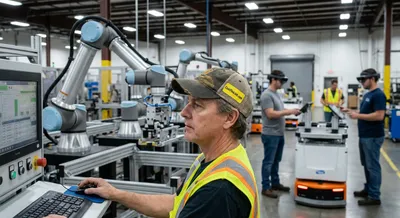
- Robotics: Manufacturing and warehouse employers are using machines for repetitive tasks while increasing demand for technicians and maintenance workers.
- Green investment: Renewable energy, power networks, electric vehicles, and construction are creating new demand.
- Artificial intelligence: Routine office tasks are becoming easier to automate, while workers who can use artificial intelligence are becoming more valuable.
- Digital platforms: Online marketplaces are expanding access to work, but often without stable pay or strong worker protections.
The Organisation for Economic Co-operation and Development reports that employment in its member countries reached about 670 million people in May 2026, with an unemployment rate of 4.9 percent. However, employment and labor force participation growth are slowing, and the unemployment rate for young people is rising in many countries. (oecd.org)
Sectors With the Strongest Hiring Momentum
1. Health care and social assistance
Health care is the strongest example of structural hiring rather than a short-term recovery.
The United States added jobs in health care and social assistance in June. Indeed reported that health care represented a very large share of recent job growth even though it is a relatively small share of total employment. LinkedIn also found health care among the most resilient industries across the United States, Canada, Brazil, France, Germany, India, Singapore, and the Netherlands. (bls.gov)
Demand is supported by:
- Aging populations.
- More health care needs.
- Shortages of nurses and care workers.
- Expansion of hospitals, clinics, and home care.
- Artificial intelligence that helps workers rather than fully replacing them.
2. Construction, infrastructure, and utilities
Construction and utilities are benefiting from infrastructure spending, energy investment, housing needs, defense spending, and data center construction.
LinkedIn reported strong monthly hiring increases in the United States in manufacturing, utilities, and oil, gas, and mining. In Northern Africa, construction accounted for about 20 percent of the increase in employment between 2024 and 2025, despite representing about 13 percent of total employment. (economicgraph.linkedin.com)
These sectors are generally less exposed to full automation because work often requires physical presence, safety decisions, local knowledge, and hands-on skills.
3. Manufacturing and industrial technology
Manufacturing hiring is uneven, but advanced manufacturing remains important in East Asia, Europe, North America, and parts of Latin America.
The Organisation for Economic Co-operation and Development reported that manufacturing remained one of the tighter sectors in the United States and euro area compared with pre-pandemic conditions. In East Asia, demand for technology-related exports is supporting industrial production, especially in electrical and optical equipment. (oecd.org)
Robotics is changing the sector in two ways:
- It reduces demand for repetitive assembly and inspection tasks.
- It increases demand for industrial programmers, maintenance workers, controls technicians, engineers, and quality specialists.
4. Logistics, transportation, and warehouses
Logistics remains important because of online shopping, supply-chain redesign, food distribution, and infrastructure construction.
LinkedIn reported hiring strength in transportation and logistics in parts of Latin America. Indeed data also showed loading and stocking jobs above the February 2020 level in the United States. (linkedin.com)
Robotics is expanding in warehouses, but it has not removed the need for workers. Instead, the work is shifting toward machine supervision, inventory control, equipment repair, route planning, and safety.
5. Artificial intelligence, data centers, and digital infrastructure
Artificial intelligence is creating a smaller but fast-growing group of jobs in:
- Artificial intelligence engineering.
- Data science.
- Cybersecurity.
- Cloud computing.
- Data center construction and maintenance.
- Semiconductor manufacturing.
- Software testing and model evaluation.
- Digital risk management.
Indeed reported that artificial intelligence-related job postings reached 5.9 percent of all postings in June 2026, well above the earlier peak of 3.3 percent in 2022. It also reported that software development job postings were beginning to rebound in several large economies. (hiringlab.org)
LinkedIn reported that job postings requiring artificial intelligence literacy skills grew by 70 percent year over year in the United States, and that about 1.3 million artificial intelligence-enabled jobs had appeared globally during the previous two years. (economicgraph.linkedin.com)
6. Education
Education continues to benefit from population growth, skills shortages, and the need for worker retraining.
LinkedIn found education to be one of the most resilient industries in several countries. Artificial intelligence is likely to change teaching work, but it is unlikely to remove the need for teachers, school leaders, trainers, and counselors in the near term. (linkedin.com)
7. Tourism and hospitality
Accommodation and food services are showing cyclical strength in some countries, especially where travel demand remains strong. However, this sector is more seasonal and more sensitive to consumer spending than health care or education.
The United States lost leisure and hospitality jobs in June, while LinkedIn found stronger momentum in accommodation and food services in the Netherlands and Singapore. This is a good example of a sector where regional conditions matter greatly. (bls.gov)
Where Artificial Intelligence Is Displacing or Augmenting Work
Artificial intelligence exposure is not the same as job loss
The World Bank estimates that about 60 percent of jobs in advanced economies, 40 percent in emerging and developing economies, and 26 percent in low-income countries are exposed to artificial intelligence in some way.
Exposure means that artificial intelligence can change the tasks in a job. It does not mean that the entire job will disappear. A job may be partly automated, redesigned, or made more productive. (thedocs.worldbank.org)
Areas facing the greatest pressure
The first pressure is appearing in work that is:
- Repetitive.
- Mostly digital.
- Easy to measure.
- Based on standard rules.
- Often performed by entry-level workers.
Examples include:
- Basic data entry.
- Routine clerical work.
- Simple customer service.
- Basic content production.
- First drafts of reports.
- Routine translation.
- Basic bookkeeping.
- Some entry-level software tasks.
- Repetitive administrative work.
Indeed reported that senior-level job postings were 14.7 percent higher year over year in May 2026, while entry-level postings were 7.5 percent lower. Entry-level postings have been falling since their 2022 peak. Software development had one of the highest shares of senior-level postings. (hiringlab.org)
This does not prove that artificial intelligence caused all of the decline. Interest rates, weak investment, and cautious hiring also matter. LinkedIn’s global research says the current hiring slowdown is mainly connected to economic uncertainty and monetary policy, rather than artificial intelligence alone. (economicgraph.linkedin.com)
Areas likely to benefit from augmentation
Artificial intelligence is more likely to augment workers in fields that require judgment, trust, physical action, or human relationships.
Examples include:
- Doctors and nurses using decision-support tools.
- Teachers creating lessons and providing personal guidance.
- Engineers testing designs.
- Lawyers reviewing large document sets.
- Financial workers checking risks.
- Software developers using coding assistants.
- Skilled trades workers using digital instructions.
- Managers analyzing large amounts of information.
- Customer service workers handling more complex cases.
The International Labour Organization’s work on the Arab States illustrates this pattern. It estimates that 14.6 percent of employment in the region has generative artificial intelligence augmentation potential, compared with 2.2 percent with automation potential. The report also finds that women have especially high exposure to both augmentation and automation because many women who hold formal jobs work in office-based occupations. (ivoire-rse.com)
Robotics and physical work
Robotics is most likely to affect:
- Assembly lines.
- Warehouses.
- Food processing.
- Vehicle production.
- Basic inspection work.
- Packaging.
- Some agricultural tasks.
The result is usually not simple replacement. Companies also need workers who can install, repair, program, supervise, and improve robotic systems.
This creates a growing divide between workers who perform routine physical tasks and workers who can operate advanced equipment. The most valuable skills are likely to combine technical knowledge with practical experience.
Digital platforms
Digital platforms are expanding in delivery, transportation, freelance services, online education, financial services, and remote work.
In Asia and the Pacific, the International Labour Organization says artificial intelligence and digital financial services may help some informal workers gain access to credit, digital payments, and formal financial systems. However, platform work can also create unstable income, weak benefits, algorithmic management, and limited worker protections. (ilo.org)
Regional Hiring Outlook
North America: Stable but cautious
Best opportunities: Health care, social assistance, construction, utilities, manufacturing, logistics, data centers, and skilled trades.
The United States and Canada still have relatively low unemployment, but hiring has lost momentum. Health care remains the strongest source of durable growth. Artificial intelligence is creating new jobs in data centers and software, but it is also making employers more cautious about entry-level office hiring.
Europe: Labor shortages beside weak hiring
Best opportunities: Nursing, health care, electricians, welders, construction, manufacturing, energy, education, and defense-related infrastructure.
The European labor market has a serious matching problem. The International Labour Organization reports that 98 percent of occupations studied were in shortage in at least one European Union country. The largest shortages included welders, nurses, cooks, and electricians. (ivoire-rse.com)
At the same time, online job postings have weakened in several countries. Artificial intelligence and the green transition are increasing demand for new skills while reducing demand for some routine office tasks.
East Asia: Technology demand, demographic pressure
Best opportunities: Semiconductors, electrical equipment, robotics, engineering, health care, elder care, data centers, and advanced manufacturing.
East Asia remains a center of industrial and technology employment. However, aging populations are shrinking the available workforce, while property weakness and trade uncertainty are limiting broad-based hiring.
The region will likely create more jobs in automation, robotics, and health care while reducing the share of employment in routine manufacturing.
South Asia: Large job growth potential
Best opportunities: Digital services, business services, construction, logistics, renewable energy, education, health care, and small-business technology.
India remains a major positive outlier in LinkedIn’s hiring data. However, the region still faces a large gap between the number of young people entering the labor market and the number of stable, formal jobs available.
Artificial intelligence could help South Asian workers sell digital services to global customers. It could also reduce demand for simple support, translation, data entry, and routine business-process work. Training quality and digital access will determine which effect is stronger.
Africa: More workers, but not enough formal jobs
Best opportunities: Construction, agriculture, renewable energy, logistics, telecommunications, digital finance, health care, and education.
Africa’s central challenge is demographic. The labor force is growing rapidly, but most workers remain in informal employment. The International Labour Organization estimates that nearly nine in ten workers in sub-Saharan Africa are informal, and more than half live in households below the moderate poverty threshold. (ivoire-rse.com)
Artificial intelligence may create new digital services and improve access to finance, but the benefits will be limited without reliable electricity, affordable internet, digital skills, and strong education systems.
Latin America and the Caribbean: Gradual improvement
Best opportunities: Health care, logistics, construction, energy, mining, agriculture technology, tourism, and digital services.
The region is expected to add jobs in 2026, but the recovery is moderate. Hiring is stronger in some commodity, logistics, energy, and construction industries than in general office work.
Artificial intelligence may affect business services and administrative work first, especially in countries that export digital services. At the same time, it could increase productivity in agriculture, finance, health care, and small businesses.
Middle East: Two very different labor markets
Best opportunities: Energy, construction, tourism, logistics, health care, defense, data centers, and digital services.
The Gulf economies have low unemployment and strong demand for infrastructure, technology, tourism, and energy projects. Non-Gulf economies face much higher unemployment, especially among young people.
The International Labour Organization estimates unemployment at 2.5 percent in the Gulf Cooperation Council economies compared with 16.4 percent in non-Gulf Arab States in 2026. (ivoire-rse.com)
Artificial intelligence is likely to create the strongest gains in the Gulf, where infrastructure and investment are more advanced. Non-Gulf economies risk falling further behind if they lack digital skills, reliable infrastructure, and investment.
Actionable Advice
For workers
- Build artificial intelligence literacy. Learn how to use common artificial intelligence tools in your field.
- Add practical skills. Combine digital skills with health care, engineering, finance, construction, logistics, or another real-world specialty.
- Do not ignore skilled trades. Electricians, mechanics, welders, equipment technicians, and health care workers are among the most durable occupations.
- Show results, not just credentials. A portfolio, project, certificate, or work sample can help prove ability.
- Prepare for changing tasks. Focus on judgment, communication, problem-solving, and working with technology.
- Use digital platforms carefully. Check pay, benefits, fees, ratings, and income stability before depending on platform work.
For employers
- Automate tasks, not people by default. Redesign jobs so workers can use artificial intelligence rather than simply removing positions.
- Invest in entry-level training. If companies stop hiring beginners, they may create future skill shortages.
- Measure productivity and job quality together. Faster work is not enough if errors, burnout, or turnover increase.
- Hire for skills where possible. Many workers can perform well without a traditional university degree.
- Train workers before introducing robotics or artificial intelligence. This improves adoption and reduces disruption.
For governments and schools
- Expand short, affordable technical training.
- Improve career information using current hiring data.
- Support digital access in rural and low-income communities.
- Protect platform workers without blocking new business models.
- Create stronger links between schools and employers.
- Track artificial intelligence-related job changes by occupation, age, gender, and region.
Conclusion
The July 2026 global jobs market is best described as resilient but selective.
Employment is growing in essential services, infrastructure, health care, education, logistics, energy, and advanced manufacturing. However, hiring is not spreading evenly. Many employers are cautious, entry-level office roles are under pressure, and workers face stronger competition for professional jobs.
Artificial intelligence is not yet causing universal mass unemployment. Its more visible effects are task automation, slower entry-level hiring, higher demand for artificial intelligence literacy, and faster growth in technical and digital infrastructure jobs.
The most important divide is no longer simply between “technology jobs” and “non-technology jobs.” It is between work that can be easily standardized and work that requires judgment, physical skill, trust, care, creativity, or responsibility.
The regions most prepared for the next stage of work will be those that combine strong education, digital access, worker training, infrastructure investment, and policies that help people move into better jobs.