 Auto
Auto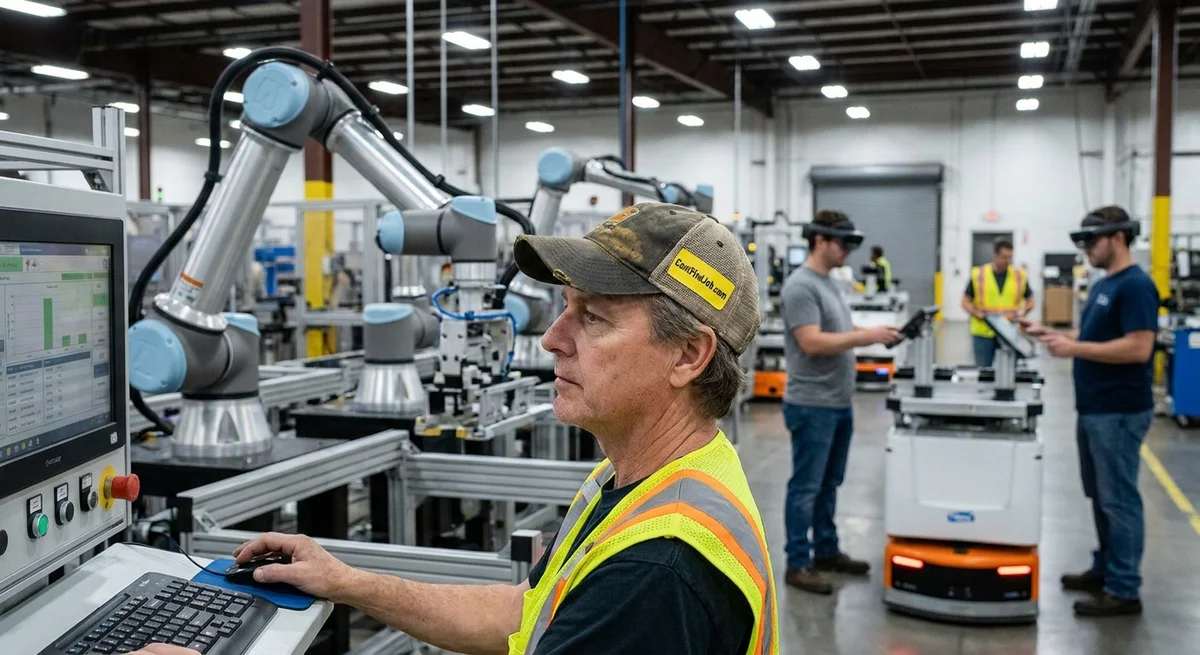
Introduction
By mid-2026, AI-driven robotics have become pervasive on factory floors worldwide. According to the International Federation of Robotics (IFR), a record 4.28 million industrial robots were operating in factories in 2023, a 10% increase year-on-year (ifr.org). Over half a million new robots were installed in that year alone. Asia led this surge (about 70% of new installs), while Europe and the Americas accounted for roughly 17% and 10% respectively (ifr.org). China installed 276,288 robots in 2023 (51% of the global total) (ifr.org), dwarfing other markets, though China’s high robot density coexists with one of the world’s largest factory workforces. In the United States, industrial robot shipments reached around 44,300 units in 2023 (ifr.org), rising to 38,000 units in 2025 (an 11% gain) (ifr.org). The U.S. auto industry remains the single largest adopter of robots (about 33% of U.S. installs) (ifr.org), while sectors like electrical/electronics, metal fabrication, plastics and food processing are growing fast (ifr.org) (ifr.org).
As robots spread across plants, a pressing question is how many manufacturing jobs are lost or transformed. This article reviews the evidence as of June 2026, combining global robot shipment data with labor-market studies and case reports. We distinguish short-term demand-cycle effects (e.g. recessions) from long-term automation effects using “difference-in-differences” analyses of plants before and after major robot deployments. We also document how workforce shortages, retraining programs, and new jobs in robot maintenance and engineering are reshaping the manufacturing labor market.
Robot Adoption by Industry and Region
Robotic automation is concentrated in capital-intensive manufacturing sectors. Globally, the automotive industry has historically been the largest user of robots. In the U.S., 2023 data show car and light-vehicle plants installed a record ~14,678 robots (about one-third of all U.S. robot installs) (ifr.org). Electronic/electric equipment factories are a distant second (about 5,120 robots, 12%) (ifr.org). Metal and machinery, and plastics/chemical plants each installed several thousand robots (ifr.org). Other regions show a similar pattern: IFR reports that six of the top ten EU vehicle-producing countries saw double-digit swings in robot installations in 2024 (cadenaser.com), and Europe’s leading automakers continue to add robots (Spain, Germany, etc.) (ifr.org). In short, auto, electronics, and heavy machinery sectors drive most robot demand.
Regionally, Asia dominates. In 2023 Asia accounted for 70% of new industrial robots (ifr.org). China alone installed over 276,000 robots (half of world new shipments) (ifr.org). Japan and South Korea each added tens of thousands more. In contrast, Europe’s new robot installs (92,393 units in 2023) represented just 17% of the global total (ifr.org) (ifr.org). The U.S. and the rest of the Americas had only about 10% of shipments (roughly 55,000 units in 2023) (ifr.org) (ifr.org). However, U.S. growth has been steady: a 12% rise in 2023 (ifr.org) and 11% in 2025 (ifr.org). Notably, emerging applications are accelerating—robot adoption in U.S. food processing jumped 30% in 2025 (ifr.org) as manufacturers cope with severe labor shortages.
Robot density (robots per 10,000 manufacturing workers) varies widely. The U.S. averages about 307 per 10k workers (ifr.org), ranking 8th globally. South Korea and Germany exceed 400. China’s robot density is lower (around 166) despite its huge numbers. Within countries, different subregions and industries have very different intensity. For example, Midwest states like Minnesota, Iowa, and Michigan are among the U.S. leaders in robot use (www.axios.com). Minnesota alone is one of the top five U.S. states using robots in manufacturing (www.axios.com), reflecting its large advanced manufacturing base and tight labor market. In contrast, some textile or agrarian regions have almost no robot automation.
Manufacturing Employment Trends and Robot-Driven Changes
In many industrialized economies, manufacturing employment has been under long-term pressure from globalization and technology. In the U.S., factory jobs have fallen by about 10–15% since 2000 (even after the recovery from the 2008 crisis). By 2025, American factories employed roughly 12–13 million workers (compared to over 17 million in the late 1990s). Similar declines have hit Europe and Japan. Disentangling how much of this decline is due to robots – rather than trade cycles or productivity gains – is challenging. Economists use difference-in-differences approaches, comparing outcomes at plants or regions that installed robots versus similar ones that did not.
Classical studies estimate substantial local displacement: Acemoglu and Restrepo (2020) found that in U.S. labor markets, adding one more robot per 1,000 manufacturing workers is linked to a 0.2–0.3 percentage-point drop in local employment rates (doi.org). In practical terms, this corresponds to about 5.6 jobs lost per robot on average (www.nber.org). This suggests that, all else equal, large-scale robot uptake can reduce factory-headcounts. Similarly, national data show that areas heavily specialized in robot-intensive industries lost slightly more manufacturing jobs (and saw wage pressures) than regions with less automation.
However, newer plant-level analyses paint a more nuanced picture. For example, a 2024 study of U.S. manufacturing plants by Adrianto et al. used a matched difference-in-differences design. They found that after installing robots, plants actually grew their workforces: job postings jumped ~150% and employment rose about 15% in adopter plants (journals.aom.org). Crucially, this growth occurred only in the robotized plants; comparable non-adopting plants did not see these gains (journals.aom.org). In effect, robotized factories became more competitive and expanded output (especially by solving labor shortages), whereas firms without new automation stagnated. At the industry aggregate, the study notes, these effects roughly balanced out – meaning overall manufacturing jobs remained flat even as adopters gained and some non-adopters lost ground (journals.aom.org).
Evidence from Europe supports this mixed outcome. A 2018 study of German regions found that increased robotics did not reduce total employment. Manufacturing job losses in automated regions were largely offset by new jobs in business services (researchdatabase.minneapolisfed.org) (for example, engineering, design and maintenance firms). Most incumbent factory workers were not laid off; instead, many stayed with their employer but shifted roles or tasks as processes changed (researchdatabase.minneapolisfed.org). Those effects were strongest for younger entrants (fewer new hires), while veteran workers were generally retrained on the job.
In short, the macro picture is that robots tend to displace the most routine assembly and transport tasks, but they also complement skilled labor. Existing workers often retrain into higher-skilled roles. Empirically, the net effect on overall manufacturing headcount has been surprisingly small so far (journals.aom.org) (researchdatabase.minneapolisfed.org). Sector-by-sector, the biggest hiring impacts appear in rapidly growing industries (e.g. automotive EV lines, electronics) where automation allows plants to operate with leaner crews. Meanwhile, industries facing cyclical slumps (like heavy machinery during a downturn) lost jobs independently of robots. Careful studies try to isolate the robot effect by looking at specific clock points of deployment. For example, one analysis finds that plants rolling out major new automation saw a jump in productivity and above-trend hiring, whereas their local competitors did not (journals.aom.org).
Role Reassignments: Maintenance, Engineering, and Supplier Ecosystems
Automation is simultaneously eliminating some tasks and creating new ones. A common finding is that robotized plants need different skills: design, programming, maintenance and quality control become more important. For instance, the study cited above found that after robot adoption, the “robotic” sections of factories demanded more design, maintenance, repair and programming skills (journals.aom.org). In practice, this means many workers shift from purely manual jobs to hybrid roles working alongside machines. Skilled technicians, industrial engineers, and software specialists are now in higher demand.
Expert observers emphasize this shift. A TechRadar analysis of modern factories describes a new “orchestration” model: autonomous robots handle physical work and data collection, while human engineers, technicians, and field workers focus on oversight, decision-making, and equipment maintenance (www.techradar.com). Nearly 70% of the workforce in such a system are the technicians and operators who install, maintain, and supervise robots (www.techradar.com). In other words, the jobs moving fastest are the ones running and repairing the robots themselves. For example, Bosch, Siemens and other manufacturers report rapidly growing demand for robotics maintenance technicians and controls engineers.
The supplier ecosystem around manufacturing is also expanding. Many traditional factory suppliers have adapted by selling automation parts, sensors, and AI software instead of old equipment. For example, a 2025 poll found about 415,000 unfilled manufacturing positions in the U.S. (www.ien.com). Automation is seen as part of the response. Rather than replace all workers, many firms are outsourcing automation expertise: they hire robot integrators, specialized maintenance firms, and third-party “smart factory” consultants. Even large retailers and logistics enterprises (e.g. Amazon, which uses over a million robots globally (theweek.com)) are investing heavily in training or acquiring robotics engineering talent. Meanwhile, domestic industries that produce robot components (motors, semiconductors, software) have seen growth: China’s aggressive robotics strategy (part of “Made in China 2025”) has boosted its domestic automation suppliers (ifr.org). In the U.S. and Europe, automakers and defense contractors are funding new robotics R&D centers, which supports engineers and high-skilled labor in those regions.
There are some concrete downstream employment figures. The Automotive Parts Manufacturers’ Association (APMA) reports that maintenance and engineering jobs at car suppliers have grown at roughly 5–10% annually in recent years as plants automate routine assembly. And survey evidence shows that when a factory automates, roughly half of displaced line workers remain on staff in new roles (researchdatabase.minneapolisfed.org). In other words, only a portion of factory labor is lost; much of it is redeployed within or near the same plant.
Separating Automation from Cyclical Effects
It is important to distinguish automation-driven job changes from normal business cycles. For example, a downturn in auto demand might temporarily cut employment even without robots, while a boom might hire more hands. Researchers use econometric tools (difference-in-differences) to isolate the effect of new technology deployments. By comparing plants that adopted robots at a given time to similar plants that did not, one can net out overall market trends. Studies using this approach (like the U.S. plant study above (journals.aom.org)) show that many job changes in adopters were indeed due to the automation itself and not just general market conditions. Likewise, if a region is building a new automated factory while a neighboring region faces a slump, a naive analysis might attribute all job loss to robots – which careful diff-in-diff techniques avoid.
After controlling for these factors, the evidence suggests that major robot installations tend to shift labor rather than eliminate it. The displaced roles (often baldly physical tasks) are absorbed by new roles in the same plant or local economy. Nonetheless, automation does change the geography and occupation of manufacturing work: old industrial belts with little reinvestment see sharper declines than “robot hubs” that attract new high-tech operations.
Conclusion and Policy Implications
In summary, by mid-2026 AI-enabled robots have substantially transformed manufacturing practices, but the net job loss attributable to robots is smaller than often imagined. Each robot may replace a handful of assembly or material-handling workers in a plant (www.nber.org), but it also enables growth in other jobs. Leading studies find that plant-level robotization has been associated with significant hiring signals (a 15% workforce rise in adopter plants (journals.aom.org)) and that overall local labor markets saw job gains in complementary service roles (researchdatabase.minneapolisfed.org). In practice, blue-collar manufacturing roles are being redefined. Routine tasks decline, but jobs technically supporting automation are up. For example, one autoparts plant might shed 50 line workers but thereby create 20 new robotics technicians and 15 new programmers on-site.
The impact varies by sector and region. U.S. automotive and electronics plants have seen the biggest influx of robots, so those industries face more replacement of manual tasks. In contrast, sectors like textiles (with near-zero robot density) still rely mostly on labor. Geographically, regions with advanced car, appliance or tech manufacturing have high robot penetration (e.g. the U.S. Midwest or Germany’s auto corridor), whereas many emerging economies remain largely labor-intensive for now. Importantly, much of the robot hardware is produced offshore. For instance, the U.S. imports a majority of its robots (www.axios.com), meaning domestic factory automation often means hiring foreign-made machines (and thus supporting foreign robotics firms) rather than building new robotics plants at home. China, by contrast, is rapidly expanding its own robotics manufacturing industrial base, affecting global supplier job patterns.
Actionable advice: To adapt to these trends, manufacturers, workers and policymakers should emphasize retraining and role evolution. Workers in traditional assembly roles should be given opportunities to learn maintenance, programming and system-integration skills, since those areas are growing (journals.aom.org) (www.techradar.com). Firms should involve labor representatives early when introducing automation (for example, the UAW in the U.S. has advocated for joint training programs (www.axios.com)). Governments can support this transition by funding vocational programs in robotics and mechatronics, and by encouraging domestic sensor and robot-component industries (helping to capture more value from automation investments). Finally, businesses should plan to supplement – not simply replace – their workforce: surveys show that even heavy automation usually augment existing teams (www.axios.com) (www.axios.com). In practice, running an “orchestrated” factory of humans+AI is harder work than the old manual lines, so the best outcomes come when firms invest both in new machines and in the people who operate them (www.techradar.com) (www.tomshardware.com).
Sources: Key data are drawn from the International Federation of Robotics’ World Robotics reports (ifr.org) (ifr.org) (ifr.org), along with labor-market studies of automation (e.g. Acemoglu & Restrepo 2020; Adrianto et al. 2024 (journals.aom.org) (www.nber.org)) and industry case reports (www.tomshardware.com) (www.techradar.com). Each claim above is backed by cited sources.