 Auto
Auto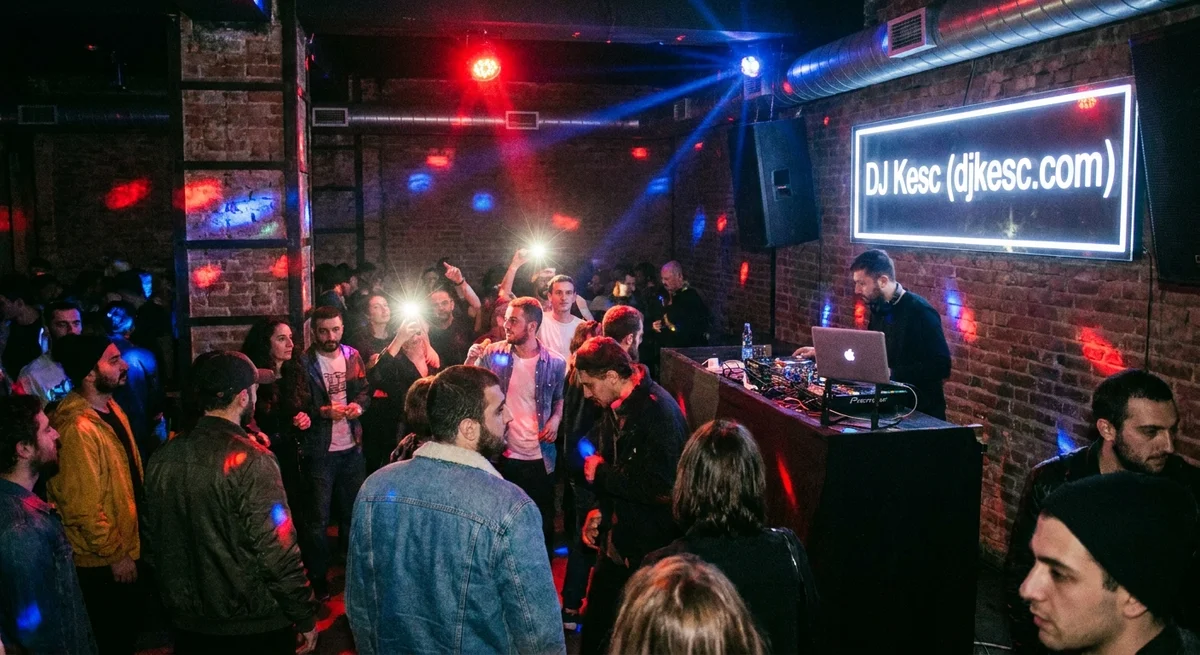
After-Hours in Tbilisi, Georgia: A Deep Dive into the Capital’s Club Culture
Tbilisi is one of the rare cities where techno is not only a music choice. It is also a way to talk about freedom, identity, privacy, and political change.
The city’s best clubs are hidden in former Soviet buildings, under bridges, inside stadiums, and beside the Mtkvari River. Parties often begin after midnight and may continue until breakfast. The crowd can include local DJs, students, artists, queer communities, visiting ravers, and travelers who came from far away for one night on a famous dance floor.
But Tbilisi is not a simple “cheap Berlin.” Its clubs have serious door policies, strong privacy rules, and a history of political action. The right approach is to treat the scene as a living community, not as a tourist checklist.
Important note: Prices, lineups, room openings, and door rules change often. The ranges below are practical planning figures for 2026, not guarantees.
How Tbilisi Became a Post-Soviet Techno Capital
The early years: small rooms and new freedom
Georgia’s modern electronic music revival began in the early 2010s and became much stronger around 2014. At that time, electronic music was still a small part of the country’s music life. Early spaces such as Café Gallery helped build a local audience. Mtkvarze followed with house, disco, and experimental nights. Then Bassiani gave the scene a much larger home. Georgia Travel (georgia.travel)
The timing mattered. Georgia was independent from the Soviet Union, but many young people still lived around conservative social rules, economic pressure, and memories of war and political unrest. Clubs became places where people could dress differently, meet across social groups, dance without being watched, and explore identities that were less accepted in public life. We Are Europe (preproduction.weare-europe.eu)
This is why Tbilisi’s techno scene often feels more intense than a normal weekend party. For many regulars, the club is a temporary free zone.
Bassiani changes the scale
Bassiani opened in 2014 beneath Tbilisi’s Dinamo Arena, inside a former swimming pool. The location gave the club a powerful visual language: Soviet sports architecture was turned into a dark, modern dance floor. The main room’s concrete walls and large scale helped make the club internationally famous. The Guardian (theguardian.com)
In 2016, KHIDI opened under a bridge and added another major room to the city’s growing techno map. Together with Café Gallery and Mtkvarze, these venues made Tbilisi a serious destination for international DJs and electronic music fans. Georgia Travel citeturn13search2
The 2018 “Rave Revolution”
The scene became globally known after police raided Bassiani and Café Gallery on May 12, 2018. The authorities said the operation targeted drug dealing. Clubbers and activists saw the raid as a heavy-handed attack on nightlife, personal freedom, and drug-policy reform. Human Rights Center of Georgia (hrc.ge)
The next day, thousands gathered outside Georgia’s Parliament. DJs played music, people danced in the street, and the protest became known internationally as the Rave Revolution. Human Rights Watch later criticized Georgia’s harsh drug laws and called for a public-health approach instead of severe punishment. Human Rights Watch (hrw.org)
The famous idea that “we dance together, we fight together” came from this period. It helped turn Tbilisi club culture into a symbol of protest, not just entertainment.
The Main Venues
Bassiani and Horoom
Location: Beneath Dinamo Arena, near Tsereteli Avenue and Station Square.
Bassiani remains Tbilisi’s most famous club. The main room is built for long techno sets, deep bass, little light, and serious dancing. It is not a place designed around table service, selfies, or casual conversation.
The club also has Horoom, a smaller room with a different mood. Horoom is often linked with queer-focused programming, house, slower electronic music, and more experimental bookings. The exact style depends on the night, so check the event listing before going. Bassiani’s own 2026 calendar shows that Horoom can continue operating even when the main Bassiani room is not open. (bassiani.com)
Bassiani entry rules
Bassiani’s online ticket system is more demanding than that of most clubs. Online buyers must be verified, provide personal information for age checking, and may buy only one ticket. Entry requires the ticket QR code and a real identity document. A scan or photocopy is not accepted. Bassiani terms (bassiani.com)
The club also bans photography, video, phone flash, screen lights, smoking inside, and ticket transfers. Bassiani/Horoom rules (bassiani.com)
Bassiani has a selective door. The best approach is simple:
- Bring your passport or valid ID.
- Know which event you are attending.
- Do not arrive visibly drunk.
- Avoid large, noisy groups.
- Wear clothes that are comfortable for dancing.
- Do not film the queue or argue with the door staff.
- Do not treat the club like a sightseeing attraction.
My view is that the door policy makes sense as a safety tool, but it can also feel mysterious and unfair to visitors. A club that protects a vulnerable community still has a duty to explain its rules clearly.
KHIDI
Location: Under a bridge on the river, around Sanapiro Street and the President Heydar Aliyev Embankment.
KHIDI is the darker, more industrial alternative to Bassiani. It is known for techno, EBM, experimental electronic music, bass, and harder sounds. The club has the main KHIDI room and the smaller G2 room. Large events may add outdoor or temporary spaces.
KHIDI celebrated its 10th anniversary in June 2026 with a two-day, 48-hour program featuring more than 30 local and international artists across KHIDI, G2, and an outdoor space called HAERI. (ageofhate.com)
KHIDI security and privacy
KHIDI’s official rules are clear. Guests agree to a search at entry. Liquids cannot be brought inside. The club asks people to respect others regardless of gender, sexual orientation, ethnicity, or age. Aggressive, sexist, or homophobic behavior can lead to removal. Photography is discouraged, and guests are asked to keep phones away from the dance floor. KHIDI house rules (khidi.ge)
The club also says that personal and characteristic clothing is welcome, while suits and uniforms may be refused. This is not the same as saying everyone must wear black. The better rule is: dress for the music, not for Instagram.
Mtkvarze
Location: On the left bank of the Mtkvari River, around Agladze Street.
Mtkvarze is one of Tbilisi’s most characterful venues. It occupies a former Soviet-era fish restaurant and has a more relaxed feeling than Bassiani or KHIDI. Its music can include house, disco, techno, hip-hop, and experimental electronic sounds. It usually has a main room, a smaller room, and a river-facing terrace or outdoor area. Petit Futé (petitfute.co.uk)
It is often a good first club for newcomers because the door is usually less intimidating and the music is wider in style.
A recent July 31, 2026 season-closing event listed entry at 50 GEL, with a cheaper 20 GEL price before midnight. It ran from 11 p.m. until 9 a.m. Resident Advisor (ra.co)
Left Bank
Location: Dodo Abashidze Street 10, on the left bank of the river.
Left Bank is more than a nightclub. It is a community and arts space with indoor dance floors, outdoor programming, live performances, screenings, and local creative projects. Its music can move from techno to house, experimental electronic music, hip-hop, and live performance. Left Bank (leftbank.club)
Left Bank has one of the clearest inclusion policies in the city. It bans harassment, racism, queerphobia, sexism, transphobia, violence, and other abusive behavior. Guests who are visibly drunk, disruptive, or under the influence may be refused entry. Everyone agrees to a search, and phone cameras must be covered at the door. Left Bank house rules (leftbank.club)
A typical published Left Bank event in 2026 listed entry at 30 GEL, with free or reduced entry during early hours on some nights. Left Bank event listing (leftbank.club)
One practical warning: Left Bank’s layout changed in 2026. Space Two was scheduled to close after the land behind the club was sold, while the team planned an expansion into a nearby former car-wash area. Check the current room map before you go. Resident Advisor (ra.co)
Smaller Rooms and Local Options
Café Gallery
Café Gallery is one of the older names in Tbilisi’s electronic music story. It combines a café, art space, and small club atmosphere. It is more intimate and less monumental than Bassiani or KHIDI.
A published 2025 club night listed entry at 10 GEL, with a minimum age of 21 and a passport or ID requirement. That price should be treated as an example, not a permanent rule. Resident Advisor (ra.co)
TES and Mutant Radio
TES and Mutant Radio are part of the smaller, more experimental side of Tbilisi’s nightlife network. These spaces are useful for local DJs, open-deck nights, radio sessions, left-field music, and community events. They may feel less like a major club and more like a meeting point for artists and regulars.
The best way to find these nights is through current event calendars, Instagram, Resident Advisor, and local Telegram or social-media channels. Schedules can change quickly.
Horoom and G2
Do not think of Horoom and G2 as simple “second rooms.” They often have their own musical identity and can be the best part of a night. On quieter weekends, the smaller room may offer a more focused crowd and a gentler atmosphere than the main floor.
Door Policies, Security, and Inclusivity
Tbilisi’s club security culture is built around four ideas:
- Privacy
- Consent
- Crowd control
- Protection from harassment
That is why the major venues restrict photography, search bags, check ID, and remove aggressive guests. These rules are not only about finding drugs or weapons. They are also about keeping a dance floor private and reducing unwanted attention. KHIDI and Left Bank both publish detailed rules about harassment and discrimination. (khidi.ge)
The difficult debate
The same system can create tension.
A selective door can protect queer people, women, minorities, and local regulars from harassment. But it can also leave visitors confused about why they were refused. The visitor may feel that the system is based on appearance, nationality, race, class, or insider status.
There is no easy answer. In my view, face control is defensible only when it protects safety, not when it becomes a performance of power. Visitors should respect a refusal, but clubs should also make their standards as clear and consistent as possible.
The debate became sharper after Russia’s invasion of Ukraine. The Washington Post reported in 2022 that Bassiani, known for its pro-diversity politics, banned people with Russian passports. For many Georgians, this reflected the country’s history of Russian occupation and the war in Ukraine. For others, it raised hard questions about whether nationality-based exclusion fits with an international, inclusive club culture. The Washington Post (washingtonpost.com)
Bassiani’s own manifesto archive shows that the club has continued to speak about anti-LGBTQ legislation, the so-called “Russian law,” protest, solidarity, and political repression. In 2026, Georgia’s wider civic space is also under pressure, according to Amnesty International. (bassiani.com)
What It Costs
Georgia uses the lari, written as GEL or ₾.
Typical cover charges
| Venue type | Practical 2026 planning range |
|---|---|
| Small club or local night | 10–30 GEL |
| Left Bank-style event | Around 30 GEL, sometimes free early |
| Mtkvarze | About 20–50 GEL, depending on time and event |
| KHIDI | Often 40–90 GEL for major nights |
| Bassiani | Roughly 30–40 GEL advance when available; door prices may reach 60–100 GEL |
| Two-day anniversary or marathon event | About 100–140 GEL |
KHIDI’s published 2026 events show how prices rise with lineups: a normal major event ranged from about 50 to 90 GEL, while its two-day anniversary listed tickets from 100 to 140 GEL. KHIDI events (khidi.ge)
Bassiani’s online ticket system is difficult to price from outside the verified platform. Current local guides place advance tickets around 30–40 GEL and larger door prices around 60–100 GEL. Treat those as planning figures and check the exact event. Current Bassiani guide (georgia-spirit.com)
Drinks
A sensible budget is:
- Beer: around 8–15 GEL
- Water or soft drink: around 3–8 GEL
- Basic mixed drink: around 15–25 GEL
- Cocktail: around 20–35 GEL
Prices depend on the venue and the night. Current Tbilisi nightlife guides place beer around 6–10 GEL in ordinary bars and cocktails around 15–25 GEL, while clubs and special events may charge more. (georgiaexpats.com)
Carry some cash, even if you plan to use a card. Major clubs often accept cards, but smaller bars and temporary event spaces may not.
A realistic full-night budget is 100–180 GEL for entry, two or three drinks, a late taxi, and food. Big international lineups can push that higher.
The Main Nightlife Zones
1. Chughureti, Fabrika, and Saarbrücken Square
This is the best warm-up zone for visitors. You will find cafés, courtyard bars, creative spaces, small music events, and places to meet people before the clubs open.
Fabrika is especially useful because it has food, drinks, a courtyard, a hostel, and breakfast from 8 a.m. to noon. Fabrika (hostelfabrika.com)
2. Dinamo Arena and Station Square
This is Bassiani territory. The stadium area can feel quiet and industrial during the day. At night, look for the club entrance and follow the event instructions rather than wandering around the arena.
3. The river and bridge corridor
KHIDI and Mtkvarze are both connected to the Mtkvari River, but they are not right beside each other. Roads, bridges, rail lines, and industrial spaces can make the walk confusing.
Use a ride-hailing app between venues, especially after midnight.
4. Rustaveli and the Old Town
Café Gallery and many bars are around the central Rustaveli and Old Town areas. This is a useful place for dinner, a glass of wine, or a smaller party before moving to a larger club.
How to Move Safely at Night
Use Bolt rather than street taxis
Bolt operates in Tbilisi and offers ride-hailing, food delivery, and other services. Bolt Tbilisi (bolt.eu)
For safety:
- Order the car through the app.
- Check the license plate and driver photo.
- Wait in a lit, busy place.
- Share the ride with a friend.
- Check that seat belts work.
- Do not accept rides from drivers who approach you outside a club.
- Do not get into a car if the plate does not match.
The UK travel advice for Georgia also recommends pre-booking taxis through an app instead of flagging one in the street. UK government travel advice (gov.uk)
Do not depend on the metro after club hours
Tbilisi’s metro normally runs from about 6 a.m. until midnight, though hours can change for repairs, holidays, or special events. It is useful for getting to dinner or a warm-up, but not for the journey home after a club night. (tbilisimetro.org)
A safe club-to-club plan
A good route might look like this:
- Dinner in Chughureti or around Rustaveli.
- One quiet drink at Fabrika or a central bar.
- Check the lineup and move to one main club.
- Use Bolt if you change venues.
- Leave the club with a friend or book the ride from inside.
- Eat before going home or before sleeping.
Avoid walking alone through empty industrial roads or along the river late at night. Also avoid strangers who invite you to unknown bars or clubs. The U.S. State Department warns travelers about drink overcharging and scams connected with invitations to nightlife venues. U.S. State Department (travel.state.gov)
Seasons, Big Weekends, and Best Times
Friday and Saturday are the main nights
Tbilisi nightlife starts late. Bars may fill around 10 or 11 p.m., but the larger clubs often become busy after midnight. The strongest dancing may happen between 2 a.m. and sunrise, with some rooms staying open into the morning. Published event listings commonly run until 8 or 9 a.m. Resident Advisor (ja.ra.co)
Autumn through spring
For the fullest club experience, September through May is usually the safest bet. More international artists visit, the main rooms are more likely to be open, and the city’s creative community is back from summer travel.
Summer
Summer is not dead, but the program can change. Open-air parties become more important, some residents travel, and major rooms may pause.
As of August 11, 2026, Bassiani’s published calendar showed a run of Horoom events during August, while the next listed full Bassiani-and-Horoom program was October 9. KHIDI’s website still listed nights for August 14, August 15, and August 21. In other words, summer requires checking the exact weekend rather than assuming every room is open. (bassiani.com)
Big weekends
The busiest nights usually include:
- Club anniversaries
- Season openings
- Season closings
- Long holiday weekends
- International DJ bookings
- Festival weekends
- Special queer and community events
These nights sell out faster and may have higher entry prices. KHIDI’s June 2026 anniversary, with more than 30 artists across multiple spaces, is a good example of a major weekend. (ageofhate.com)
Food After Sunrise
Tbilisi is excellent for post-club food. The best meal after dancing is usually not a fancy brunch. It is hot, filling, salty, and shared.
24-hour khinkali
Pasanauri on Baratashvili Street is a popular choice for khinkali and Georgian food at very late hours. A current listing shows the Baratashvili location as open 24 hours. Pasanauri listing (georgia24.ge)
Order:
- Khinkali, Georgian soup dumplings
- Khachapuri, cheese bread
- Lobiani, bean-filled bread
- Mtsvadi, grilled meat
- A large bottle of water
Fabrika breakfast
If you finish near Chughureti, Fabrika serves breakfast daily from 8 a.m. to noon. Its courtyard and lobby bar make it a good place to recover before checking into a hotel or starting the next day. Fabrika Eats (hostelfabrika.com)
Bakery breakfast
For bread, pastries, khachapuri, and coffee, Puri Guliani is another useful morning stop. Its breakfast menu runs from 9 a.m. to noon, with items such as eggs, pastries, and Georgian bakery dishes. (wolt.com)
Delivery and fast food
Bolt Food and other delivery services can help when you are too tired to search for a restaurant. Availability changes by hour, so check the app rather than trusting an old travel guide. Bolt confirms that food delivery operates in Tbilisi. Bolt Tbilisi (bolt.eu)
Final Take
Tbilisi became a techno capital because its clubs offered something bigger than loud music. They offered belonging, privacy, resistance, and a chance to imagine a freer society.
Bassiani is the landmark. KHIDI is the darker engine room. Mtkvarze is the more relaxed river venue. Left Bank represents the scene’s newer community model. Smaller rooms such as Café Gallery, TES, Mutant Radio, Horoom, and G2 keep the culture from becoming only a tourist brand.
My advice is simple: choose one or two venues, learn the rules, arrive with patience, and do not force the night. Tbilisi rewards people who listen. The best experience may not be the club with the biggest name. It may be the smaller room where the local crowd is dancing at 6 a.m., the phones are away, and everyone understands that the night belongs to the people inside it.