 Auto
Auto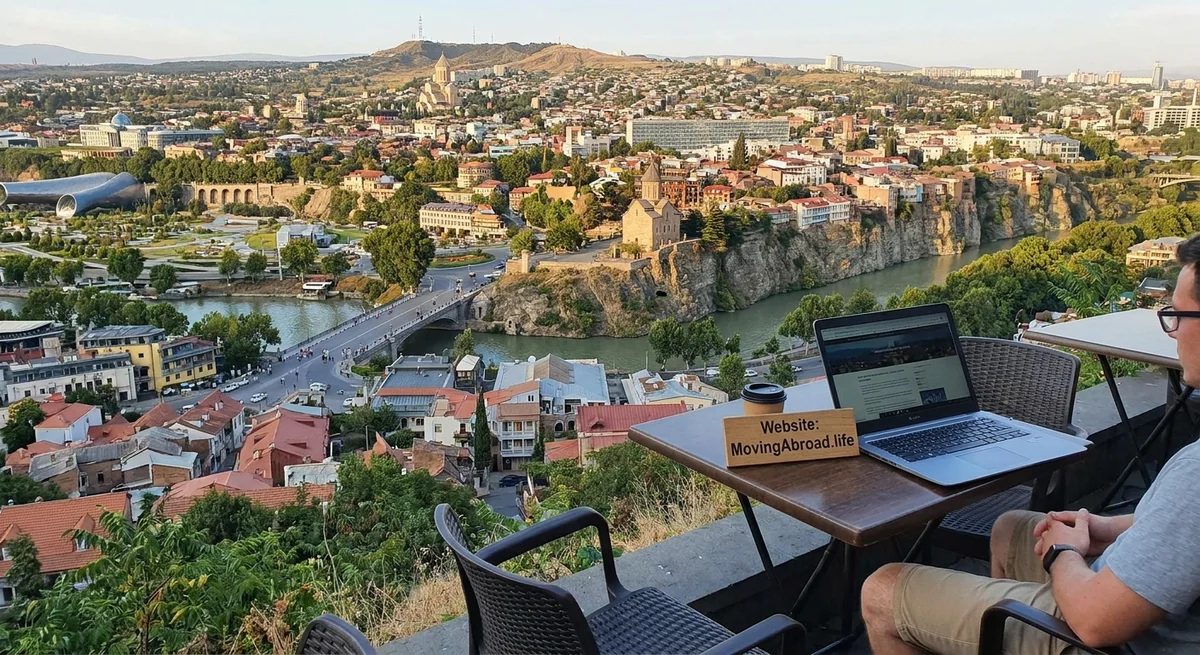
Introduction
Tbilisi, Georgia’s sunlit capital, has emerged as a high-freedom, low-friction hub for expats and digital nomads. The country’s open-door policies – including visa-free stays up to a full year for citizens of 95+ nations【TheGeorgianGuide】 – make getting started remarkably easy. Georgia’s modernizing economy offers affordable living, robust digital infrastructure, and enticing tax perks (like a flat-1% small-business tax), all wrapped into a unique Caucasus ambience. In this guide, we break down safety, housing costs (from Vake to Saburtalo), healthcare, climate, connectivity and more. We also weigh the trade-offs – such as language barriers and regulatory quirks – and compare Tbilisi to nearby alternatives like Yerevan (Armenia) and Budapest (Hungary). Our aim is to give you an honest, data-driven portrait so you can decide if Tbilisi is the right base for your next chapter.
Visa & Residency
One of Tbilisi’s biggest draws is its visa-light entry. Georgia’s government allows citizens of roughly 95 countries (including the US, EU, UK, Canada, Australia, etc.) to enter visa-free and stay up to 365 days【TheGeorgianGuide】. In practical terms, a visitor can arrive with just a passport and remain for a full year without immigration red tape. Unlike many countries, Georgia requires no advance visa or lengthy paperwork for these nationalities; there is no registration or fee for the large list of visa-exempt guests【TheGeorgianGuide】. For anyone evacuating cold climates or seeking a neutral meeting spot, this means you can book a flight and land in Tbilisi almost instantly, with no embassies involved. Even for citizens of nations not on the visa-free list, Georgia offers an e-Visa option at reasonable cost. Overall, the gateway is wide open, which suits digital nomads and expats who want to test the waters before committing.
(For comparison, neighboring Armenia’s policy is slightly less open – about 65 passports have visa-free entry, with others needing e-visas【VisaIndex】. The EU’s Hungary (Budapest) requires Schengen visas for non-EU nationals, making Georgia a much easier first stop.)
Business, Banking & Currency
Georgia’s Small Business Status is famous among entrepreneurs. By registering as an “Individual Entrepreneur,” you can operate a solo business and pay just 1% tax on gross turnover (up to ~500,000 GEL or ~$185k/year)【Tbilisi Expat】. There is no corporate entity to form, and no Georgian citizenship or residency is required to qualify【Tbilisi Expat】. In practice this means freelancers, consultants, and small startups can keep almost all their revenue. (A few professions are excluded – for example, legal and financial services – but most online/offshore services qualify.) The process is straightforward and quick: major expat tax guides note you can register and get this Small Business status in about a day【Tbilisi Expat】. Combined with Georgia’s lack of net wealth or inheritance taxes, this makes the fiscal climate extremely friendly for small-scale businesses.
Opening a bank account is also quite accessible. Major banks (TBC, Bank of Georgia, Liberty) advertise English-friendly mobile apps and support USD/EUR accounts. In fact, bank account fees are very low – basic personal accounts often run under $1 per month【Tbilisi Expat】, a fraction of Western costs. In 2026 Georgia even introduced world-class mobile banking (e.g. TBC Mobile, mBank) allowing you to manage money in English, set up deposits, SWIFT transfers and more【Tbilisi Expat】. Long-time expat guides report home broadband/4G speeds rival many western cities, so banking/app tech is not a barrier.
However, foreigners should note that banking KYC has become stricter. While it used to be enough to stroll into a branch with your passport, now bankers often require more documentation or even local references【Banco Georgia】. It’s still very possible, but plan to go in person with a resident helper, local SIM card and proof of address. Once approved, though, you’ll enjoy very competitive services. Account activation can take a few weeks, but the upside is accounts are easy to top up via international transfer or even cryptocurrency if needed.
The currency – the Georgian Lari (GEL) – floats freely against the dollar and euro. In late 2025/early 2026 it has been roughly 2.7–2.8 GEL per USD. That rate has been relatively stable over the last year【Geronimo】, though you should build in some cushion for fluctuations. Historically the Lari did depreciate (for instance during the 2022 regional upheavals), so it’s wise not to assume a pegged rate. Overall though, inflation in Georgia has been moderate recently, and residents report that everyday price inflation (especially rents and groceries) has been far lower than in Western Europe or the U.S.
Cost of Living & Housing
Tbilisi is consistently cited as budget-friendly. Expats find that daily expenses are far lower than western capitals. For example, ExpatHubGeorgia notes that Tbilisi’s cost-of-living index (about 42/100) is roughly a third lower than in Berlin or London【ExpatHub Cost】. A typical expat budget of $1,000–$1,500 per month (all-in, excluding rent) is considered comfortable【ExpatHub Cost】. Even less if you cook at home and mainly use local services – some budget estimates for a frugal remote worker run only $750–$900/month【Geronimo】.
Housing varies by neighborhood. The Vake district – leafy, embassies and universities nearby – is Tbilisi’s most prestigious area. Expat surveys call it “the most affluent neighborhood… with the highest density of expats”【ExpatHub Neigh】. You’ll find wide streets, villas and upscale apartment buildings. Vake commands the highest rents: a modern 1-bedroom flat (around 65 m²) can run roughly $1,000–1,200 per month【ExpatHub Cost】 (1000–1200 USD typically cited). Costs trend higher for larger or furnished units, especially near Vake Park.
By contrast, Saburtalo – just east of Vake, a large residential area – offers better value. It has a Metro line and steady expat population around the university and parks. Saburtalo rentals for a similar 1-bed apartment tend to be around $600–800 per month【ExpatHub Cost】. (Even quieter outer suburbs can be ~30% cheaper yet.) In short, expect a furnished one-bedroom in a good location to be around 2500–3000 GEL in Vake or 1500–2500 GEL in Saburtalo; older or unfurnished places cost less.
Aside from rent, most everyday costs are low. Groceries, utilities and transport are cheap: a loaf of bread or local kebab is a dollar or two, a Metro ride about 0.30 USD, and monthly utilities (electricity, gas, water in a typical apartment) often under $50【Geronimo】【TbilisiCost】. Tbilisi’s relative affordability means your dollar stretches. For example, ExpatHub estimates that a modest two-person lifestyle away from excess luxuries can run under $2,000/month【ExpatHub Cost】, while a solo individual can live comfortably on $1–1.5k (expathub.ge). (By comparison, Budapest often runs 30–50% higher for the same standard. Numbeo data show a 1-bed city-center flat at ~2,500 GEL in Budapest versus ~1,835 GEL in Tbilisi【RentCompare】.)
Total lifestyles vary: a digital nomad might budget toward the lower end by cooking in and coworking part-time, whereas a family or couple might split $2,000–3,000+ for more space, private school or car costs. But in every case, the consensus is that monthly living costs in Tbilisi remain significantly below Western Europe or North America【Geronimo】【ExpatHub Cost】.
Safety & Security
By global standards, Tbilisi is relatively safe. Georgia’s overall travel safety score is about 6.6/10 (where 10 is best)【IsItSafe】, ranking it in the “generally safe” category with moderate risk. The biggest risk factor cited in surveys is environmental (pollution), while violent crime rates are low【IsItSafe】. In practical terms, most residents say that violent crime is rare and that one need only watch out for petty theft (pickpockets, bag snatches) in crowded areas. Nightlife districts can get rowdy, but major incidents are uncommon.
Official travel advisories reflect this reality: the UK Foreign Office, for example, advises against all travel only to the Russian-occupied regions of South Ossetia and Abkhazia【UKFCO】. Importantly, these conflict zones lie well outside central Tbilisi. The capital city itself is not flagged as dangerous – indeed the advisories explicitly mention avoiding certain border areas, implying that places like Tbilisi and surrounds are fine. (Georgia has no ongoing civil conflict in its cities, and the police presence is visible in major areas.)
That said, Georgia’s geopolitical position is tense. It borders Russia, which in 2008 seized Abkhazia and South Ossetia. The war in Ukraine and shifting regional alliances remind expats that Georgia lies at a fault line between East and West. If regional stability is a top concern, Budapest (in EU/NATO) is clearly safer geopolitically. Yerevan (Armenia) also borders conflict zones (Nagorno-Karabakh) though is relatively stable now. In summary: Tbilisi’s day-to-day safety is good, but it is wise to stay aware of any developments given its proximity to unsettled areas.
Healthcare
Healthcare in Tbilisi combines high-end private clinics with some Soviet-era quirks. Nearly 90% of hospitals are private, many run by U.S. or European-trained physicians【GeorgiaExpats】. In the past decade Tbilisi has built modern medical centers (often affiliated with German or Israeli doctors), so quality is generally regarded as good by regional standards. For routine needs (checkups, dental, imaging), expats find plenty of options. Prices are low: a primary doctor visit may cost only ~$10–25, a specialist ~$20–50, and an MRI might be around $80–150【GeorgiaExpats】. (Even major surgery or hospitalization often comes at a fraction of Western costs, though patients usually prefer English-speaking clinics for anything complex.)
One caveat: while doctors are well-trained, support services can lag. It’s common to encounter receptionists or staff who don’t speak English【GeorgiaExpats】, or bureaucratic confusion (e.g. unclear insurance claims). To be safe, many newcomers sign up for an international-private insurance plan (especially after the 2026 rule requiring it) and stick to clinics recommended by expat networks.
As of Jan 2026 Georgia now requires health/accident insurance for all visa-free or tourist visitors【MandatoryIns】. This law means any stay longer than a few days should have coverage – a local insurance plan starts at only ~$15/month【GeorgiaExpats】, but you can also buy short-term international policies. Emergency services (ambulance, etc.) are widely available in Tbilisi. In short, while Georgia’s system is a bargain and adequate for most issues, expats should have insurance and possibly use English-speaking doctors for peace of mind.
Air Quality & Environment
One notable downside is air quality. Tbilisi lies in a valley lined with hills, and in winter many residents burn wood or coal for heat, leading to spikes in particulate pollution. Air-quality trackers often rate Tbilisi in the “moderate” range. For example, studies have recorded PM2.5 fine particles averaging ~24 μg/m³ in winter (US AQI ~77)【IQAir Data】. That level exceeds the WHO’s ideal (10 μg/m³) and can feel noticeable in the lungs. Local advisories often recommend sensitive individuals keep windows closed or wear masks on heavy-smog days【IQAir Data】. In late spring and summer this improves greatly, with many sunny, windy days that clear out pollutants【ExpatHub Weather】.
In summary, breathe easy: the environment is not dangerous, but Tbilisi tends to have worse air than a typical European city in winter. In our safety rating above, environmental issues pulled Georgia’s score down somewhat (environment was the lowest sub-score【IsItSafe】). If you have severe respiratory issues, this is a factor. Otherwise, for most people the convenience factors outweigh this seasonal nuisance.
Winter Climate
Winters in Tbilisi are mild by Eastern European standards. Snow is possible but infrequent in the city. Daytime highs in December–February typically hover around 7–10°C (45–50°F), with nights dipping to 0–2°C. Residents report that “winter in Tbilisi is typically dry with a reasonable amount of sunny days”【ExpatHub Weather】. In practice, that means many clear, crisp days when you can still enjoy outdoor cafes (if bundled up), punctuated by occasional cold snaps. It’s a classic 4-season climate: you can expect cold rain or light snow a few times a year, but nothing like the bone-chilling damp of, say, a London fog. However, apartments rely on gas heating, so be prepared for higher utilities in December–January (cable-knit sweaters indoors are common!).
Compared to Yerevan’s high altitude chill or Budapest’s multi-month winter, Tbilisi’s season feels shorter and sunnier【ExpatHub Weather】. In fact, many expats say they love the contrast: snowy mountain resorts (Gudauri, Bakuriani) are an easy drive away for skiing, while the city itself stays relatively temperate.
Internet & Tech Connectivity
For digital nomads or remote workers, connectivity is crucial – and Tbilisi delivers. Home internet is robust: providers like Silknet or Magti offer fiber-optic packages routinely in the 50–100+ Mbps range, often for just $15–$18 per month【Tbilisi Expat】【Tbilisi Guide】. Wireless internet and 4G mobile data are likewise fast; one test ranks Tbilisi’s mobile median speed near the top globally (around 200 Mbps download) by mid-2025 standards. Co-working spaces (Forum, Terminal, Impact Hub, etc.) boast very reliable high-speed connections (often 200+ Mbps) and modern facilities【Tbilisi Expat】.
In short, fast internet is taken for granted. The country is building out 5G in central areas, and Wi-Fi is ubiquitous in hotels and cafes. Tech infrastructure is modern and kept up – Georgian engineers even emphasize that mobile apps and fintech here are “world-class.” So whether you’re running video calls or streaming movies, Tbilisi’s connectivity compares well with any major city.
Flight Connectivity
Tbilisi International Airport (TBS) is Georgia’s main hub. It serves 65+ destinations in 30 countries【FlightConnections】. Turkish Airlines, Qatar Airways and Emirates link to Istanbul, Doha and Dubai daily. European carriers (Lufthansa, WizzAir, easyJet, British Airways) fly to major cities like Frankfurt, Warsaw, London, Athens and Milan. Notably, BA offers direct flights to London-Heathrow and easyJet to London-Luton【FlightConnections】, making Europe just a few hours away. Regional flights connect Tbilisi to Moscow, St. Petersburg, and key Caucasus airports (Baku, Yerevan). Even if routes can be seasonal, on most days you’ll find multiple options to hop to the West or Middle East.
One caveat: Georgia is not in the EU Schengen zone, so flights into Europe require passport control on arrival. Also, at times flights can be pricey compared to budget hubs, since it’s a smaller airport. But overall Tbilisi is decently well-connected. Compared to Yerevan (fewer direct flights, especially after political border closures), Tbilisi has more international variety. And while Budapest has more traffic and frequencies (especially to EU capitals), Tbilisi’s links are growing fast as tourism and business travel pick up.
Language & Culture
English skills in Georgia are improving but still limited outside tourist circles. By one measure (EF English Proficiency Index), Georgia ranks around #35 globally with a score of ~541【EF EPI】 (average skill among test-takers). In practice, that means many young people and service staff do speak English, especially in hotels or cafes in Vake/Old Town. However, once you step into typical neighborhoods or deal with government offices, English suddenly drops off. Expect to hear mostly Georgian or Russian on the street. English signage is common in expat spots, but outside expat areas you’ll need a translator or Google. This is one trade-off: compared to Budapest (where English is very common) or Yerevan (where Russian often bridges the gap), Tbilisi can feel isolating linguistically. Many expats recommend learning a few phrases of Georgian (or at least Cyrillic skills for basic reading) to get by with local bureaucracy, shops and transportation.
Georgians themselves are famously hospitable, and you will find that people are patient and eager to help once you try to speak their language. Culturally the country sits at a crossroads of Europe and Asia: Orthodox Christian roots, Soviet memories, plus Turkish and Persian influences. English beyond the inner circle is a challenge, but the trade-off is being immersed in a unique Georgian culture – vibrant wine dinners (supras), folk music, and an old city full of charm.
Trade-offs & Alternatives
Rising regulations. One should note that Georgia is still politically evolving. In recent years there have been quick legal changes – for example, the mandatory travel health insurance rule took effect only in 2026【MandatoryIns】. Banking compliance tightened rapidly in 2023–26 as well【Banco Georgia】. Leaders are pro-business, but policies can shift unpredictably, especially around elections. Expats should stay informed via local news or social media (English-language media is emerging but limited). Compared to stable EU countries like Hungary, you trade a bit of certainty for Georgia’s lower taxes and lightweight bureaucracy.
Geopolitical location. Georgia’s geopolitical proximity is a double-edged sword. Positioned between the EU/NATO sphere and the former Soviet Union, it enjoys Western investment but is also in Russia’s sphere of influence. While direct conflict is unlikely in the city, regional tensions exist (recall Russia’s 2008 war over Abkhazia and South Ossetia). Compared to Washington-backed safety of Budapest, Georgia is geopolitically riskier. On the other hand, Yerevan (Armenia) similarly feels Russian influence, but has internal political issues of its own. Tbilisi’s government currently pursues a pro-Western path (aspiring to EU membership), but also maintains a working relationship with Moscow. This tightrope means mid-term stability isn’t guaranteed, though in everyday terms life goes on normally.
Comparison: Yerevan vs Budapest
-
Yerevan (Armenia): Also ancient and affordable, Yerevan shares some features with Tbilisi. It offers very low living costs and visa-free or e-Visa entry for many nations【VisaIndex】. However, Yerevan’s real estate market is smaller and lacks Israel-style skyscrapers; internet speeds are decent but generally a bit slower. Politically, Yerevan can be more volatile – recent elections and the Nagorno-Karabakh conflict have caused unrest【Media Reports】. English is less common in Armenia. On the positive side, Yerevan has a tight-knit expat community and even cheaper prices on food and entertainment. If your priority is ultra-low cost and a quieter environment, Yerevan might edge out Tbilisi, but it may lack the dynamic startup scene or English access that Georgia has pushed to build.
-
Budapest (Hungary): A world apart. As an EU capital, Budapest guarantees the highest political stability, Schengen access, and EU healthcare for residents. English is widely spoken and bureaucracies (though often criticized as rigid) are transparent. However, Budapest is far more expensive: nearly every cost category is 30–90% higher than Tbilisi’s (for example, a mid-range meal is almost twice as much, and rent is ~35% higher【RentCompare】). Taxes in Hungary are also higher (15% personal income, 9% corporate minimum). For many expats, the financial side is the “deal-breaker” – Georgia’s allure is significantly lower overhead. Trade-offs: In Budapest you sacrifice tight costs and the Georgian visa hub, but gain seamless travel in Europe and top-tier services. Tbilisi offers the opposite trade – easier entry, cheaper living, 1% entrepreneurship tax – at the expense of some language and regulatory simplicity.
Conclusion
Tbilisi stands out as a compelling high-freedom, low-friction relocation base. Its beautifully absurd mix of Soviet leftovers and European bustle creates a very livable city: crime is low, living costs are low, and a year-long visa is free. The cost of living is South-Asian-cheap by Western standards【ExpatHub Cost】, Islamabad-style winters (dry, sunny) make seasons manageable【Weather】, and the public infrastructure (internet, cafes, co-working) has leapt forward. The 1% tax regime and entrepreneurial infrastructure further sweeten the deal for freelancers and startups【Tbilisi Expat】.
Yet no place is perfect. If your lifestyle demands top-tier healthcare and environmental standards, or if you need English-speaking locals everywhere, you might tolerate the higher bills of Budapest. If you prefer a smaller, quieter environment, Yerevan has its charm (and even lower out-of-pocket costs). Tbilisi is best suited to those who prize access, affordability and a cosmopolitan nomad life over some Western conveniences. It rewards the bold: speak a little Georgian, adjust to the cadence of life, and you’ll find Georgia pays you back with huge value. For anyone choosing where to plant new roots in the near future, Tbilisi is certainly worth a long look – just be sure to pack your passport, your sense of adventure, and maybe a face mask for January!