 Auto
Auto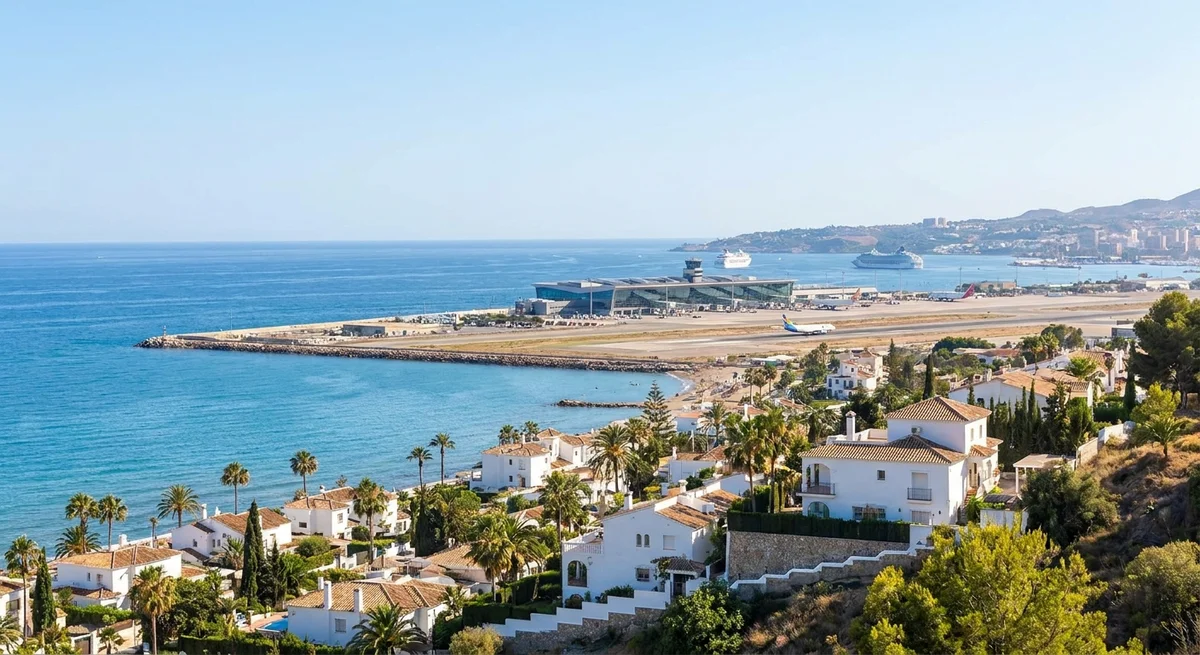
Málaga & Costa del Sol, Spain: Sunbelt Living With Big-Flight Access
The Malaga province and Costa del Sol are famous for year-round sunshine, beaches and big-city amenities. Málaga city itself is a midsize Mediterranean port, while towns like Fuengirola, Benalmádena and Marbella range from bustling suburbs to upscale resorts. Together they form one of Spain’s most international regions. Thanks to Málaga-Costa del Sol Airport (25 M passengers in 2024 (www.aena.es)) with dozens of European routes (60% of traffic is international (www.aena.es), led by the UK and Germany), the area offers big-flight access to the UK and elsewhere. Nor is it a remote outpost: Málaga city has a metro and extensive Cercanías commuter rail (C-1) linking the airport through Torremolinos and Benalmádena to Fuengirola (www.malagaweb.com). However, much of the Costa del Sol is still car-dependent outside these rail corridors. In fact, surveys show 64% of locals drive to work, and nearly 68% say they would use transit if it were practical (www.theolivepress.es). In short, while the core city and train-linked towns (Torremolinos, Benalmádena, Fuengirola) are quite walkable, most sea-side and inland communities still rely on car or sparse bus service.
Safety and Security. Spain is generally safe, and the Costa del Sol is no exception beyond minor petty crime. Málaga city had 37,519 reported crimes in 2024 (www.theolivepress.es) (an 8.5% rise from 2023), but this is spread over a city of ~600k and mostly involves theft or minor offenses. Touristy areas remain safe with precautions: pickpockets and scams may appear in crowded spots. By per-capita measures, however, Marbella actually topped all Andalusia in 2024. One report citing Interior Ministry data notes Marbella had the highest crime rate per inhabitant in Andalusia last year (www.theolivepress.es) (one offence per ~0.087 person). Nearby Fuengirola and Torremolinos also ranked high for crime-per-population, while Benalmádena fared a bit better. By contrast, larger cities like Málaga have more crimes in total but spread over a much larger population. In everyday terms, Málaga city (like other European midsize cities) is considered quite safe – one analysis even ranked it Spain’s second-safest major city (www.theolivepress.es) – but ex-pats should still lock doors, watch valuables, and avoid isolated areas at night. Always be vigilant in nightlife spots (the local press warns of some pickpocketing and occasional gang incidents) (www.theolivepress.es).
Cost of Living & Rents. The Costa del Sol is not a budget outpost. Housing costs, especially closer to the sea, can be high. Rental rates jumped about 34% since 2020 (guides.waypointsur.com). Current listings (late 2025/early 2026 data) show a major coastal premium (guides.waypointsur.com): in Marbella a basic one-bedroom starts at ~€950–1,500 per month and a two-bedroom €1,500–2,500 (guides.waypointsur.com). Fuengirola and Benalmádena are somewhat cheaper: one-bedrooms around €700–1,100/month and two-beds €1,000–1,600 (guides.waypointsur.com). Málaga city itself overlaps those ranges (roughly €750–1,100 for a one-bedroom, €1,000–1,500 for two (guides.waypointsur.com)). Inland towns like Álora or Ronda can be 30–50% cheaper. Beware move-in costs: Spain legally allows landlords to ask for up to 5 months’ rent upfront (first month + 2 months deposit + 2 months guarantor, plus an agency fee) (guides.waypointsur.com). Utilities (water, power, internet, community fees) add another €200–300/month.
By comparison, Valencia city rents are generally a bit lower than Málaga’s, and Alicante (Costa Blanca) rents sit between Málaga and Marbella levels. For example, Torrevieja (Alicante) leads Spain with 44.6% foreign residents (ine.es), but its coastal rents are largely comparable to Fuengirola, and its housing spectrum extends from mid-range to very expensive in hotspots. Overall: expect monthly budget for a modest 2-bedroom in coastal Málaga province to start around €1,400–1,800 (more in Marbella or tourist zones), plus €300–500 for a small family’s utilities (guides.waypointsur.com).
Year-Round Climate & Livability. This sunbelt region lives up to its name: typically ~310 days of sun a year. Summers are long, very hot and dry (daily highs often 35–40 °C, even reaching mid-40s in heat waves), with virtually no rain June–September. Winters are short, mild and wet (December to February averages near 12–16 °C highs; frosts and snow are virtually unknown on the coast). The region’s Mediterranean climate lets residents enjoy outdoor life most of the year. Thunderstorms or occasional “dana” events (sudden Mediterranean rain storms) can hit in fall and spring, but by and large January–March sees moderate weather.
Climate Resilience. However, the Costa del Sol faces some climate challenges. A decade-long drought – 10 of the last 11 years below normal rainfall (elpais.com) – has strained water supplies. By late 2024, Málaga Province was in a true water emergency: reservoirs were down ~50% from the year before and only rains in late 2024 (and even tanker ships for water) prevented major cutoffs (elpais.com) (elpais.com). As of early 2025, restrictions eased from “severe scarcity” to “moderate scarcity” in the western Costa del Sol, allowing about 225 liters/person/day (cadenaser.com), but officials stress continued conservation (in 2024 all water use in Málaga Province was well below normal (elpais.com)).
Wildfires and floods are also a concern. Inland hills and pine forests draw flames in exceptionally hot summers. For instance, the 2021 Sierra Bermeja fire (near Estepona) was one of Andalusia’s largest ever. That blaze not only destroyed thousands of hectares but, studies now show, removed forest that used to mitigate floods: future heavy rains on deforested slopes trigger much higher runoff (one model suggests potential flood zones could expand several-fold after such fires (cadenaser.com)). In October–November 2024, torrential rains (so-called danas) actually did cause flooding in parts of town[45], highlighting how both intense rain and intense heat (which fuels fires) are becoming more frequent with climate change.
In short, while you can enjoy pleasant beach weather 9–10 months per year, be prepared for intense summer heat (plan air conditioning) and the need for drought-savvy habits (use water sparingly). Homes typically have AC but often lack central heating (mornings can get down to 5–8 °C in winter). Insurance and local governments are now paying more attention to fire and flood readiness, but it’s wise to check if your homeowner or renter insurance covers natural disasters (wildfire and flood coverage are standard EU requirements, but still confirm).
Digital Nomad Visa & Residency. Spain now offers a Digital Nomad (Telework) Visa, making EU residency easier for remote workers. This national visa (introduced by 2023 legislation) lets qualified non-EU nationals live in Spain while working remotely for foreign companies (www.exteriores.gob.es). Key requirements include: proof of a university degree or 3+ years’ professional experience, and sufficient income (at least 200% of Spain’s minimum wage – roughly €2,400/month in 2024 (www.exteriores.gob.es)). Applicants must have a clean criminal record and health insurance. Spouses and dependent children can join under this visa (www.exteriores.gob.es).
Processing time is a few weeks at a Spanish consulate. Once in Spain, holders receive a one-year residence permit (extendable up to 5 years total if conditions continue). Keep in mind you must work almost entirely for non-Spanish entities (no more than 20% of your time on local clients) (www.exteriores.gob.es). This visa has opened doors for thousands of tech workers who want an EU base, with no requirement to first hold a student or work visa. (As of 2025, Spain has also tweaked its tax rules to attract remote professionals – see below.)
Healthcare (Andalusia). Spain’s public health system ranks among Europe’s best in many respects (high life expectancy, strong primary care). Andalusia’s service (Servicio Andaluz de Salud) operates hospitals and clinics throughout the province. Málaga city has several large public hospitals, and even on the coast there are good public clinics. Waiting lists, however, can be long. In fact, Andalusia has historically had some of Spain’s longest waiting times for elective surgery (www.surinenglish.com). Recent reforms (the Andalusian Health Guarantee Plan) have cut those overdue waits by about 15.4% in 2024 (www.surinenglish.com), but overall delays remain longer than in richer regions. For many expats, the usual solution is to buy private health insurance: trusted companies (AXA, Sanitas, Mapfre, Adeslas, etc.) offer plans with good hospital networks. Private insurance in Spain is relatively affordable (often €50–100/month for young adults) and allows fast access to medicine and specialists. Many foreigners register for the public system too (especially if working in Spain), which then gives them access to public clinics at reduced cost. In sum, expect generally high-quality care but be prepared to pay privately for swift service or elect certain procedures if you need timeliness.
Taxes for New Residents. For tax purposes, anyone living more than 183 days/year in Spain is a resident and taxed on worldwide income. Spain’s income tax rates are progressive up to ~47% on wages. However, Spain offers a special inpatriate regime (the so-called “Beckham Law”) for new-qualified workers. Under this regime, qualifying foreign professionals can opt to be taxed at flat 24% on up to €600,000 of their income (47% above) (movingtospain.com), rather than the usual progressive scale. This can mean a big saving on salaries (standard top marginal tax is 45–47%). The regime lasts up to 6 years. It also limits Spain’s wealth tax to Spanish assets only (so you won’t pay wealth tax on most foreign holdings) (movingtospain.com), and exempts most foreign-source dividends/interest.
The catch: you must have been non-resident for the previous 5–10 years, and you must actively opt into this regime. A 2022 startup law eased the rules – for example, requiring only 5 prior years outside Spain instead of 10 (spanishsolicitors.com) – in part to cover digital nomads and other expats. In practice, many remote workers and entrepreneurs do take advantage of this lower rate upon moving here. If you don’t or can’t qualify, Spain still has double-tax treaties with most countries so you can often avoid double taxation on pensions or overseas income. (Tax compliance can be complex, so newcomers often hire a fiscal advisor.)
Infrastructure – Transport & Access. The region’s transport is well-developed by Spanish standards. Air: Málaga Airport connects the Costa del Sol globally. It handled nearly 25 million passengers in 2024 (www.aena.es), making it Spain’s third-busiest (after Madrid/Barcelona). Besides frequent flights to Europe, it has direct routes to the US (seasonally), and even Latin America and Africa via main airlines. This huge airport is a boon for travelers and expats alike.
Rail: A commuter train line (Renfe Cercanías C-1) runs from the airport/Málaga city west along the coast through Torremolinos, Benalmádena, to Fuengirola (www.delsolprimehomes.com). Trains run roughly every 15–20 minutes (www.delsolprimehomes.com), taking only about 30–40 minutes end-to-end. Málaga city also has a modern 2-line Metro (connecting the city center to Cádiz Rd suburbs, hospital, and university areas). Intercity Renfe AVE trains link Málaga to Madrid (in ~2.5 hrs) and Seville. Bus: A network of long-distance and regional buses also stitches the region together; local buses connect urban centers but are slower and less frequent outside peak hours. There are also Malaga city’s metro buses and suburban bus lines (Tussam and CTMAM).
Road/Car: Major highways serve the area. The A-7/N-340 toll-free highway runs along the Malaga coast and connects east-west Spain (it turns into AP-7 toll road near Marbella toward Cádiz, and MA-20/Má-21 around Malaga CBD). Inland, the A-45 connects Malaga to Córdoba/Madrid, and the A-7 northwards toward Granada. Traffic on the coastal A-7 can be very heavy in summer; many residents simply drive or use long-distance bus. Outside Málaga city, few expats car-free: an English survey notes that living “walkable” requires being within ~800m of train/bus, and that anywhere requiring navigating motorway crossings on foot quickly becomes impractical (www.delsolprimehomes.com).
Expat Community. The Costa del Sol has one of Europe’s largest and most diverse expatriate populations. Málaga province now has ~1.79 million people, with 19% foreign-national residents (over 340,000 foreigners) (www.theolivepress.es). The largest groups are Britons (~49,300 in the province) (www.theolivepress.es), followed by Moroccans, Italians, Colombians, etc. In neighborhoods, foreigner percentages are extremely high – for example, Fuengirola is already 38.5% foreign-born (ine.es). Marbella municipality (165k pop) is particularly international – by some accounts seen 153 nationality groups and nearly a third foreign residents (moonvilla.es) – though official census shows ~19% foreigners (almost 5,500 Brits and many Scandi, German, Dutch). Mijas, Estepona and thereabouts also host large expat enclaves.
This means a strong support network: English, Swedish, Norwegian, Russian and other communities run many cafés, clubs, churches and associations. You’ll find British-style pubs, international schools and all kinds of worldwide foods on supermarket shelves (even Iceland stores). Costa del Sol life often revolves around the expat scene, especially in high season when the population swells. By contrast, Valencia city is less international – only about ~10–12% foreigners (mainly EU) – though it has its own cohesive expat neighborhoods and an emerging digital nomad scene. Alicante and the Costa Blanca have similarly heavy foreign presence: Torrevieja (Alicante) is ~45% foreign (ine.es), and Benidorm (Alicante) ~31% (ine.es), mostly Britons and North Europeans.
Risks & Challenges. Seasonality: Tourism (and related hospitality jobs) dominate the local economy. In summer 2025, fully 21% of all workers in Malaga province were in tourism or hospitality (www.surinenglish.com), a record high. While this means many job openings in summer, it also means a sharp winter lull. Hotels and restaurants often cut staff or hours from November through March, which can hit service quality and local employment. If you’re not in leisured fields (tech, remote work, teaching, etc.), finding year-round work outside tourism can be tricky. Long-term rentals also often vacate July–Sept so owners can do short-term lets, which can depress fall rents.
Car Dependence: As noted, much of expat living still assumes a car. Outside Málaga’s core urban zone and the C-1 rail corridor, essentials (groceries, schools, certain hospitals) are often driving-distance. The A-7 coast road is fast but congested, and many coastal neighborhoods are built around cars. Surveys find nearly 70% of locals would prefer public transit if available (www.theolivepress.es), reflecting frustration. So if you buy outside main hubs (e.g. inland Mijas, Marbella hills, Estepona outskirts), budget for one or two cars, plus parking and fuel.
Housing Pressure: Property in Costa del Sol is under intense pressure. Demand from rich buyers, second-home seekers and rental investors has driven prices sharply upward. In 2025 the Malaga area saw many towns with >15% annual home-price gains (cadenaser.com). Málaga Province averages about €2,100/m² (used homes) – beyond the national average – and iconic zones like Marbella now average over €3,000/m² (cadenaser.com). In fact, Marbella tops Spain when measuring “effort rate”: local buying power must be about 76% of household income to afford a median home (cadenaser.com), compared to a reasonable threshold of 30–35%. (For reference, Valencia city’s effort rate is moderate by comparison, and Alicante/Benidorm are high but slightly below Marbella’s level.) The rental market is similarly tight: low vacancy and high short-term demand mean rents rarely drop. For newcomers, this means housing is the single biggest cost and challenge. Searching months ahead (especially winter-early spring) helps, and you may compete with foreign investors on any appealing property.
Conclusion. Málaga and the Costa del Sol offer a luxurious “sunbelt” lifestyle with unparalleled global connections. You get contemporary city amenities (universities, hospitals, theatres in Málaga) and beach-town relaxation, plus Spain’s friendly culture. Villarious expat enclaves make adjusting easy for English-speaking newcomers. However, it’s not all effortless paradise: the region’s climate hazards (drought, wildfire risk, heat) and economically volatile tourism cycle demand caution. The cost of housing and living is high, and life outside major centers often requires a car. Compared to Valencia or the Alicante coast, Costa del Sol can be pricer (especially in summer) and more touristic-year-round. But its combination of historic villages, vibrant expat scene, and that big international airport keep it uniquely appealing. In short, research these pros and cons carefully as you plan the move: the region rewards those who love sun, sea and Spanish culture, but demands respect for its environment and market realities.