 Auto
Auto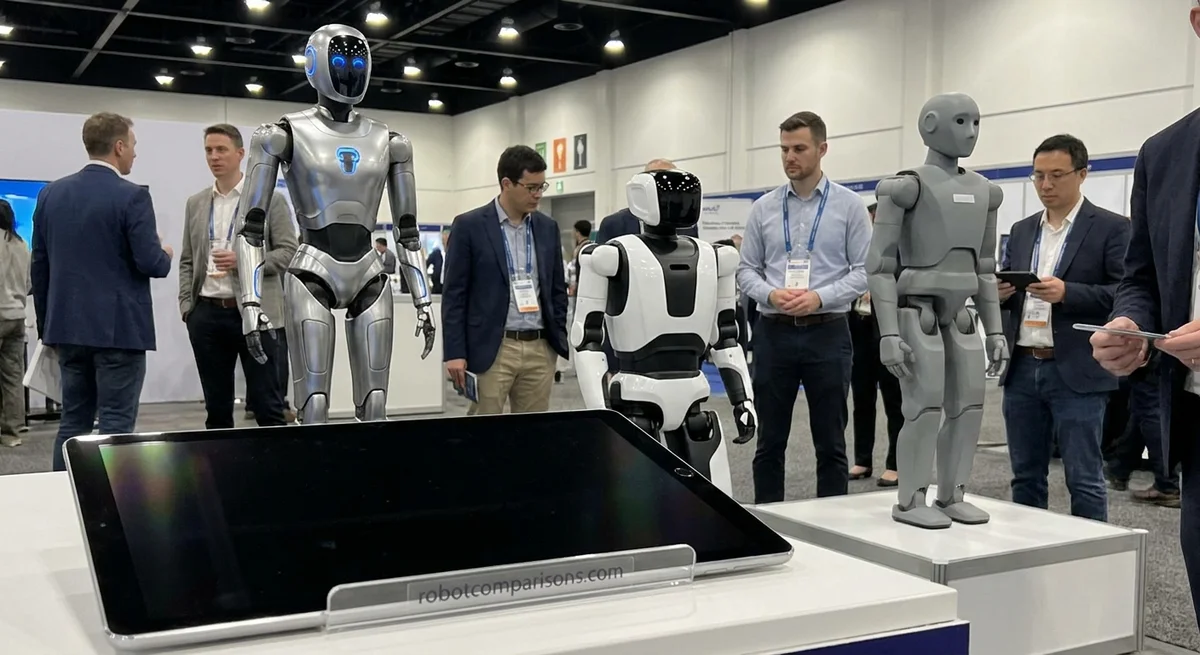
Introduction
By 2026, humanoid robots – machines shaped like people – have moved out of demo labs and into real jobs. Companies big and small are deploying these robots for tasks in warehouses, factories, and even stores. The major players include Agility Robotics (Digit), Apptronik (Apollo), Figure AI (Figure 02), Sanctuary AI (Phoenix), 1X/Halodi (EVE), Unitree (H1), Fourier Intelligence (GR-1), and others. Each robot differs in size, speed, carrying capacity, price, and smart software. In this review, we look at how to buy or lease them, where they are available, their tech specs, safety features, and support networks. We also give a simple scoring guide for different users (for example, a warehouse manager vs. a tech researcher) to see which robot fits each use case best.
Agility Digit (Agility Robotics, USA)
Overview: Digit is a bipedal (two-legged) warehouse robot made by Agility Robotics. It can walk, carry boxes (up to 16 kg) and climb stairs. Digit has been used in real warehouses (e.g. at Amazon and Spanx) to move bins and packages.
-
Size & Specs: Digit stands about 175 cm tall and weighs 65 kg (botmarket24.com). It can carry up to ~35 lbs (16 kg) per arm. Its top speed is about 5 km/h (3.1 mph). It has wheels at the hips to help it move and balance. One battery charge lasts about 8 hours (botmarket24.com).
-
Purchase Options: Digit is not sold in stores. It is only offered to businesses. Agility Robotics provides it through a Robot-as-a-Service (RaaS) subscription or by outright purchase with a support contract (www.agilityrobotics.com). In RaaS, you pay a monthly fee that includes the robots, software updates, and maintenance. As of 2026, analysts estimate a Digit costs on the order of $250,000 each (botmarket24.com). In practice most companies start with a pilot contract or lease rather than a simple retail sale.
-
Geographic Availability & Lead Times: Agility is based in Oregon (USA) but can deploy Digit worldwide for large customers. Because Digit is still cutting-edge, expect a custom sales process. Lead times run on the order of months, depending on demand and customization. (For context, one analysis reports other Chinese humanoids ship in 2–12 weeks, while Western robots like Digit typically ship via pilot program only (www.grabarobot.com).)
-
Software & Controls: Digit is managed via Agility’s cloud platform (“Agility Arc”) for fleet control. Operators can assign tasks via a web interface. It uses cameras and LIDAR to navigate. Safety sensors (vision and touch) make it stop if it bumps into something. Agility notes Digit has a “perimeter” safety zone and a smaller “impact” zone: if a person or object enters these, Digit slows or stops (apptronik.com). This makes Digit safe around people.
-
Service & Support: Agility offers training, installation, and ongoing support for businesses. Their team will help integrate Digit with your workflow (e.g. how to pick up totes from a conveyor). Agility’s website highlights ROI of under two years versus a human worker (botmarket24.com) (www.agilityrobotics.com). Warranty and software updates are typically included in the subscription or service plan.
Apptronik Apollo (Apptronik, USA)
Overview: Apollo is Apptronik’s general-purpose humanoid. It’s built for warehouses and factories. Unlike Digit, Apollo has a single body and head (no wheels), but it is modular – it can be mounted on wheels or a lift platform if needed. Apollo is designed to be friendly around humans, with LED indicators and “conversational” controls.
-
Size & Specs: Apollo is about 5’8″ tall (173 cm) and weighs roughly 160 lbs (73 kg) (apptronik.com). It can carry up to 55 lbs (25 kg) in its arms (apptronik.com). Its top speed is around 5 km/h (3.1 mph). Apollo runs on hot-swappable battery packs (4 hours each) that can be swapped in seconds (apptronik.com).
-
Purchase Options: Like Digit, Apollo is only sold to enterprises, not consumers. Apptronik has said Apollo will cost on the order of mid-six figures (likely $200-300K or more), though they have not published an exact price. Their sales model is similar: customers typically sign service contracts or RaaS agreements. Apptronik raised large funding (over $900M) to scale up production (apptronik.com), so availability is improving, but expect lead times of several months or more for a delivery.
-
Geographic Availability & Lead Times: Apptronik is based in Texas (USA). Apollo has been demonstrated in North America; global sales would require contacting Apptronik directly. Lead times depend on order size and configuration. Like Digit, Apollo is in pilot deployments (for example Walmart tested Apollo in a warehouse). It is not yet “on the shelf.”
-
Software & Controls: Apollo comes with Apptronik’s software suite for task programming and fleet management. It emphasizes intuitive controls: you can point-and-click tasks and deploy sensors. Apollo’s safety is handled by adjustable zones: an outer perimeter zone and inner impact zone. If a worker enters the perimeter, Apollo slows; if something enters the impact zone, it immediately stops (apptronik.com). This ensures human co-workers stay safe.
-
Service & Support: Apptronik is building a global support network. Early customers get dedicated engineering support. The company offers training, simulation, and integration services. As with Digit, companies often start with an evaluation program.
Figure 02 (Figure AI, USA)
Overview: Figure is a Silicon Valley startup backed by OpenAI, Microsoft, and Nvidia. Figure 02 is their second-generation conversational humanoid. It’s aimed at factories (for assembly lines) and eventually homes. Figure’s robots are notable for heavy AI: they use large language models and high-end GPUs onboard so they can understand speech, see the world, and make decisions on the fly.
-
Deployment: Figure has signed deals with BMW (Germany) to use these robots in car factories (www.iotworldtoday.com). As of early 2026, Figure 02 units are in limited production for these customers. It is not a consumer product yet – you cannot buy Figure 02 on a website.
-
Size & Specs: Exact figures for Figure 02 are not public, but it is roughly human-sized (~170-180 cm tall). The Nvidia blog notes Figure added two Nvidia RTX GPU modules on board for vision and speech processing (blogs.nvidia.com). It carries out high-precision tasks like pick-and-place on assembly lines. For example, it was tested at a BMW assembly line in South Carolina (blogs.nvidia.com).
-
AI & Autonomy: Figure 02 emphasizes autonomy. According to Nvidia, the second-gen robot has ~3× the AI computing power of its predecessor, enabling “fully autonomous real-world tasks” (blogs.nvidia.com). It has six cameras and onboard AI models trained on synthetic data to handle vision. Figure’s CEO Brett Adcock says the goal is for Figure to handle shop-floor jobs and even retail or home delivery in the future (blogs.nvidia.com). Figure robots use a proprietary AI stack (called Helix) with OpenAI’s models to converse and reason.
-
Purchase Options: Figure AI is currently taking large enterprise orders. They have said they plan to ship 100,000 robots in a few years (www.iotworldtoday.com), focusing on big clients like BMW and other unnamed Fortune 500 companies. Pricing is not public, but some sources suggest base units could be in the low six figures. Buyers must contract directly with Figure AI; there is no off-the-shelf price. Lead times are long (multiple months) and production is still ramping.
-
Safety: Figure’s safety features are not fully public, but like others, it likely uses vision sensors and emergency-stop zones. Nvidia’s blog notes Figure can perform tasks under real-time AI control, but it does not specify collision handling. As always, companies deploying Figure add fencing or soft stops as needed.
Sanctuary Phoenix (Sanctuary AI, Canada)
Overview: Sanctuary AI (Vancouver) aims to build a true general-purpose humanoid. Their latest model is Phoenix, a 6th/7th generation robot powered by their “Carbon” AI system. Sanctuary’s goal is an AI-controlled robot that can do many human tasks by understanding natural language and feedback.
-
Size & Specs: Phoenix stands about 5′7″ (170 cm) tall and weighs 155 lbs (70 kg) (www.sanctuary.ai). It can carry roughly 55 lbs (25 kg). Its top walking speed is around 3 mph (4.8 km/h) (www.sanctuary.ai), which is slower than some faster robots, but it is built for dexterity. Phoenix has highly articulated hands (20+ degrees of freedom) with haptic sensing to mimic human touch (www.sanctuary.ai).
-
AI & Autonomy: Phoenix’s brains is the Carbon AI control system. Sanctuary designed Carbon to translate speech or text instructions into actions. It combines modern AI with symbolic reasoning so Phoenix can plan tasks on its own (www.sanctuary.ai). For example, if you tell Phoenix “sort these parts by size,” the AI will figure out the steps to do it. Sanctuary claims Phoenix can already perform hundreds of tasks learned from customer demos. It aims to work side-by-side with humans in shops, factories, or even hospitals.
-
Purchase Options: Phoenix is not sold at retail. Sanctuary AI works directly with business customers and pilot projects. There is no published price or catalog. According to industry trackers, Phoenix is only available through pilot programs (often with heavy customization) (ui44.com). Sanctuary’s partners include Magna (an auto supplier in Ontario) for manufacturing use (www.design-engineering.com). Canadians and Americans can inquire, but expect a bespoke sales process, likely with large upfront costs.
-
Geographic Availability & Lead Times: Sanctuary can deploy to North America and beyond for major clients. It completed its first consumer land-based (Canadian) deployment in early 2024. With Magna’s partnership, Phoenix units will be integrated into automotive plants (targeting 2026 rollouts) (www.design-engineering.com). Lead times are long, and Sanctuary is focused on enterprise (graduated leasing or capital purchase with service) rather than consumer retail.
-
Safety & Support: Phoenix is designed for co-working without extensive guarding (hence the slow speed and soft padding). It has many cameras and sensors for collision avoidance. Sanctuary claims “explainable” AI planning, meaning a human operator can see what task Phoenix intends. The company offers training and cloud updates via its Carbon platform.
1X EVE (1X Technologies, Geneva/USA)
Overview: EVE is a unique wheeled humanoid from 1X Technologies (formerly Halodi Robotics). Unlike biped robots, EVE balances on a single wheel at the base, allowing it to zip around quickly while keeping a human-like torso above. It’s aimed at security, logistics, and general-purpose tasks in human buildings.
-
Size & Specs: EVE is very tall – about 188 cm (6′2″) (www.humanoid-robots.io). It’s heavy (about 87 kg) but it can move fast: up to 14.4 km/h (9 mph) (www.humanoid-robots.io) – one of the fastest of all humanoids. It runs for about 6 hours on a charge (www.humanoid-robots.io). It can carry about 15 kg (33 lbs) in its arms (www.humanoid-robots.io).
-
AI & Controls: EVE’s autonomy is advanced. It uses the 1X OS and a “Redwood” AI stack – a vision-language system that lets the robot predict its own movements. In simple terms, EVE can watch a person do a task (via VR teleoperation) and then learn by imitation to repeat it (www.humanoid-robots.io). It also has a “world model” to plan actions in new environments. For remote control, EVE supports haptic gloves and VR, so a human can teach it tasks.
-
Purchase Options: EVE is production-ready but sold only to institutions. Prices aren’t public. 1X (based in Geneva with US presence) invites inquiries for custom orders via their website (www.1x.tech). There are rumors of large-volume deals: for example, 1X announced a partnership to deploy up to 10,000 EVE robots across a venture portfolio (www.humanoid-robots.io). But technical support and ordering must go through 1X directly.
-
Geography & Lead Times: 1X ships internationally to research and security clients. Because EVE is complex, orders typically involve contracts of months of lead time (especially if custom sensors are needed). There is no “off-the-shelf” sale; you must work with 1X’s sales team for a quote and schedule.
-
Safety: EVE’s unique wheeled design uses soft, muscle-like actuators for the arms (www.humanoid-robots.io). This makes it very safe on contact (it’s like hugging someone with soft arms). Its speed can be limited in populated areas. Overall, EVE is built to be safe for patrolling or guiding visitors without heavy guards.
Unitree H1 (Unitree Robotics, China)
Overview: Unitree, known for robotic dogs, also makes H1, a full-size bipedal for research use. H1 is not aimed at warehouse work but at labs and universities that need a standard humanoid testbed. It became popular because it broke the $100K price barrier for such a robot.
-
Size & Specs: H1 stands 180 cm tall and weighs about 47 kg (botinfo.ai). It holds the world record for fastest humanoid walking speed at 3.3 m/s (over 7 mph) (botinfo.ai). Its armged payload is smaller – the standard H1 has no arms, the H1-2 variant adds arms and hands (7 extra joints) for about $128,900 (botinfo.ai). The leg structure (cable-driven motors) gives it smooth, powerful motion. Battery life is a few hours depending on activity.
-
Purchase Options: Unitree sells H1 through authorized resellers. In the US, ToborLife is a known partner that advertises H1 units. Current street prices are roughly $100k for H1 and $130k for H1-2 (botinfo.ai). These units ship from a US warehouse with fast delivery (some listings even mention “2-day shipping” for North America). Unitree mainly targets labs, so interested parties usually buy directly from vendors like ToborLife or Unitree’s own store (via inquiry).
-
Geographic Availability: Being Chinese-made, Unitree ships worldwide. Lead times have shortened as Unitree expanded. Reports indicate Unitree shipped more humanoids in 2025 than all Western competitors combined (botinfo.ai). Import duties on industrial robots are low (often <5%), so U.S. and EU institutions can acquire H1 by contacting local distributors.
-
Software & Use Cases: H1 runs on Linux/ROS and has open SDKs for research. It has LIDAR and IMU sensors. Many universities use H1 for studying bipedal walking and AI. It’s not a turn-key warehouse helper; rather it’s a research platform. For a budget-conscious R&D lab, H1 scores very high on value. As one analysis notes, H1 ($90K–100K) smashed traditional $250K barriers (www.forbes.com).
-
Safety: Unitree’s humanoids have torque sensors and emergency stop. They are not as certified for industrial safety as some (no formal ISO 13849 listing). Research teams typically add external safety mats or zones. In year 2026, dozens of H1 robots are in labs globally, so community forums and support groups help troubleshoot them.
Fourier GR-1 (Fourier Intelligence, China)
Overview: Fourier Intelligence – known for rehab and exoskeleton tech – has launched GR-1, billing it as “the first mass-produced humanoid robot.” GR-1 is aimed at labs and universities as a versatile assistant. It draws on Fourier’s actuator tech (FSA) for strong, precise moves.
-
Size & Specs: GR-1 is a medium-size humanoid: about 165 cm tall (5′5″) and 55 kg (www.fftai.com). It has 44 joints to mimic human motion. Top speed is around 5 km/h (3.1 mph) (www.fftai.com). It can lift up to 50 kg total in its arms (the spec sheet lists 51 DOF total and 50 kg payload) (www.fftai.com). Battery life is modest – on the order of 2–3 hours per charge, so it’s used for short tasks.
-
AI & Interaction: GR-1 uses on-board AI and even LLM support for conversation. Fourier highlights that GR-1 is powered by large language models and can have emotional interactions (www.fftai.com). It has one main camera (Intel RealSense) and microphones, so it can see objects and listen to voice commands. It’s designed to “understand a room” and chat at a basic level. The built-in software allows scripting tasks, but it’s not fully autonomous – it operates more like a sophisticated cobot.
-
Purchase Options: Fourier sells GR-1 to institutions. Pricing is roughly $100K–$200K per unit (though no fixed price list is public) (www.grabarobot.com). The company has display models in Asia and is available for order through distributors. Customers typically request a quote on Fourier’s website (“Contact Sales” button is prominent).
-
Geographic Availability: Fourier is based in Shenzhen, China, but they ship worldwide. In our research, one source notes Fourier and other Chinese humanoids now sell internationally (www.grabarobot.com). Logistics may incur $2k–$5k air freight and small import duties (as low as 0–8%) (www.grabarobot.com). Limited runs can mean 6–12 week lead times for GR-1 (www.grabarobot.com).
-
Support & Service: Fourier offers training and cloud software updates. They have partnerships with universities (ETH Zurich, CMU among others) (www.fftai.com), so a community of users is growing. Customer support is regional; in North America you may work through local distributors or agents.
Other Humanoid Platforms and Competitors
Several other notable robots are on the market or nearing release:
-
UBTECH Walker S1/S2 (China): UBTECH makes humanoids like Walker S and S1. They are taller (170 cm) and weigh 60–63 kg, with about 80–90 joints. Prices range ~$80k–$130k (www.grabarobot.com). Their strength is that they are proven in industrial programs (Foxconn, NIO in China). UBTECH has a strong service network as a large company (www.grabarobot.com). These robots are available internationally. Lead times are on the order of 4–8 weeks (www.grabarobot.com).
-
Tesla Optimus (Tesla, USA): Tesla’s humanoid has been highly anticipated. As of 2026, Tesla plans to start production in mid-2026 and begin sales by 2027 (www.techradar.com) (www.axios.com). Their goal is very high volume (1 million/yr). However, as of early 2026, Optimus is still not selling to the public. Plans may change, but businesses can only watch Tesla’s announcements.
-
Other Chinese/Budget Bots: Unitree sells smaller walkers (G1 at ~$16k, R1 at ~$6k) (www.forbes.com) which are mostly research platforms. Agibot (China) and UBTECH’s X are also on the scene. These lower-cost models show that humanoid prices are rapidly falling. For a budget project, R1 or G1 units (without arms or with limited arms) are easiest to acquire quickly from online retailers.
-
Research Toys & Scale Models: There are even toy-size humanoids (e.g. UBTECH has <1m robot), costing a few thousand dollars, meant for education. We do not cover them in detail here, but they exist for hobbyists.
Comparison by Use-Case (Scoring Rubric)
No single robot is best for all jobs. We created a simple 5-point scoring rubric for common buyer personas/use-cases (higher is better):
-
Warehouse/Logistics (e.g. fulfillment center): Top choices: Agility Digit (9/10), Apptronik Apollo (8/10). These robots are proven in stocking and order-pick scenarios (botmarket24.com). Digit is already deployed in warehouses, and Apollo’s strong arms suit moving totes. Unitree H1 is less suited (7/10) because it’s an unloved research robot. Fourier GR-1 (6/10) works but has shorter battery (2–3h).
-
Factory/Assembly (manufacturing lines): Top: Figure 02 (9/10), Sanctuary Phoenix (8/10). Figure 02’s AI lets it handle precise pick/place tasks at BMW (blogs.nvidia.com). Phoenix’s advanced AI/motion system can adapt to varied assembly jobs (www.sanctuary.ai). Apollo is also a contender (7/10) for heavy lifting. Digit scores lower (6/10) here, as it was built for sacks, not fine assembly.
-
Security/Surveillance/Service: Top: 1X EVE (9/10), Apptronik Apollo (7/10). EVE’s high speed (14.4 km/h) and silent operation (www.humanoid-robots.io) make it great for patrolling or guiding people. It’s designed for “security and logistics” use (www.humanoid-robots.io). Apollo is also strong (7/10) if task is to fetch/carry items in a mall or hospital, but it’s slower. Digit is around 5/10 – it can patrol but not very quickly.
-
Research/Education: Top: Unitree H1 (9/10), Fourier GR-1 (8/10). Both are relatively affordable (~$100k) and open enough for labs. H1 has a large user community and speed (botinfo.ai). GR-1 is well-supported academically (used at ETH Zurich, CMU (www.fftai.com)). UBTECH Walker S1 is good too (8/10) because it’s stable and industrial-grade (www.grabarobot.com).
-
Consumer/R&D Enthusiasts: Top: Unitree R1 ($5.9K robot) (9/10) and Unitree G1 ($16K) (8/10) – if you include these, since they are actually purchasable by individuals (www.forbes.com). Among the listed big humanoids, none is truly consumer-ready by 2026. Figure 03 (for home) is on the way, but still years out.
These scores are only a guide; your best choice depends on specific needs: payload vs. speed vs. cost vs. ease-of-integration. For example, warehouse operators will prioritize deployment speed and proven ROI, so Digit and Apollo rank higher (they have ROI under two years (botmarket24.com)). A tech lab will care more about openness and price, so H1/GR-1 excel.
Conclusion
In summary, 2026 offers a rich field of humanoid robots, but no “one-size-fits-all.” Business buyers must weigh capabilities vs. cost. Some key takeaways:
-
Availability: Most advanced humanoids are sold only to companies via direct contact. There are no consumer checkouts yet. Robots like Digit, Apollo, Figure 02, Phoenix, and EVE require enterprise contracts or pilot agreements (www.agilityrobotics.com) (ui44.com). Chinese robots (Unitree H1/GR-1, UBTECH, etc.) can be bought from distributors, with lead times of a few weeks to months (www.grabarobot.com).
-
Pricing: Price ranges are huge: from <$20K for basic research bots up to $250K+ for some general-purpose robots. Unitree H1 is around $90K (www.forbes.com), while Agility Digit and Apptronik Apollo run in the mid-six-figure range. Many sellers use subscription or RaaS models to soften the upfront cost (www.agilityrobotics.com).
-
AI & Autonomy: All these robots have on-board computing and sensors. Figure AI’s and Sanctuary’s models emphasize advanced AI, using LLMs and simulation to enable more autonomous action (blogs.nvidia.com) (www.sanctuary.ai). Apollo and Digit are more classic automation with safety zones (apptronik.com) (www.agilityrobotics.com). 1X EVE leads in agility and teleoperation. Buyers should ask how much autonomy vs. pre-programming each robot offers.
-
Safety & Support: Safety features (cameras, LIDAR, emergency stops) are standard. Service networks vary: publicly listed firms (UBTECH) and Western companies tend to have robust warranties (www.grabarobot.com). Emerging startups may have more limited local support, so consider service contracts and training.
Actionable advice: If you are a operations manager, start by listing tasks a human worker does (lifting, packing, inspection). Match these to robot specs above. Contact vendors to confirm costs and schedules. Remember to budget for installation and training. For researchers or smaller companies, look at the more affordable platforms (Unitree, Fourier) that let you experiment.
In all cases, verify with the manufacturer directly for the latest pricing and delivery estimates – this market is evolving fast. By 2026, humanoids are real but still early-stage. The best fit depends on your budget, location, and tasks. Use the above comparisons as a starting point to find the robot that works for you.